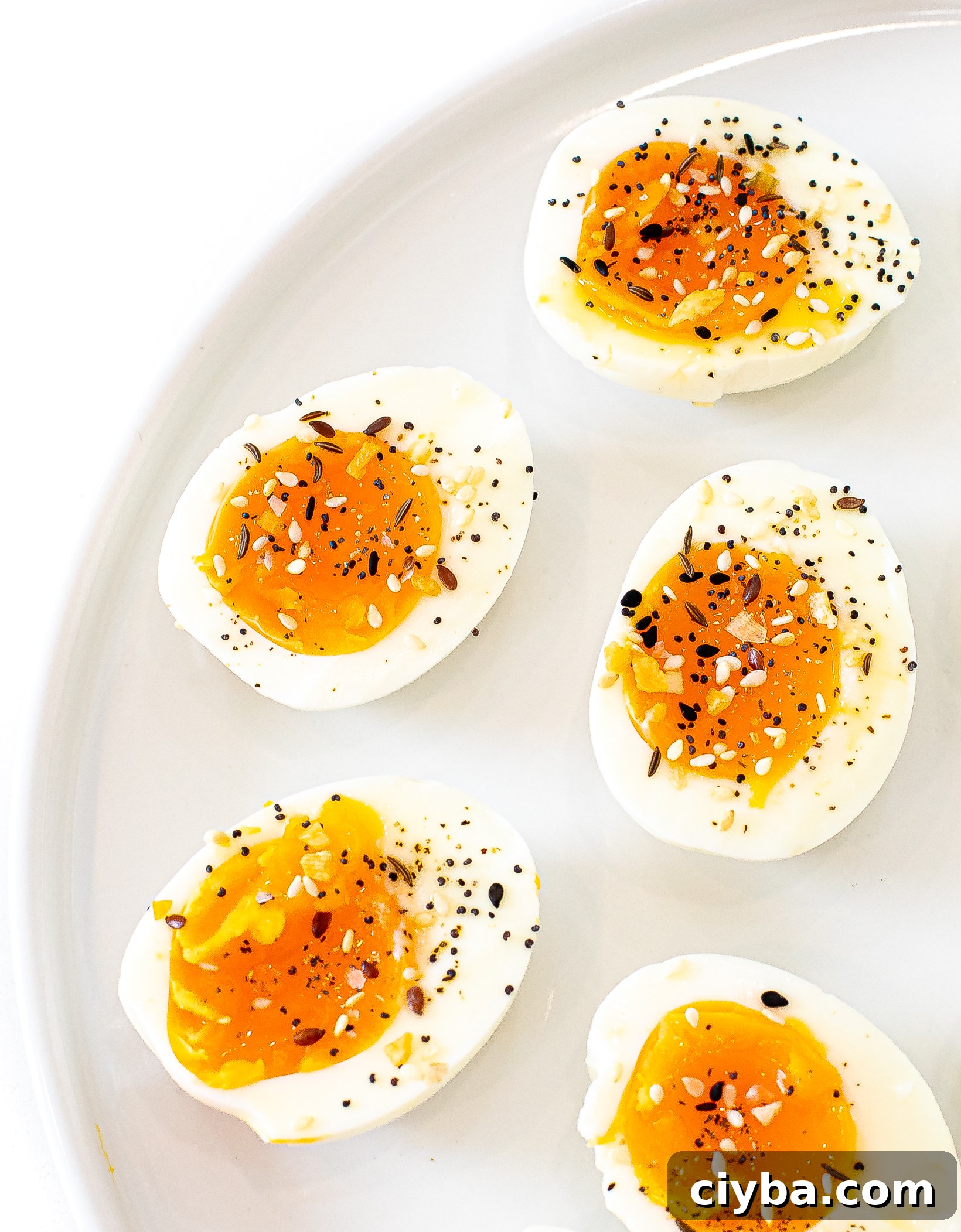
Jammy Eggs offer a luxurious, velvety yolk and tender whites that elevate any meal. They’re perfect on toast, as a ramen topper, or sliced over salads. This guide explains how to make jammy eggs at home so you can enjoy them any time.
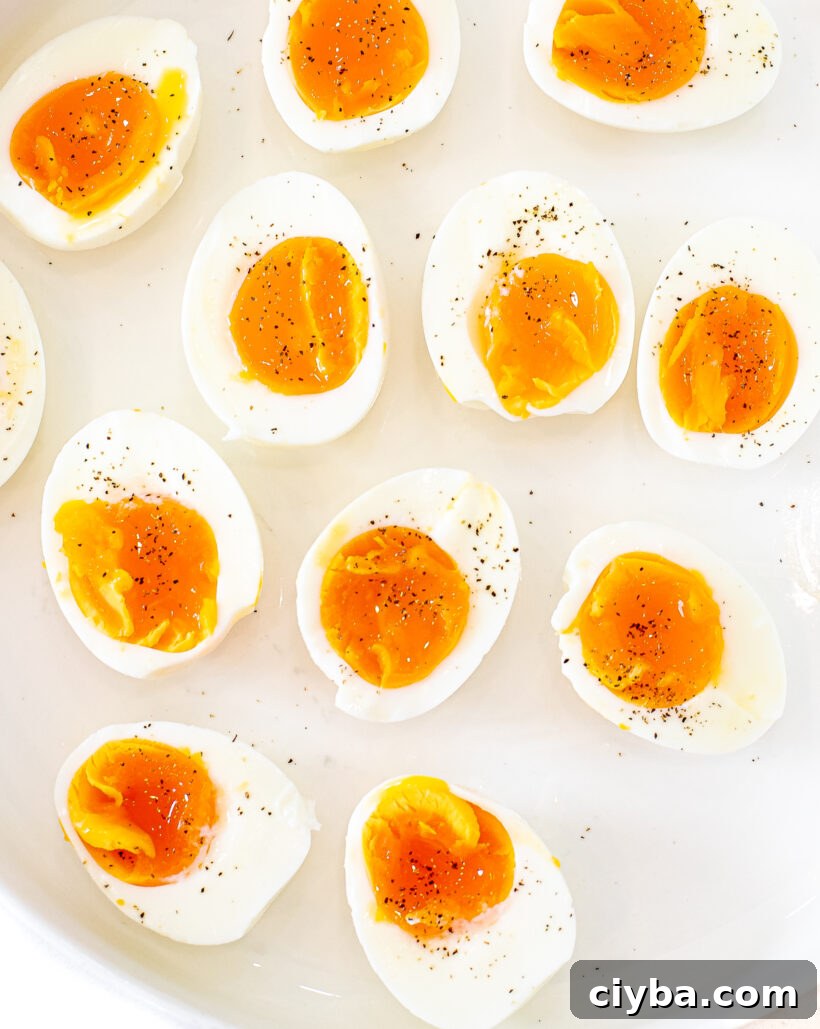
The Best Jammy Eggs Recipe
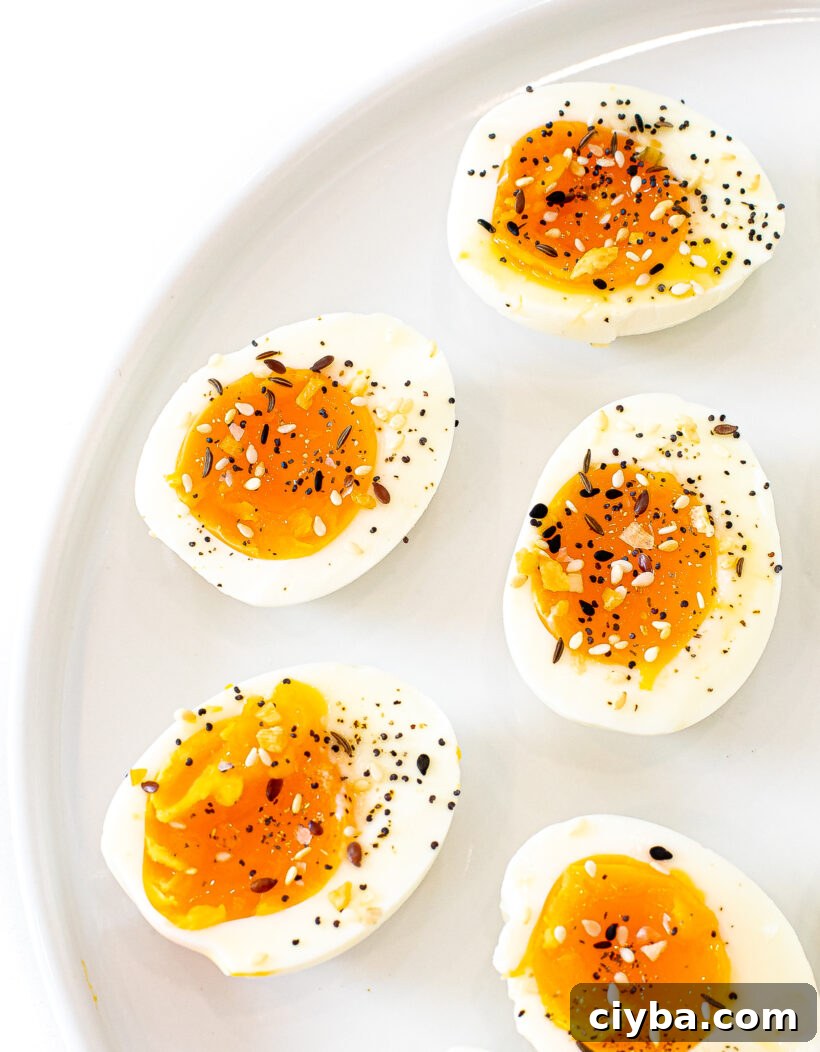
Jammy eggs sit between soft-boiled and hard-boiled: the whites are fully set while the yolks remain soft, glossy, and slightly runny. Their creamy texture makes them one of the most satisfying preparations of boiled eggs. With a simple method and a reliable timer, you can produce consistent jammy eggs every time.
They’re highly versatile: serve them for breakfast on toast, add them to grain or salad bowls for lunch, or place one in a hot bowl of soup for dinner. Once you master the timing, jammy eggs become an easy, go-to component for many dishes.
Ingredients Needed
- Eggs: Any eggs will work. Some cooks prefer older eggs for easier peeling, but peeling under running water makes a big difference regardless of age.
- Salt: Add salt to the boiling water. It helps with peeling and can reduce leakage if an egg cracks while cooking.
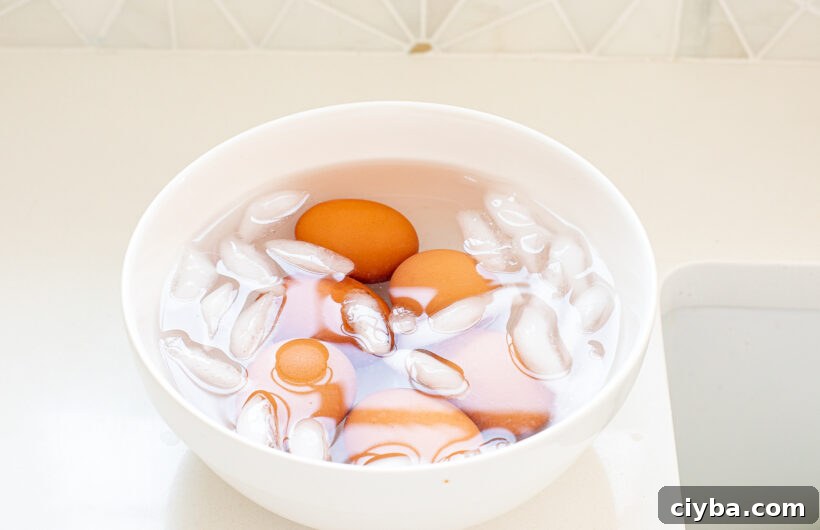
- Ice Water: An ice bath stops the cooking immediately, preserving the jammy yolk texture.
- Everything seasoning or other toppings: Optional finish—use everything bagel seasoning, flaky sea salt, cracked pepper, or paprika for added flavor and texture.
How to Make Jammy Eggs
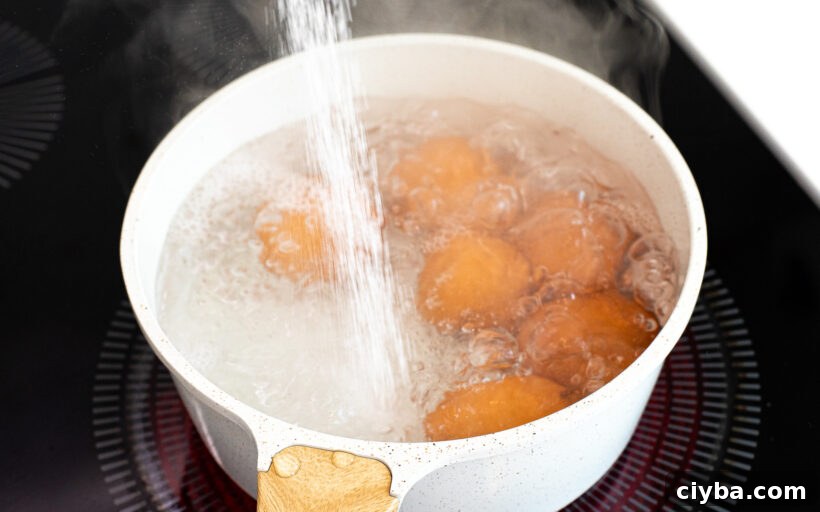
- Bring water to a rolling boil. Use a medium pot with enough water to cover the eggs by about an inch. Heat until the water is boiling steadily.
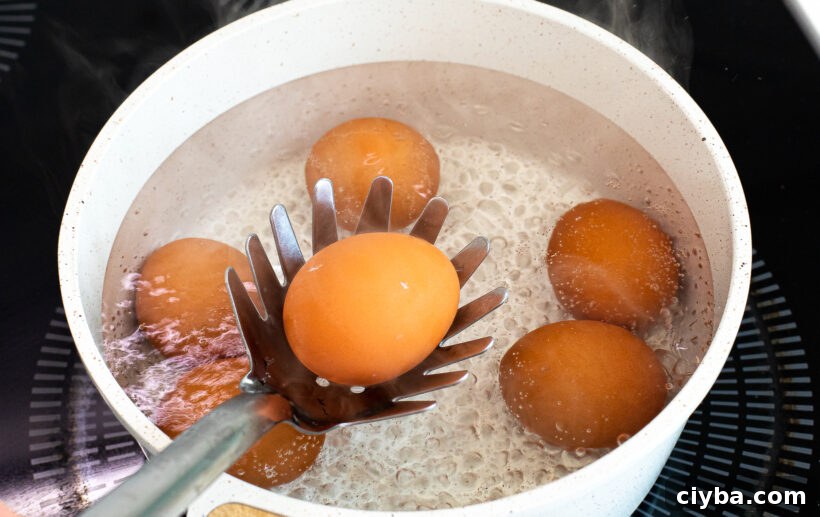
- Lower the eggs carefully into the water. Use a spoon or ladle to gently lower room-temperature eggs to avoid cracking. Sprinkle in the tablespoon of salt.
- Cook for 6–7 minutes. For most large eggs at sea level, 6 minutes yields a very soft jammy yolk; 7 minutes gives a slightly firmer but still glossy yolk. Adjust by a minute if you live at high altitude or if your eggs are unusually large or small.
- Transfer to an ice bath immediately. Remove the eggs from the hot water and plunge them into a bowl of ice water. Let them sit for about 2 minutes to stop the cooking process.
- Peel under running water. Cracking and peeling the eggs gently under running water helps remove shells cleanly and keeps the whites intact.
- Season and serve. Cut in half or slice, then season with salt, pepper, and everything seasoning or your preferred toppings. Serve right away or store chilled for later use.
Serving Suggestions
- Ramen or soup: Halve a jammy egg and float it in ramen or miso soup to enrich the broth with silky yolk.
- Salads and bowls: Add sliced jammy eggs to grain bowls, Caesar or chopped salads, and tuna or salmon bowls for extra creaminess and protein.
- Toast and toasts alternatives: Place a jammy egg on avocado toast, sweet potato toast, or a savory bagel to create a satisfying breakfast or snack.
- Breakfast bowls: Combine with roasted vegetables, quinoa or rice, and a dollop of yogurt or tahini for a balanced meal.
- Simple snack: Enjoy plain with flaky salt, cracked pepper, and a dash of hot sauce or soy sauce.
- Hearty sides: Serve alongside a hash or sautéed potatoes and breakfast sausage for a robust brunch plate.
Frequently Asked Questions
How do I know my eggs are jammy?
The best indicator is timing. For large eggs at sea level, boiling for 6–7 minutes produces the classic jammy texture. Six minutes gives a very soft, custardy yolk; seven minutes yields a slightly thicker but still glossy yolk. Adjust time slightly for altitude or egg size and always use a timer.
How can I avoid cracked eggs while boiling?
Lower eggs gently with a spoon or ladle and let refrigerated eggs sit at room temperature for a short time before boiling. Sudden temperature changes increase the risk of cracks. Adding a tablespoon of salt to the water can also reduce leakage if a crack occurs.
How long do jammy eggs last in the fridge?
Store peeled or unpeeled jammy eggs in an airtight container in the refrigerator; they will keep well for 3–4 days. Use them cold or briefly reheat by immersing in hot water for a minute before serving.
More Easy Recipes to Try
- Veggie Cream Cheese
- Herb Scrambled Eggs
- Egg Muffin Cups or Cottage Cheese Egg Cups
- Deviled Eggs
- Baked Eggs in Avocado
Recipe: How To Make Jammy Eggs
How To Make Jammy Eggs
Ingredients
- 6 large eggs
- 1 tbsp salt (for the water)
- Ice water (for an ice bath)
- Salt and pepper, for serving
- Everything seasoning, optional
Instructions
- Bring a medium pot of water to a full boil.
- Gently lower room-temperature eggs into the boiling water and add the tablespoon of salt.
- Boil for 6–7 minutes depending on preferred yolk consistency.
- Immediately transfer eggs to an ice bath for 2 minutes to stop cooking.
- Peel under running water, season, and serve.
Nutrition Information (per egg)
Calories: 36 kcal · Protein: 3 g · Fat: 2 g · Cholesterol: 93 mg · Sodium: varies with added salt

Did You Make This?
Share your experience in the comments and, if you like, add a photo of your jammy eggs. Feedback helps refine timing and tips for other cooks.