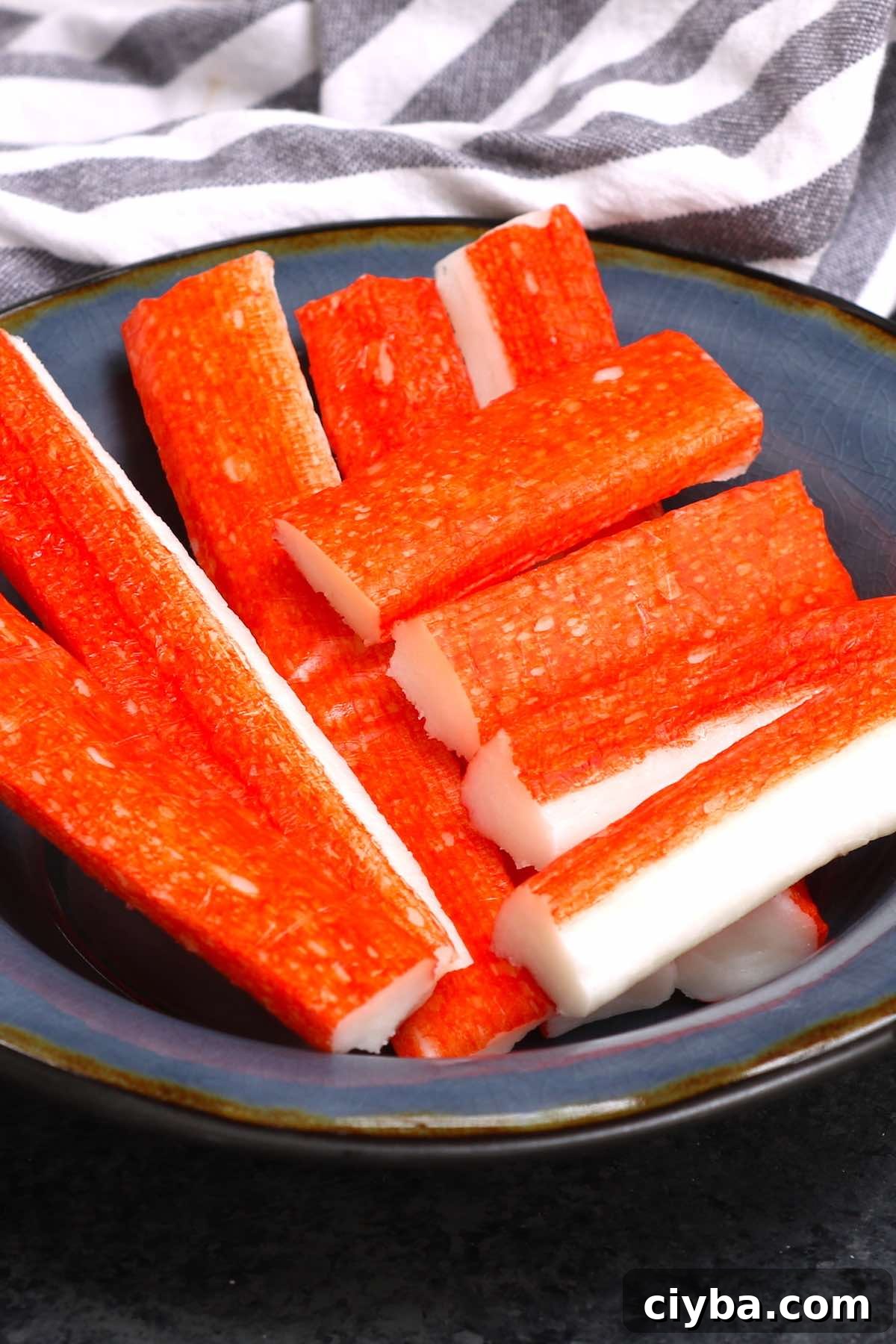
Kanikama is the Japanese name for imitation crab: processed fish meat often sold as crab sticks or ocean sticks. It’s commonly used in California rolls, crab cakes and crab rangoons.
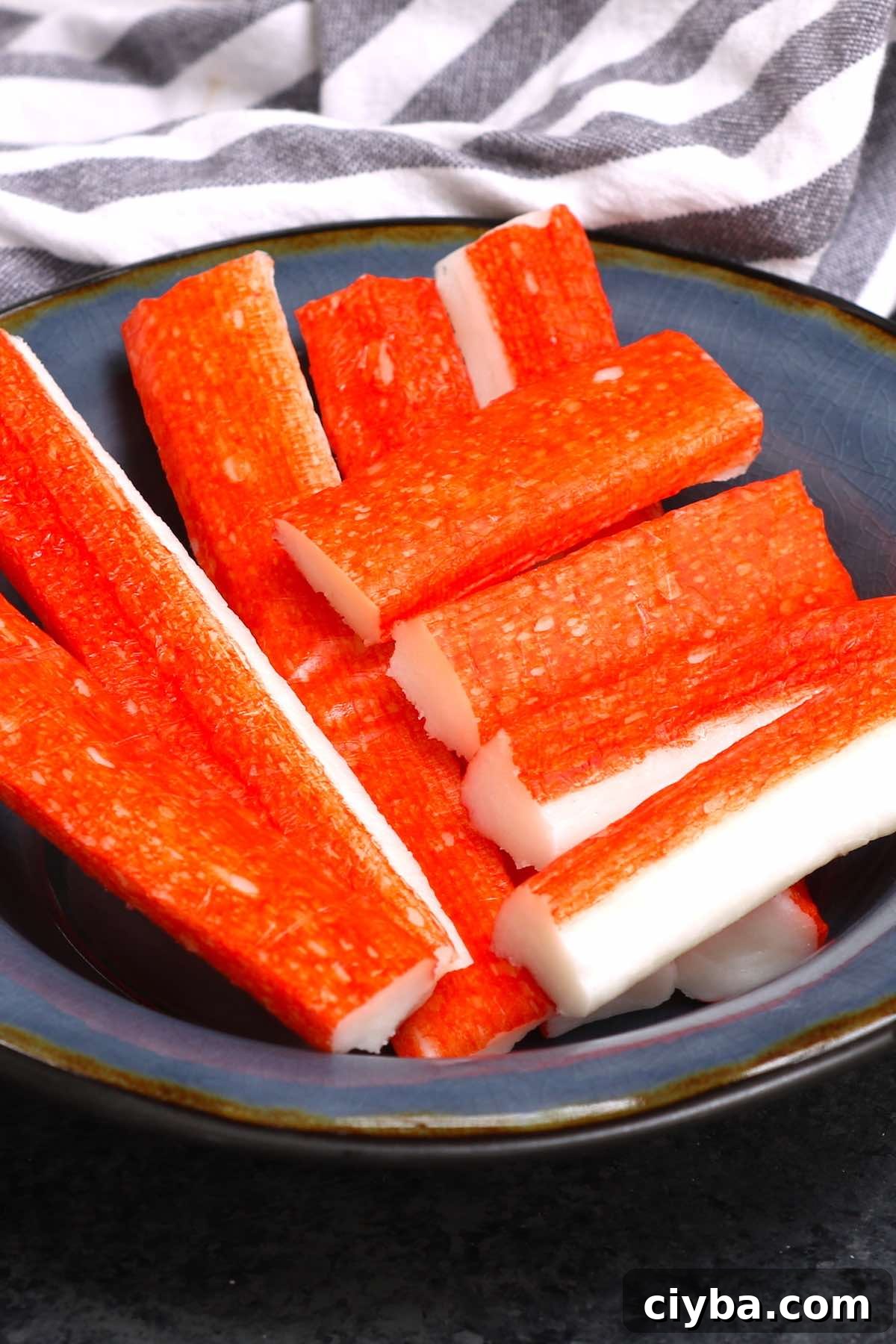
What is Kanikama (imitation crab)?
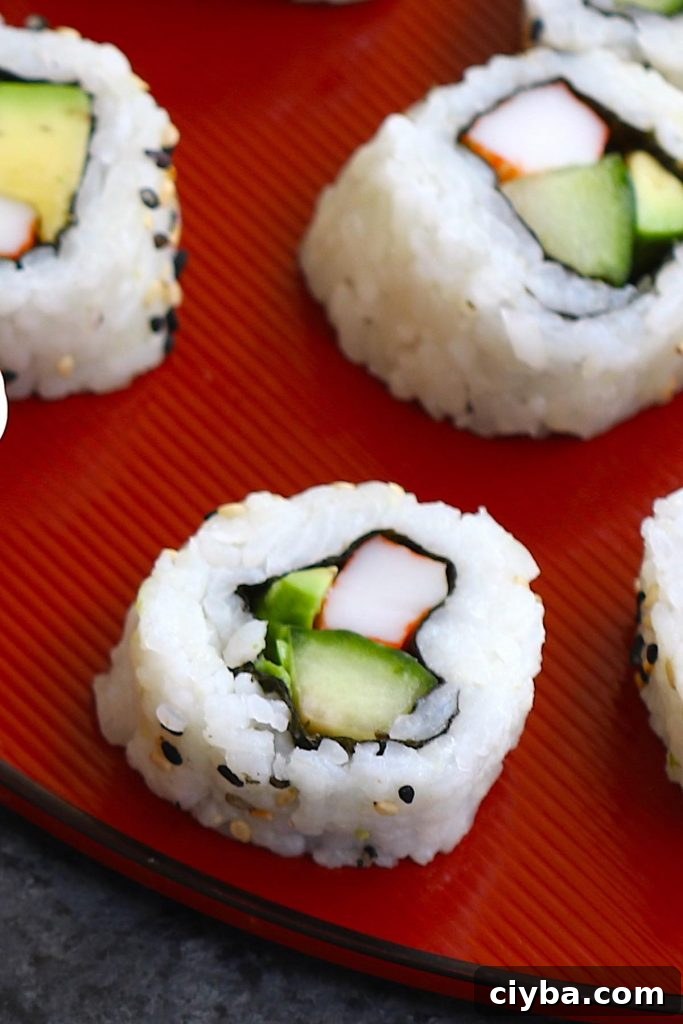
Chances are you’ve eaten kanikama without realizing it. These are the faux crab sticks often found in California rolls. Known as imitation crab, kanikama is made from surimi, a paste produced by deboning and mincing white fish, then seasoning, coloring and reshaping it into flakes, sticks or chunks.
Most kanikama contains little to no actual crab, though some products include tiny amounts of crab extract for flavor. Pollock is the most common fish used to make surimi. The modern version of imitation crab was first produced and patented in Japan in the 1970s.
What does kanikama taste like?
Kanikama is formulated to mimic cooked crab: it’s mild, slightly sweet and low in fat. Its texture and seasoning are designed to resemble real crab meat, making it a versatile, affordable substitute in many dishes.
Nutrition value
Calorie-wise, kanikama and real crab are similar—about 80 calories per 3 oz serving in many comparisons—but their macronutrient profiles differ. A large portion of kanikama’s calories come from carbohydrates, while real crab is higher in protein. As a result, real crab is generally a better choice for low-carb or ketogenic diets.
Imitation crab also tends to contain less protein, fewer omega-3 fats and lower levels of vitamins and minerals such as zinc and selenium compared with real crab. While kanikama is typically low in fat and cholesterol, its processing and added ingredients make it a less nutrient-dense option overall.
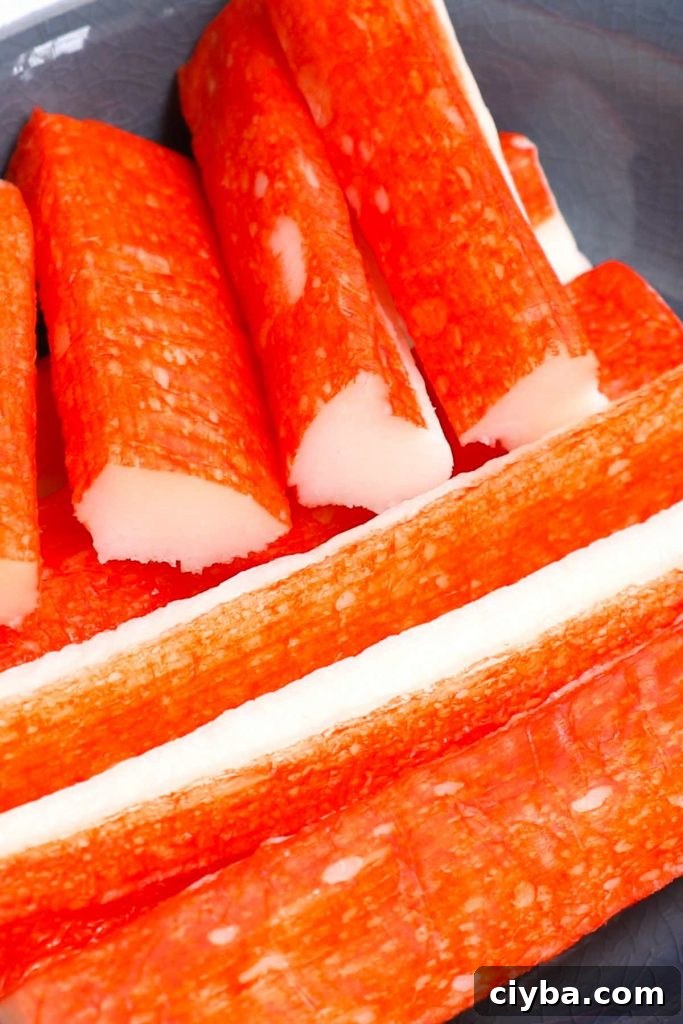
What is Kanikama made of?
The base of kanikama is surimi, usually produced from inexpensive whitefish such as Alaskan pollock. Manufacturers add starches, sugars, egg whites, flavorings and binders, and often use red food coloring to simulate the appearance of crab meat.
In many countries, kanikama is available in refrigerated or frozen sections of Asian and Japanese grocery stores as well as mainstream supermarkets.
Types of imitation crab
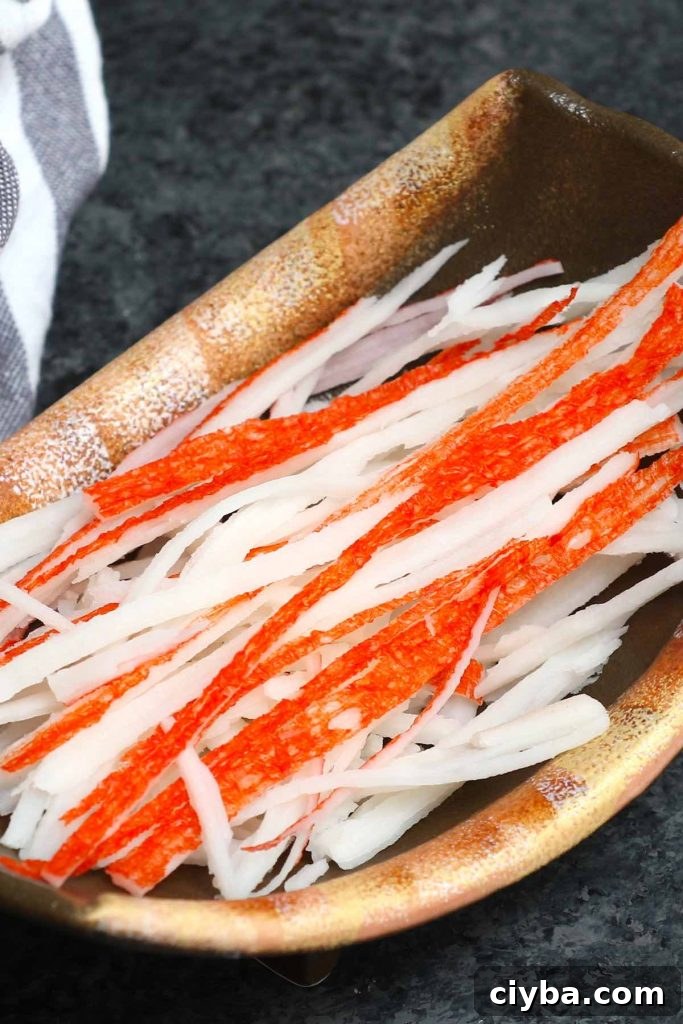
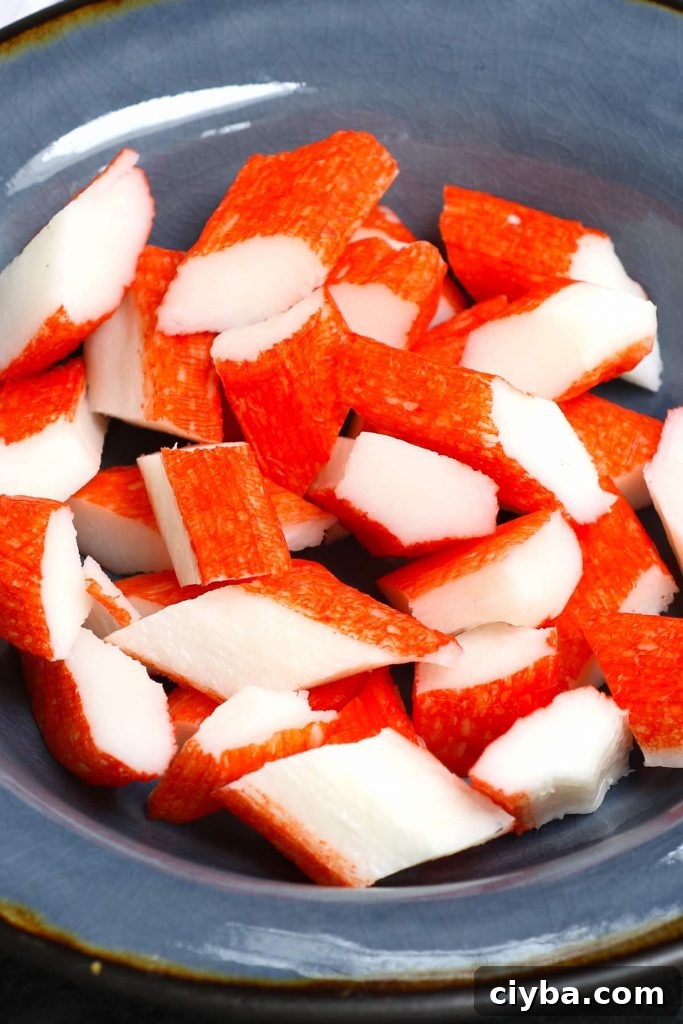
Kanikama is precooked and ready to eat straight from the package. Common formats include:
- Crab sticks – long, leg-style pieces with red-tinted edges. Widely used in sushi rolls and wraps.
- Shredded – convenient for salads, crab cakes or tacos.
- Flakes or chunks – used in chowders, stir-fries, quesadillas or as a pizza topping.
Cooking tips
Kanikama is best enjoyed without additional cooking: overheating can soften its texture and reduce flavor. It’s ideal for sushi, especially California rolls and nigiri, but it can be added near the end of cooking to warm through in hot dishes without breaking down.
Frequently asked questions:
Is kanikama raw?
No. Kanikama is cooked—usually steamed or pasteurized—during production and is sold fully cooked, ready to eat.
Is kanikama bad for you?
Kanikama is a processed food and contains additives and binders that reduce its nutritional value compared with whole seafood. It can be a budget-friendly substitute for real crab, but it’s wise to limit processed foods in your diet and check ingredient lists when possible.
Is kanikama gluten-free?
Not usually. Many imitation crab products contain wheat starch or other gluten-containing binders, so they are generally not gluten-free unless specifically labeled as such.
How to store it?
Vacuum-sealed, pasteurized kanikama can keep for several weeks in the refrigerator. Once opened, use within a few days. For longer storage, freeze kanikama; it will keep for several months in the freezer.
Some popular recipes using kanikama:
- California Roll
- Crab stick cabbage wraps
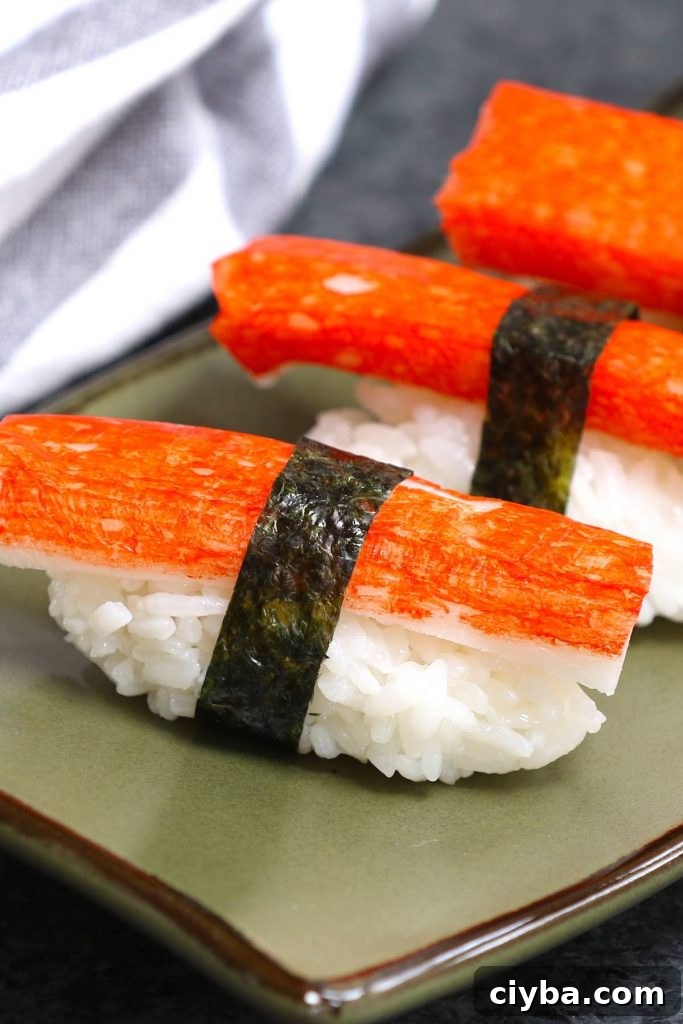
- Kanikama sushi (nigiri or rolls)
- Imitation crab salad
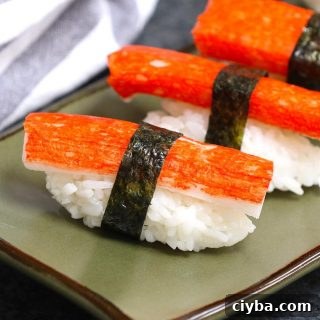
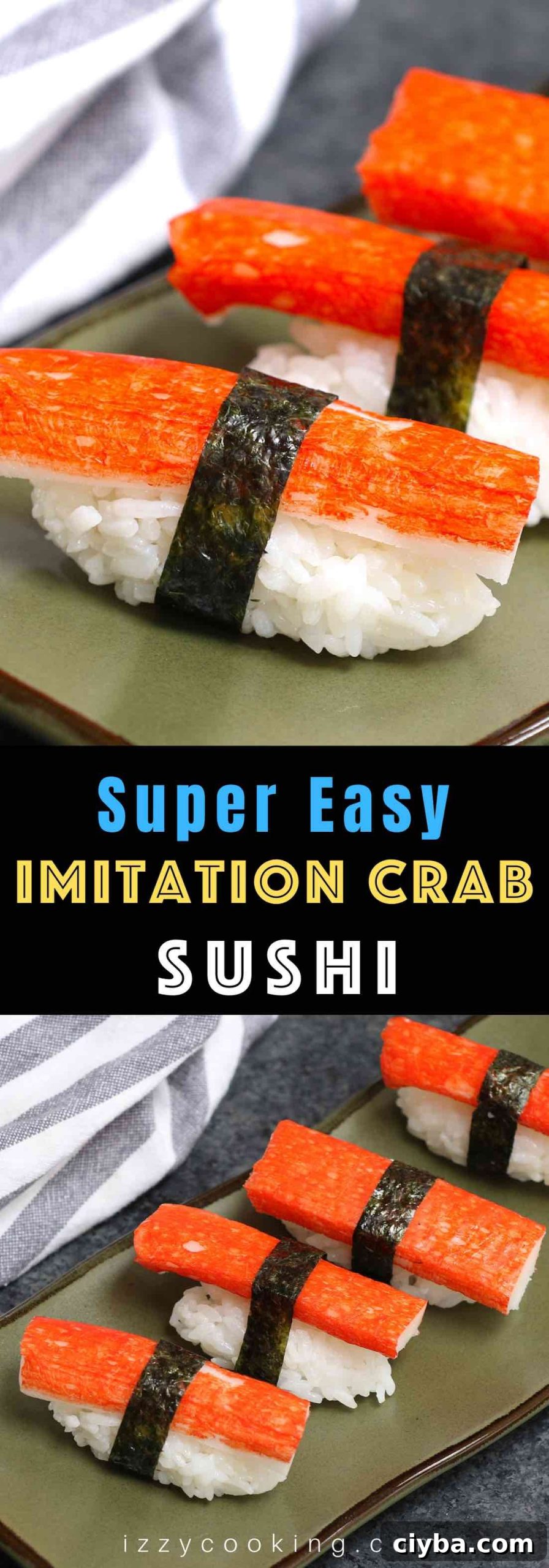
Kanikama Sushi (Nigiri)
Rate Recipe
Print Recipe
Ingredients
For Sushi Rice
- 1 cup sushi rice (short-grain)
- 1 cup water
- 1 ½ tablespoons sushi vinegar (or 1 tbsp rice vinegar + ½ tbsp sugar + ½ tsp salt)
For Kanikama Sushi
- 8 kanikama sticks
- 1 sheet nori (seaweed)
Instructions
-
Cook sushi rice: Rinse the rice, cook with the measured water, then transfer to a bowl and cool slightly. While still warm, fold in sushi vinegar (or the rice vinegar, sugar and salt mixture).
-
Shape the rice: Take about 3/4 handful of rice and form into a small oval (about 1½ inches). Gently squeeze and flatten the bottom. Wet your hands with vinegar water to prevent sticking.
-
Prepare kanikama: Cut each stick into roughly 2-inch pieces.
-
Assemble nigiri: Place a kanikama piece on the rice and press gently so it adheres. For extra hold, add a dab of wasabi between the rice and kanikama if desired.
-
Cut nori into 1/4-inch strips and wrap around the nigiri to secure the kanikama. Arrange on a plate and serve.
Nutrition
Nutrition information is an estimate and will vary based on ingredients and preparation.
Like this recipe? Rate and comment below!