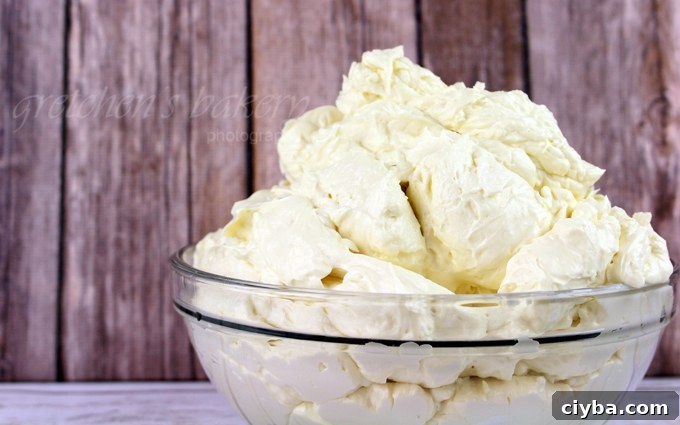
You may have heard that Italian Meringue Buttercream is the best in terms of strength, stability and taste.
That’s true. Cooking a sugar syrup to 240°F and pouring the hot syrup into a vigorously whipped meringue creates an incredibly glossy, stable Italian meringue buttercream. When made with aquafaba, this method yields a stiff, shiny, vegan buttercream that holds piping details and smooth finishes exceptionally well.
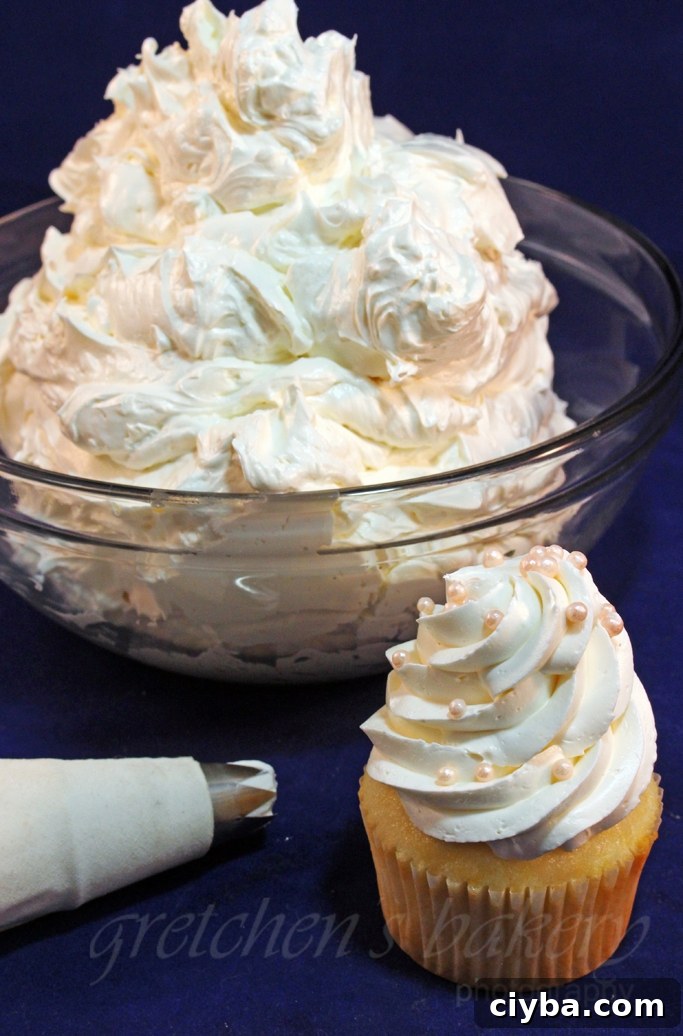
Balanced sweetness and great texture
This recipe produces a buttercream with a balanced sweetness that many find perfect. If you prefer it sweeter, you can increase the confectioners’ sugar to taste, but most people appreciate the milder finish of this version.
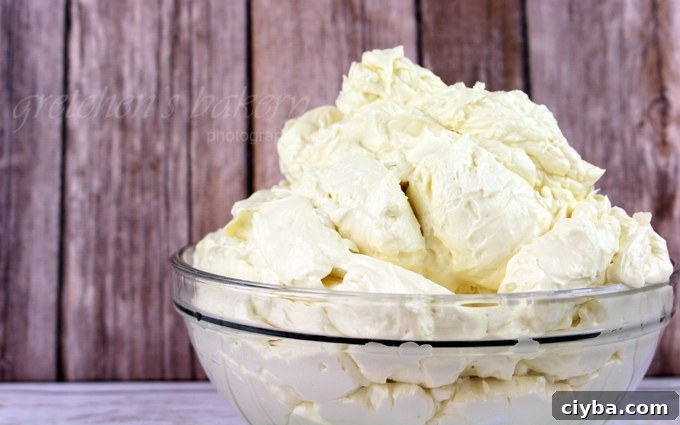
Stable, forgiving aquafaba meringue
Aquafaba meringues can sometimes break or curdle when combined into buttercream, but using an Italian method—where a hot sugar syrup is cooked to the proper temperature before adding to the aquafaba—produces an ultra-stable meringue that is much more forgiving and less prone to separation.
Choosing the right buttercream for your project
If you’re deciding between buttercream styles for a particular project, consider stability needs, taste preference, and the environment where the cake will be displayed. Italian meringue buttercream is usually the best balance of taste and performance for delicate piping, smooth finishes, and cakes that need to hold up well.
Watch the full video tutorial to see the technique and timing demonstrated step-by-step.

This website may contain affiliate links. If you click a qualifying link and make a purchase, the site owner may earn a small commission at no extra cost to you.
Notes for Success
An instant-read thermometer or candy thermometer is essential to cook the sugar syrup precisely to 240°F. Accurate temperature is the key to forming a stable Italian meringue.
If you boil your own beans instead of using canned aquafaba: rinse the beans, then soak 2 cups of dried chickpeas in 4–5 cups of filtered water for at least 12 hours, preferably overnight. Drain and rinse, then cover the hydrated beans with fresh filtered water and simmer until fork-tender (about 35–45 minutes). You should yield about 2–3 cups of aquafaba. Cool to room temperature, then refrigerate for up to one week or freeze for up to two months.
If the aquafaba seems thin, reduce it by simmering until it thickens and concentrates. The more concentrated the aquafaba, the firmer and stronger the resulting meringue will be.
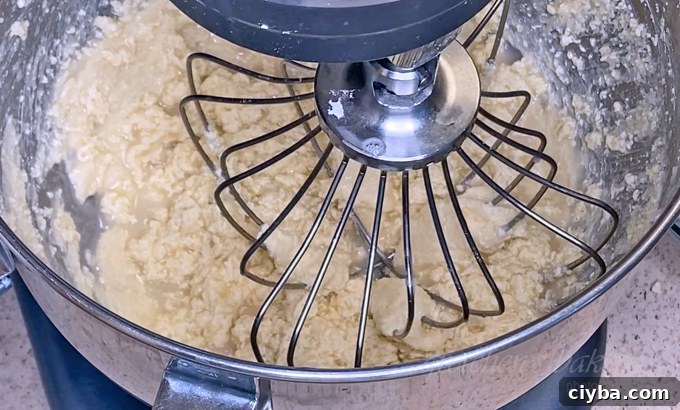
Curdled or “broken” buttercream usually results from an imbalance of moisture in the emulsion. Using a stable Italian meringue and properly softened butter helps prevent separation. If a buttercream does break, it can often be rescued—techniques for re-emulsifying a curdled buttercream can restore texture and stability.
Let’s Talk About Vegan Butter
Low moisture content in vegan butter is crucial for success with any buttercream. I prefer a vegan butter with low water content because it creates a firmer, more stable finish. Some brands firm up when refrigerated; that extra firmness is useful for assembling and transporting cakes.
Do some trials with different vegan butters to find the one with the lowest moisture content for your climate and needs. Unfortunately, moisture content is usually not listed on product labels, so testing is necessary.
Adding a small amount of butter flavor or emulsion can enhance the flavor, since many vegan butters are mild. Use sparingly—too much extract can create an artificial or off taste.

Since developing this recipe in 2017, I now often skip shortening entirely. Shortening can add heat tolerance for display in hot conditions or during long transports, but many bakers will find a butter-only vegan version works beautifully for most situations. If you do need extra stability, use a hi-ratio cake shortening formulated for buttercreams.
Vegan Italian Meringue Buttercream
Ingredients
- Aquafaba — 1½ cups (355 ml)
- Granulated sugar — 1 cup (200 g)
- Water — 1/3 cup (60 ml)
- Cream of tartar — ½ teaspoon
- Softened vegan butter — 4 sticks (454 g)
- Confectioners’ sugar — 2 cups (240 g), or adjust to taste
- Vanilla extract — 2 teaspoons (10 ml)
- Butter extract (optional) — 1 teaspoon (5 ml)
Instructions
- Reduce the aquafaba: bring 1½ cups to a boil, then simmer about 20 minutes until reduced to about ¾–1 cup. Chill until cold and slightly gelatinous.
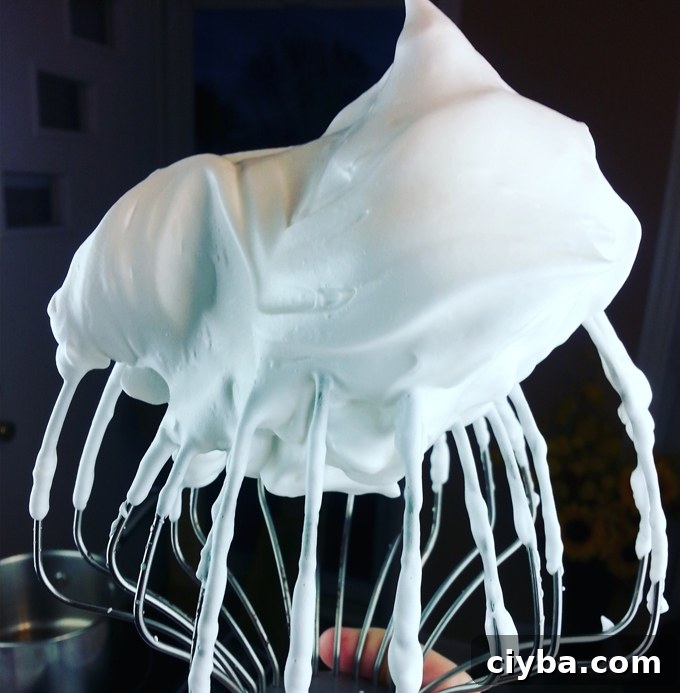
- Begin whipping the chilled aquafaba with cream of tartar on medium-high speed using a balloon whisk attachment. It should approach stiff peaks as you work.
- While whipping, prepare the sugar syrup: combine water and granulated sugar in a heavy-bottomed saucepan and bring to a boil. Do not stir once it boils to avoid crystallization.
- Attach a candy thermometer and cook the syrup to 240°F (soft-ball stage). This should take about 10–15 minutes, roughly the same time the aquafaba reaches stiff peaks.
- With the mixer running, slowly pour the hot sugar syrup into the whipping aquafaba in a thin, steady stream. Continue whipping to cool and stabilize the meringue. Placing a bowl of ice water under the mixer bowl helps speed cooling.
- Once the meringue is cooled, add sifted confectioners’ sugar and whip until smooth.
- Add the softened vegan butter only when the meringue has cooled below 100°F. Whip until fully incorporated and silky. Finish by adding vanilla and, if using, a small amount of butter extract to taste.
Notes
Store buttercream at room temperature in an airtight container for up to 3 days. For longer storage, refrigerate and rewhip before use. Cold buttercream can be returned to a spreadable consistency by bringing to room temperature and whipping briefly.
Let us know how it turned out!