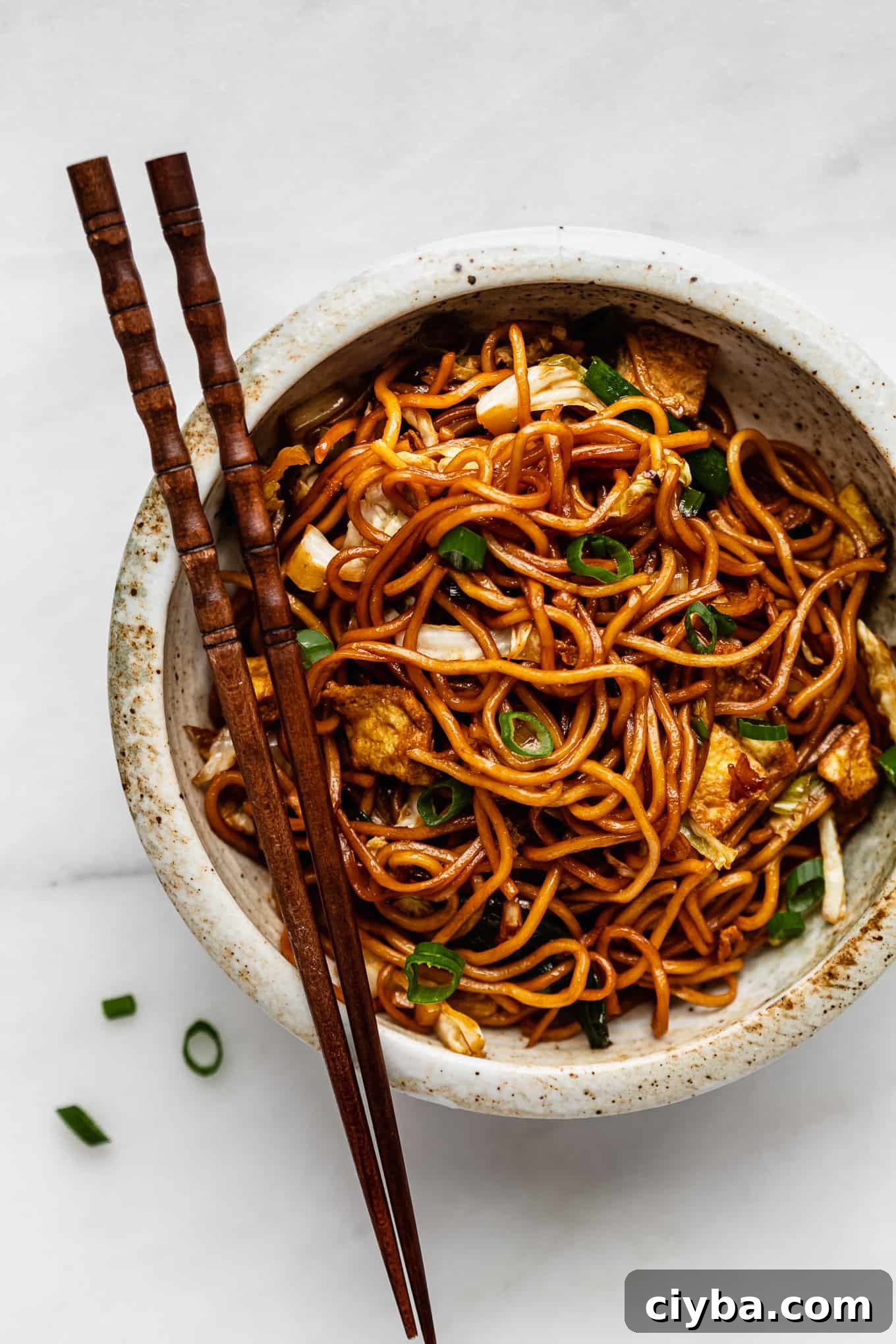
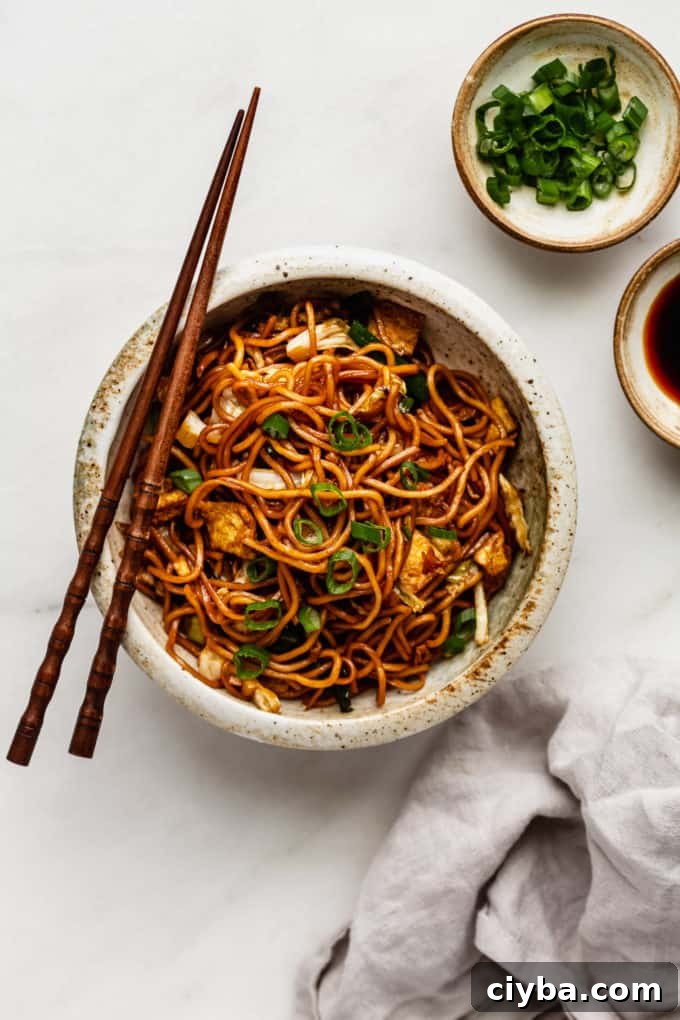
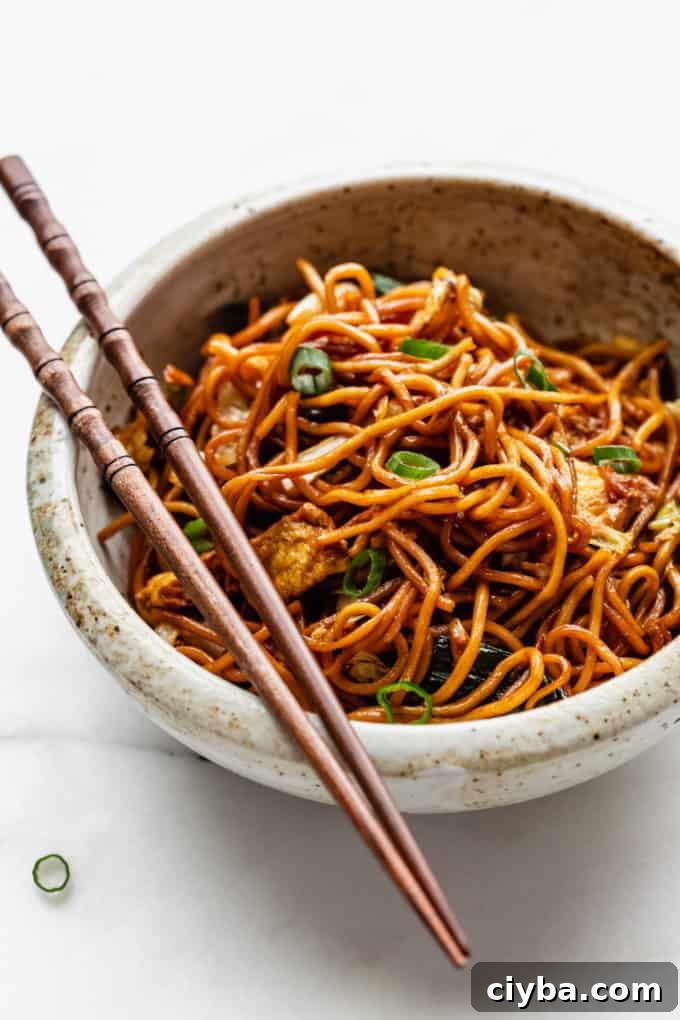
Mie Goreng is a classic Indonesian fried noodle dish commonly found as street food across the country. Quick to prepare and full of satisfying sweet-savory flavor, it makes an ideal weeknight dinner that’s on the table in about 15 minutes.
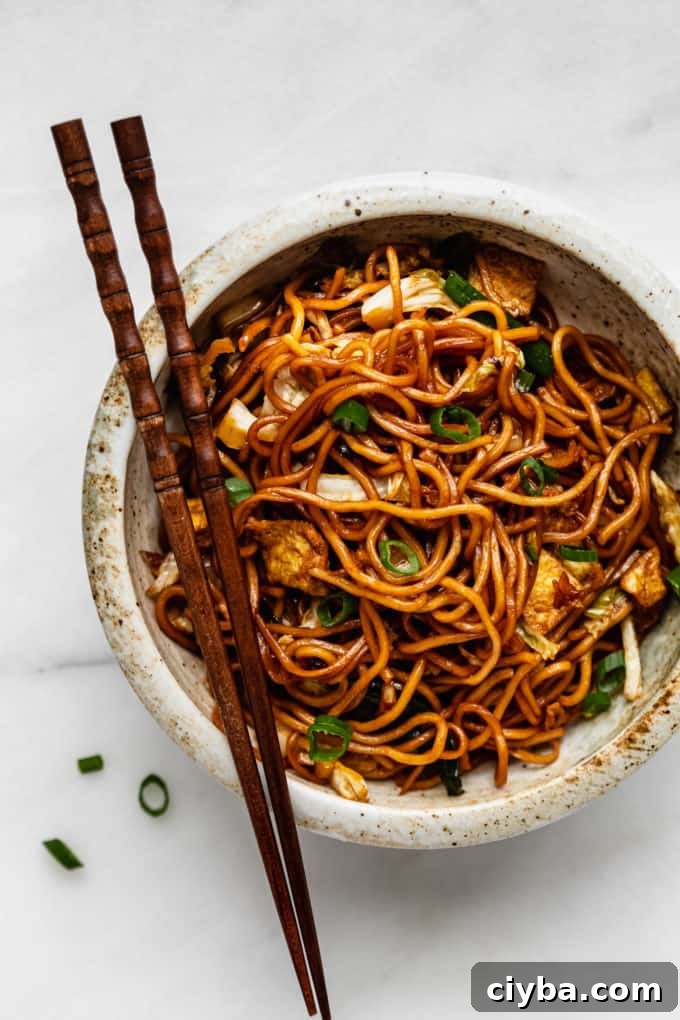
What is Mie Goreng?
If you enjoy noodles that balance sweet, salty and savory notes, Mie Goreng will likely become a favorite. This Indonesian stir-fry uses yellow wheat noodles—often egg noodles or ramen—combined with cabbage, aromatics, egg, and a simple sauce to deliver a richly flavored, satisfying meal. The name “Mie Goreng” literally means “fried noodles.” While similar dishes exist in neighboring countries, Indonesian Mie Goreng has its own distinct profile and is traditionally served by street vendors as well as restaurants.
This version keeps things vegetarian by focusing on vegetables and egg, but the recipe is easy to adapt—add shrimp, chicken, tofu, or tempeh for extra protein if you prefer.
Why you’ll love this Mie Goreng recipe
- Fast and simple: Made in one pan in about 15 minutes, perfect for busy evenings.
- Customizable: Swap in your favorite vegetables or proteins—tofu, tempeh, shrimp, or chicken all work well.
- Better than takeout: Homemade Mie Goreng is cheaper, fresher, and you control the ingredients and seasoning.
What noodles are best for Mie Goreng?
Traditional Mie Goreng uses yellow wheat noodles similar to chow mein or lo mein noodles. That said, many noodle types work well depending on what you have:
- Chow mein/egg noodles: Closest to the classic texture and flavor.
- Instant ramen: Convenient and widely available; cook and drain before stir-frying.
- Spaghetti: A pantry-friendly substitute if no Asian noodles are on hand.
- Rice noodles: A gluten-free option—soak or cook according to package directions before tossing into the pan.
Ingredients for Mie Goreng
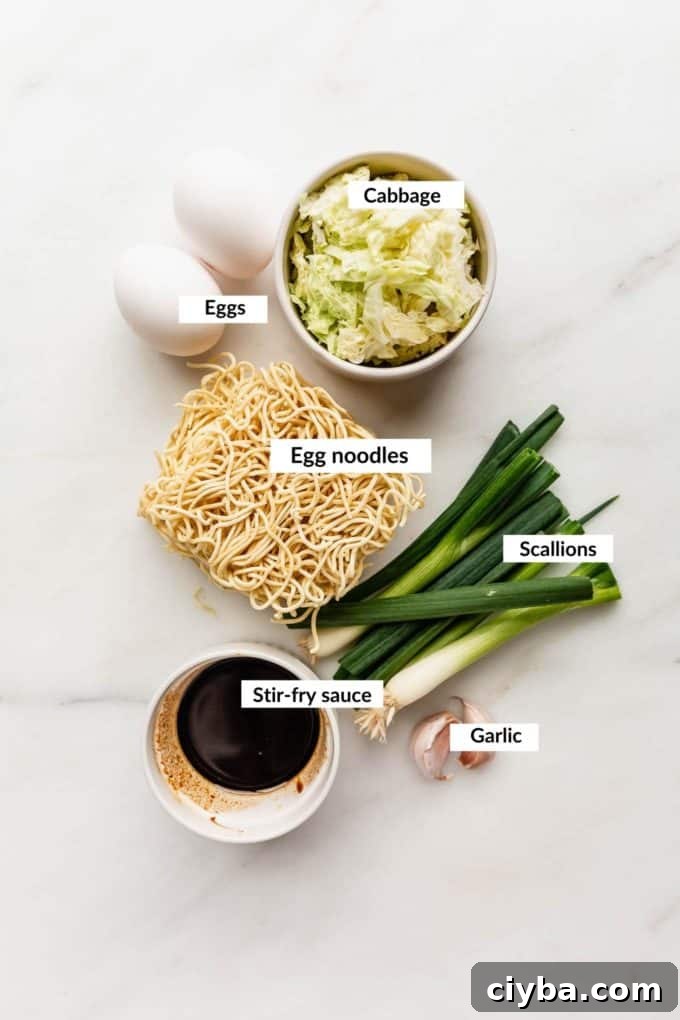
- Noodles: 400 grams egg noodles, ramen, or your preferred variety, cooked and drained.
- Scallions/green onions: Chopped, to add a mild onion flavor.
- Garlic: Fresh and chopped—essential for authentic flavor.
- Cabbage: Thinly sliced green or Napa cabbage adds crunch and body.
- Egg: Optional but traditional; cooked as a thin omelette and cut into strips.
- Stir-fry sauce: A blend of Kecap Manis (sweet soy sauce) or a substitute, soy sauce, ketchup, vegetarian oyster sauce, sesame oil, and a touch of chili like sriracha.
Substitute for Kecap Manis (Indonesian sweet soy sauce)
Kecap Manis is a thick, dark, slightly sweet soy sauce made with palm sugar, which gives Mie Goreng its signature sweetness and color. If you can’t find it, use one of these simple substitutes mixed together to approximate the flavor and texture:
- Equal parts dark soy sauce and honey
- Equal parts regular soy sauce and brown sugar
- Hoisin sauce as a ready-made alternative
How to make Mie Goreng (step-by-step)
Step 1 — Prepare the egg
Whisk 2 eggs in a bowl. Heat 1 tablespoon oil in a skillet over medium-high heat, pour in the eggs and tilt the pan so the mixture spreads into a thin omelette. Cook 1–2 minutes per side. Remove and slice into thin strips.
Step 2 — Sauté aromatics and vegetables
Heat the remaining oil, add chopped scallions, sliced cabbage and minced garlic. Sauté for about 2 minutes until the cabbage softens but still retains some bite.
Step 3 — Combine noodles and sauce
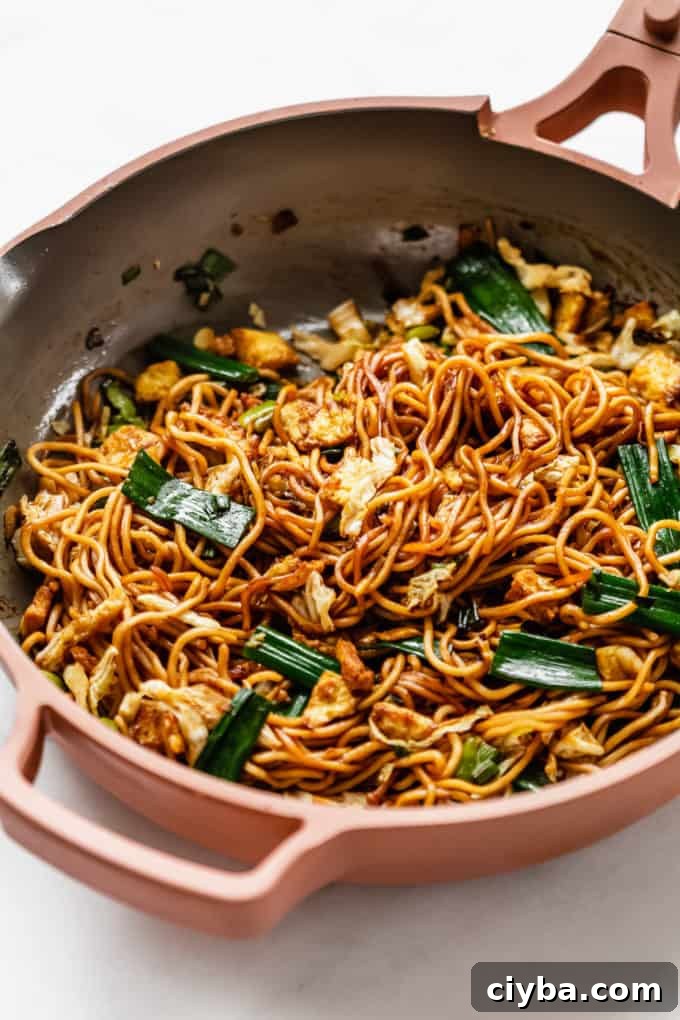
Add the cooked noodles and the sliced omelette to the pan. Pour in the prepared stir-fry sauce and toss everything together over medium-high heat until the noodles are evenly coated and heated through.
Step 4 — Serve
Serve immediately, garnished with extra scallions, sliced chili, or a squeeze of lime if you like a brighter finish. Mie Goreng is best eaten fresh to preserve texture and flavor.
Optional add-ins
Mie Goreng is highly adaptable. Add any of the following to tailor the dish to your tastes:
Vegetables
- Bean sprouts
- Carrots (julienned)
- Bell pepper
- Mushrooms
- Chinese broccoli or bok choy
- Tomato (for a touch of acidity)
Protein
- Tofu or tempeh (fried or pan-seared)
- Shrimp/prawns
- Chicken, beef, or pork (thinly sliced)
How to store and reheat
Store: Refrigerate leftovers in an airtight container for up to 3 days. This dish doesn’t freeze well because of the noodle texture.
Reheat: Reheat in a pan over medium heat, tossing to separate the noodles and adding a splash of water or oil if they stick. Microwaving works in a pinch—stir halfway through and add a little water to loosen the noodles.
Tips for perfect Mie Goreng
- Mix the sauce ahead: Combine all sauce ingredients before stir-frying so the flavors distribute evenly.
- Use a wok if you have one: A hot wok yields a slight char and better texture, but a large skillet works fine too.
- Cook proteins first: If adding meat or firm tofu, cook it before the vegetables so everything finishes evenly.
- Serve immediately: Stir-fried noodles are best right off the stove when they’re still glossy and separate.
Mie Goreng FAQ
Mie Goreng balances sweet, salty and savory flavors with mild spice if you add chili. The sweet soy base gives it a distinctive, slightly caramelized taste.
Homemade Mie Goreng can be a healthy, balanced meal when you control the oil and sugar levels and add plenty of vegetables and lean protein.
Mie Goreng originated in Indonesia and is enjoyed across Southeast Asia in many variations.
More delicious noodle recipes to try
- Yaki Udon
- Ramen Noodle Stir Fry
- Peanut Butter Noodles
- Thai Drunken Noodles
- Teriyaki Noodles
- Sesame Ginger Noodles
If you make this Mie Goreng recipe, try different vegetables and proteins to suit your taste. It’s a flexible, fast, and flavorful meal that’s easy to adapt and enjoy any night of the week.