
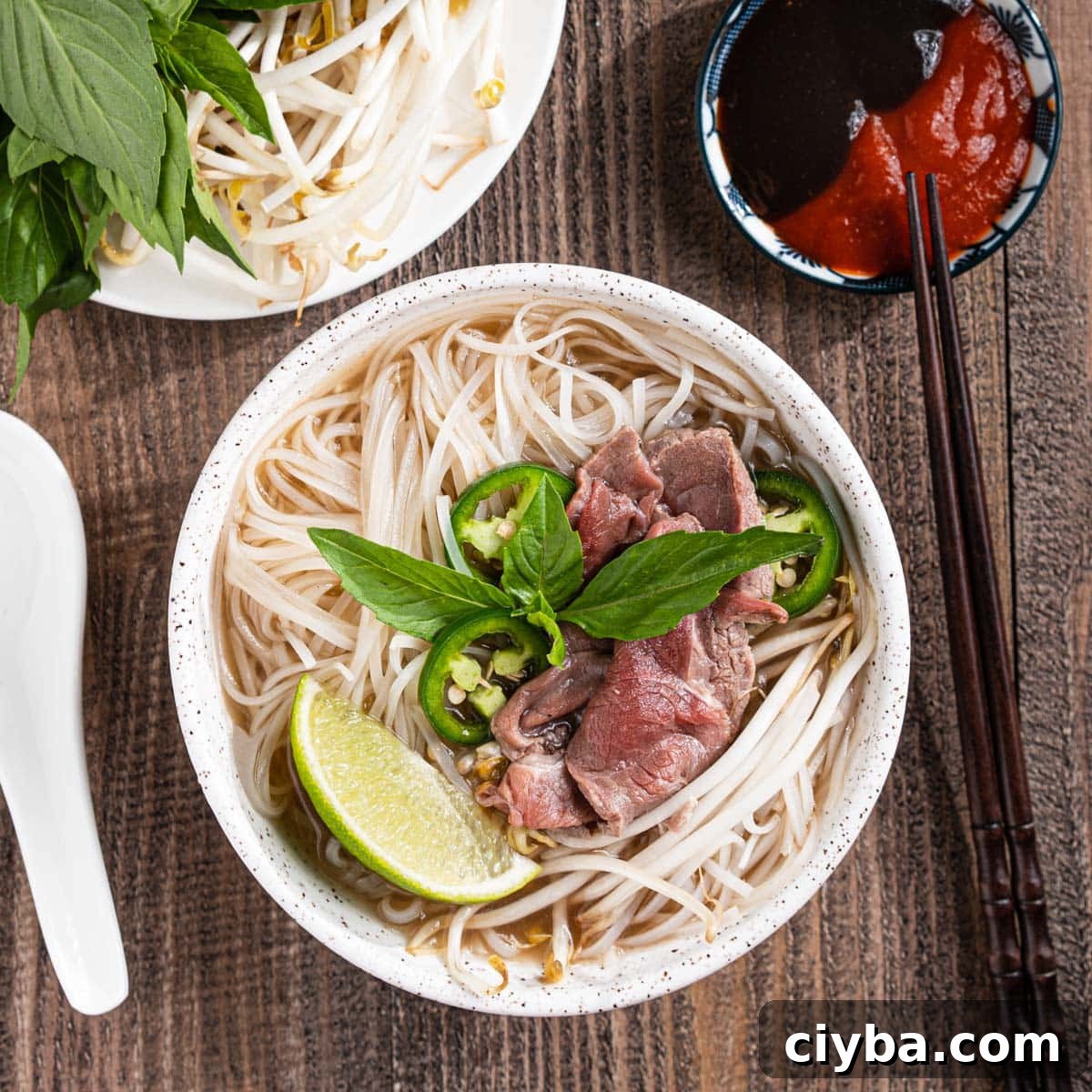
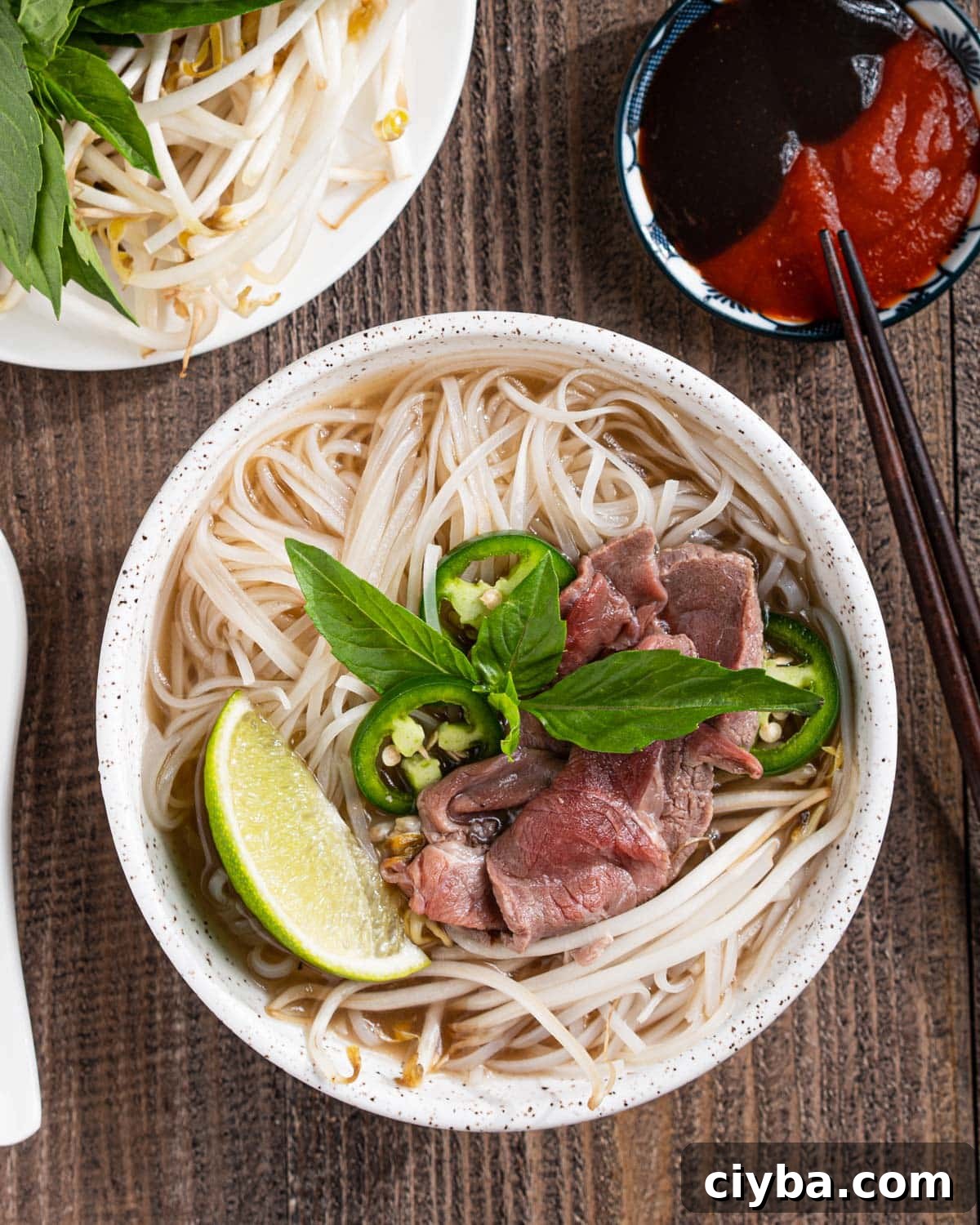
When I want a comforting bowl of Vietnamese noodle soup at home, pho tai is my go-to. The broth is clear yet deeply savory, the rice noodles are soft and silky, and the paper-thin slices of beef cook gently when hot broth is poured over them.
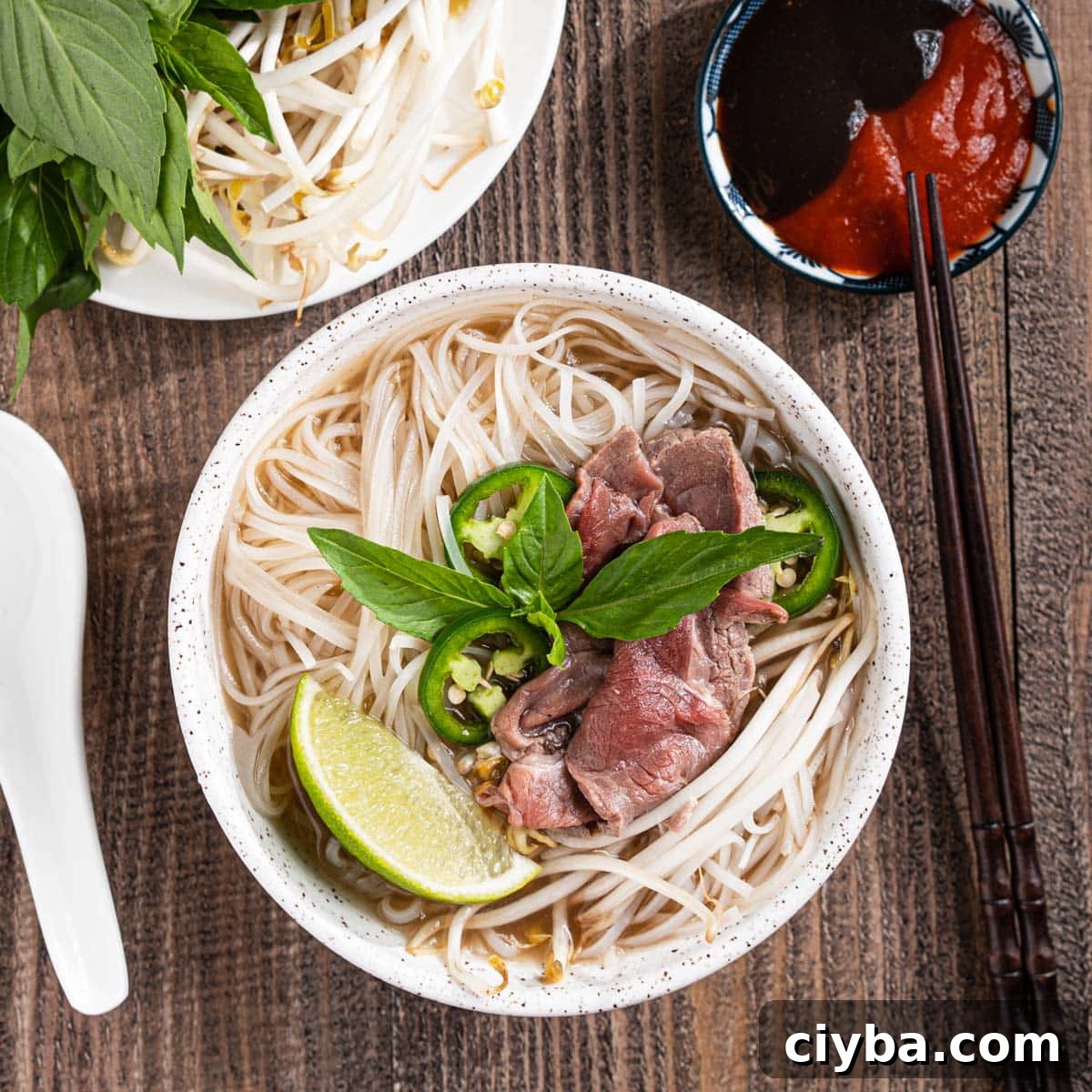
Growing up, my mother made this soup whenever someone was under the weather. It showed up for colds, tired days, or any moment we needed something warm and restorative. Over the years I’ve made this version countless times, and it’s still the one I return to for reliable, homey flavor.
This article explains the full process—from toasting the spices and charring the aromatics to simmering and assembling—so you understand what goes into the bowl and why each step matters.
What is Pho Tai?
Pho tai is a Vietnamese beef noodle soup built on a fragrant beef broth, flat rice noodles (bánh phở), and very thin slices of raw beef that cook when hot broth is poured over them. Compared with versions that include meatballs or mixed cuts, pho tai is lighter and simpler, allowing the broth to be the star.
Why This Pho Tai Works
This recipe prioritizes balance. The broth is clean and savory without being heavy. Seasoning is restrained so the aromatics and spices can shine. Slicing the beef paper-thin keeps it tender because it cooks in the bowl from the hot broth rather than being boiled.
It’s also practical: the broth freezes well and reheats without losing its clarity, so you can make it ahead and enjoy restaurant-quality pho on weeknights.
Toasting the Spices & Charring the Aromatics
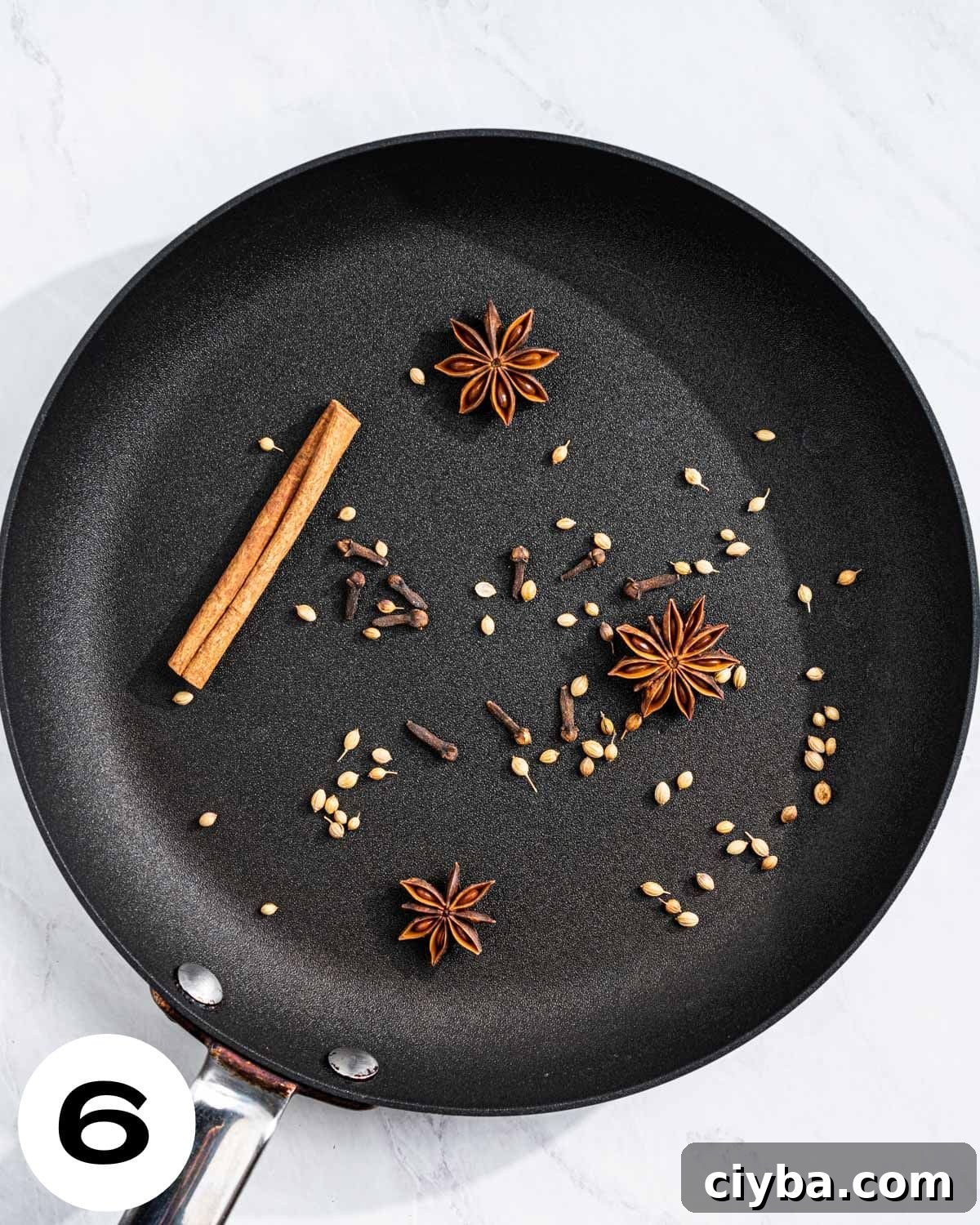
These two steps create the broth’s depth. Toasting whole spices—star anise, cinnamon, cloves, coriander—over low heat releases their essential oils and amplifies aroma. Take care not to burn them; a couple of minutes over gentle heat is enough.
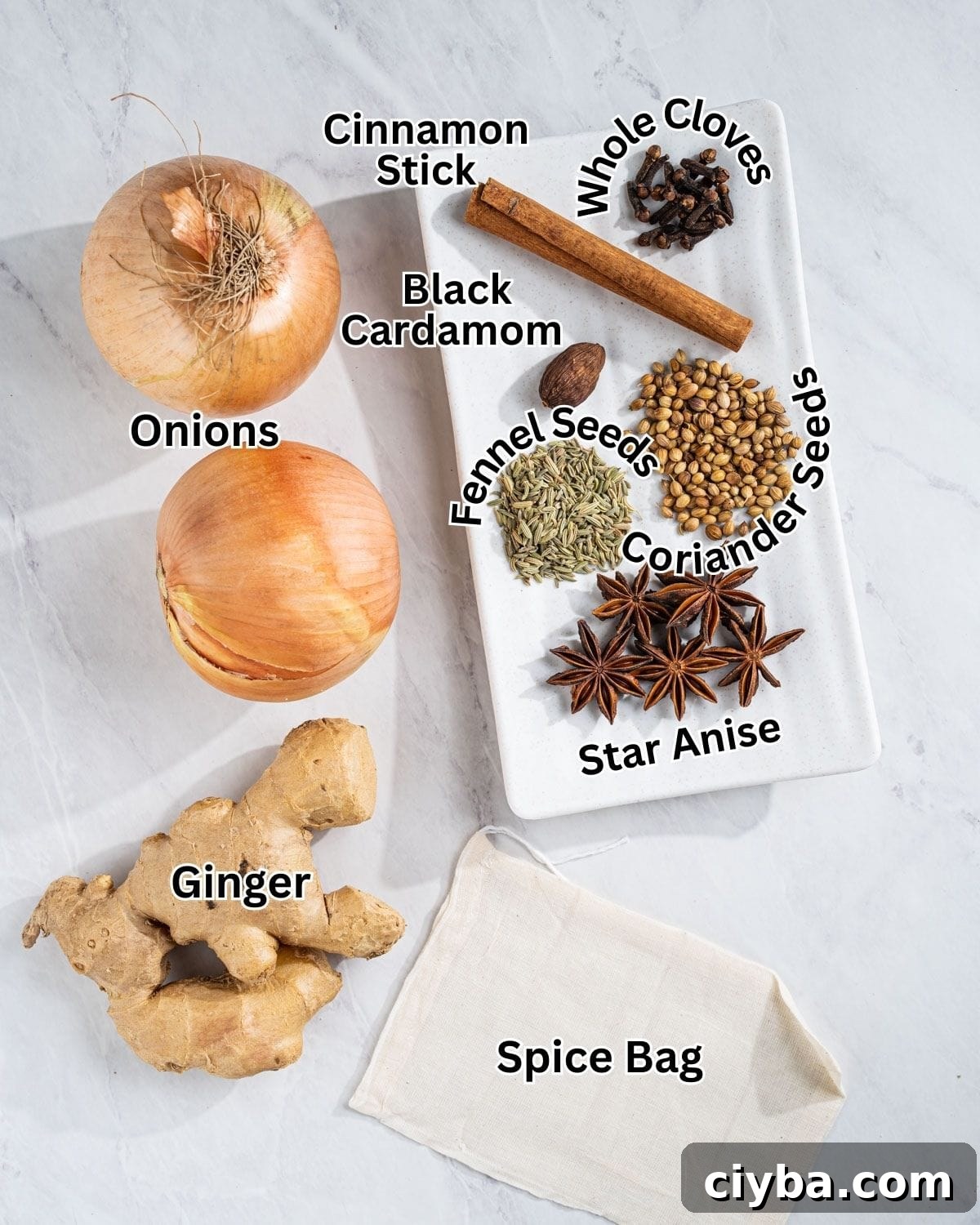
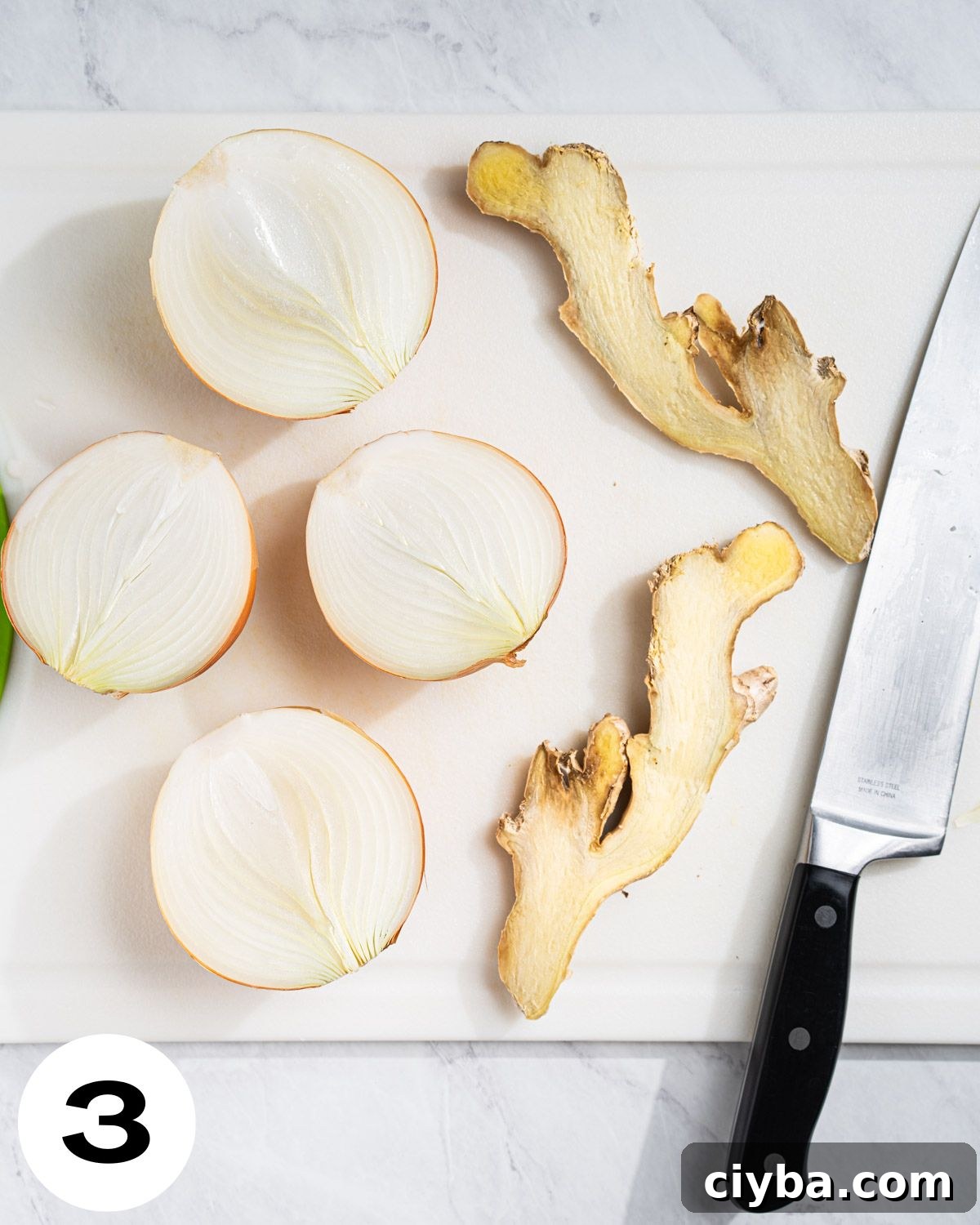
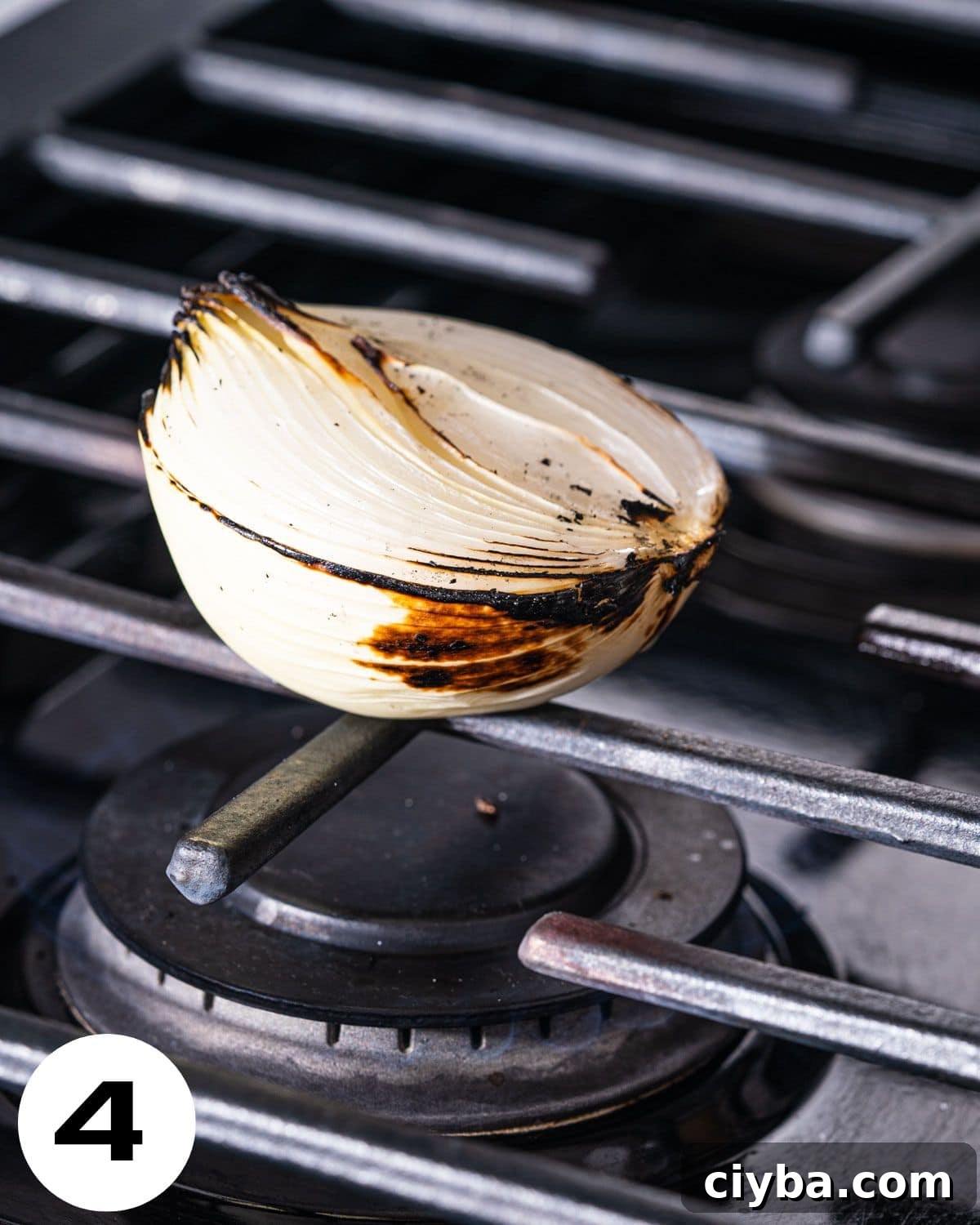
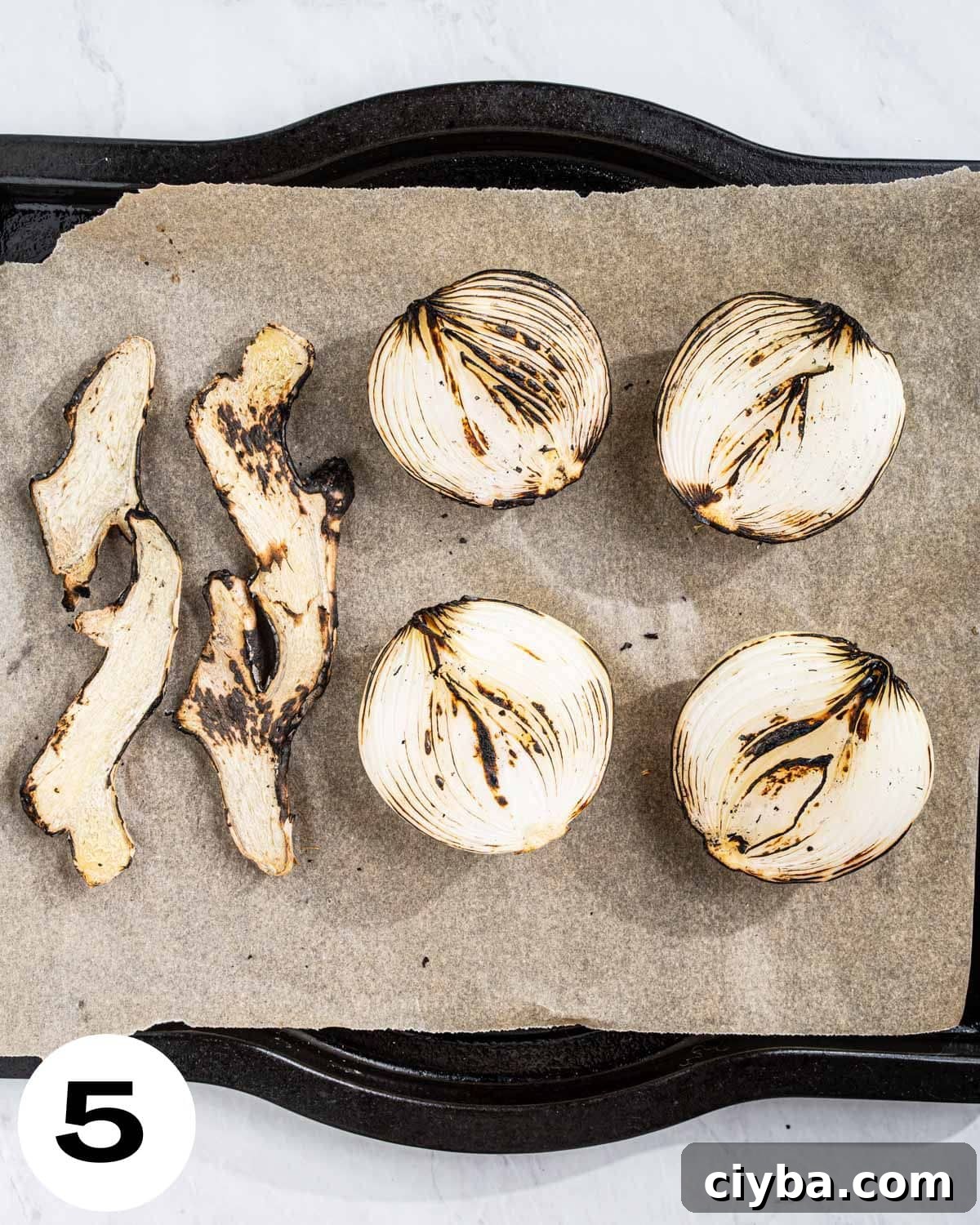
Charring the onion and ginger adds sweetness and a subtle smokiness. Do this directly over a gas flame or under the broiler until the surfaces are blistered and dark in places—those charred bits contribute a major portion of the broth’s complexity. Using a spice bag or tea infuser keeps the spices contained so the broth stays clear and cleanup is easier.
Choosing the Right Bones and Beef
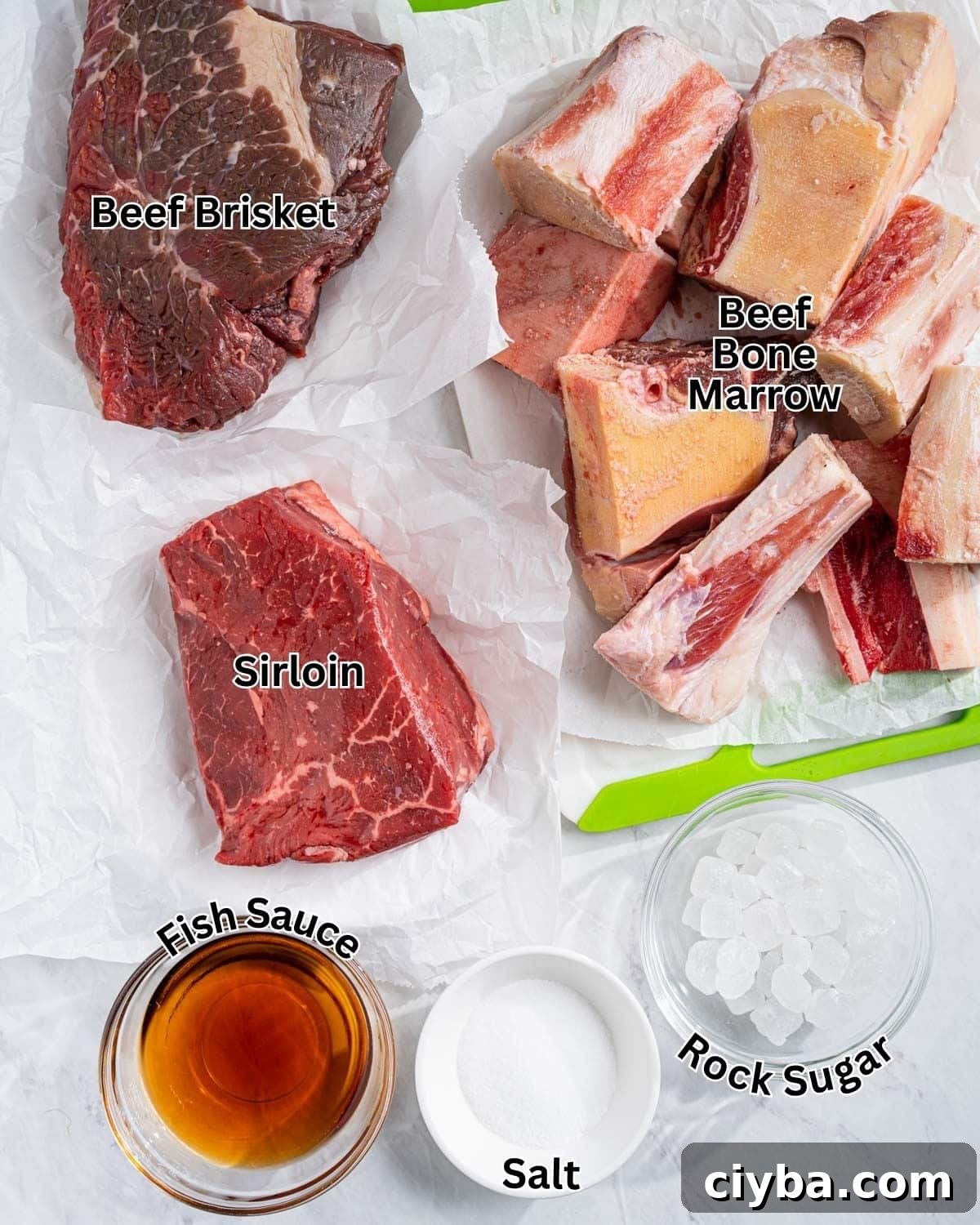
For a rich yet clear broth, use marrow or knuckle bones combined with a piece of brisket. The bones provide body and gelatin, while the brisket simmers until tender and becomes one of the toppings.
For the thinly sliced rare beef (tái), select sirloin or tenderloin. Partially freezing the meat for 20–30 minutes firms it up and makes it much easier to slice paper-thin against the grain.
How to Season Pho Broth
Pho broth benefits from restraint. The basic seasoning is fish sauce, rock sugar (or granulated sugar), and salt. Fish sauce adds umami depth, sugar balances savory notes, and salt ties everything together. Season lightly at first and adjust toward the end, because flavors concentrate as the broth reduces with simmering. Taste as you go to learn how the profile develops.
Pho Noodles: Fresh vs. Dried
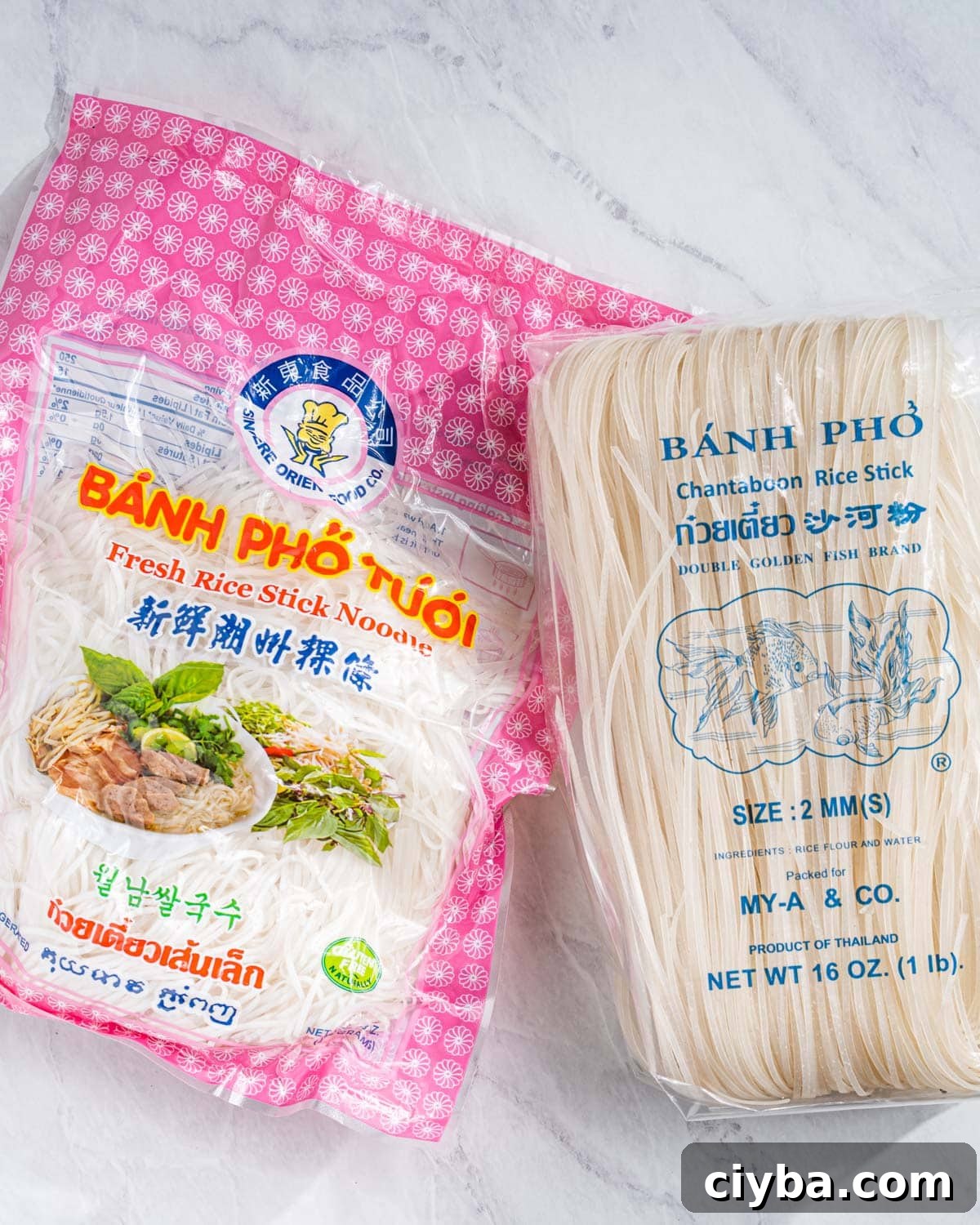
Fresh rice noodles cook almost instantly and are soft and tender after a quick blanch. Dried noodles require longer cooking but store more easily and still give excellent results. Follow package instructions for timing and rinse the noodles under cold water after cooking to stop them from sticking together.
Toppings & Garnishes
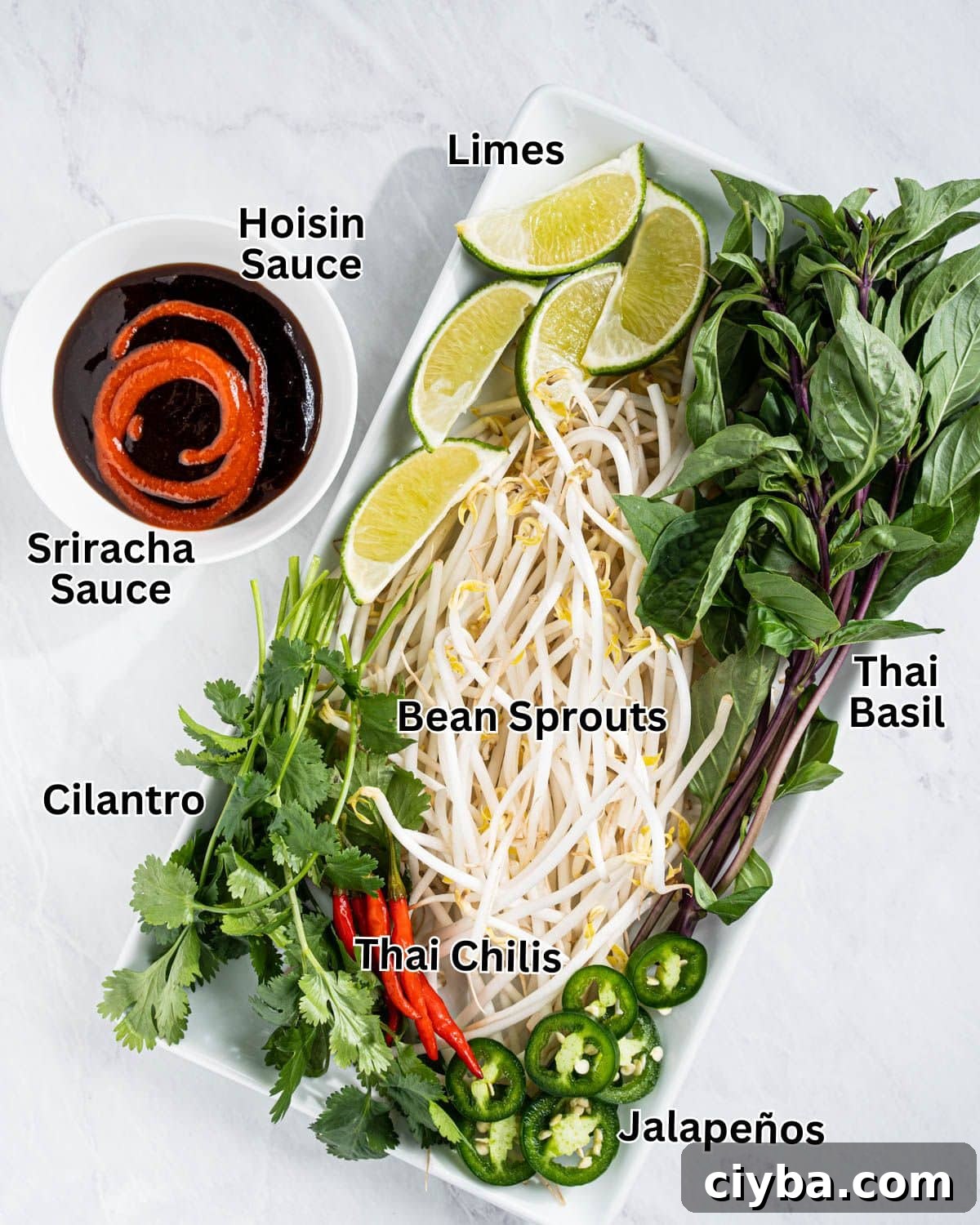
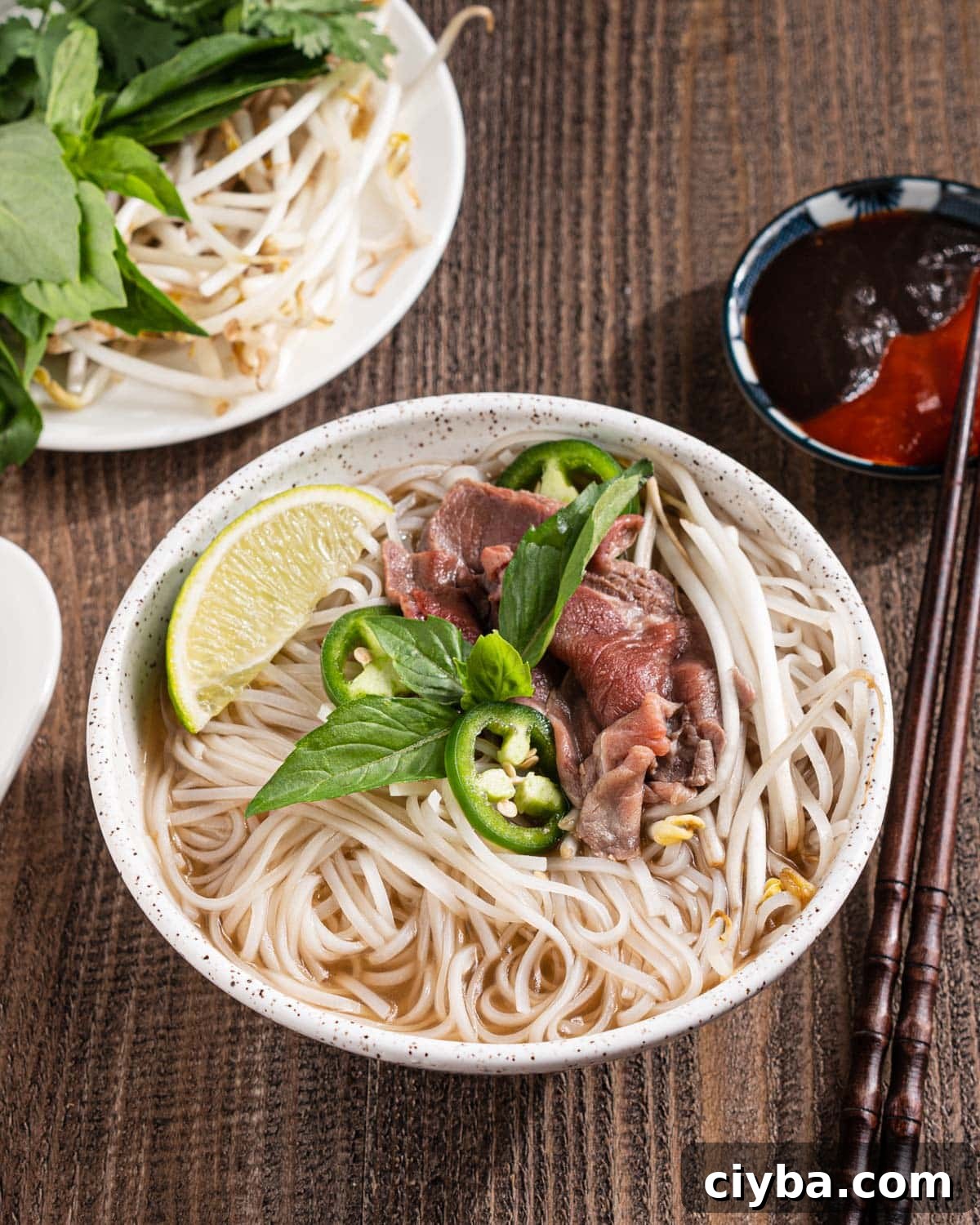
Toppings are flexible. Common accompaniments include bean sprouts, Thai basil, cilantro, lime wedges, and sliced jalapeños. Hoisin and sriracha can be served on the side; many people prefer dipping meat into them rather than stirring them into the broth. Use what you enjoy and omit what you don’t.
How to Make Pho Tai (Overview)
Please scroll ⬇️ to the recipe card for exact ingredient amounts and step-by-step instructions.
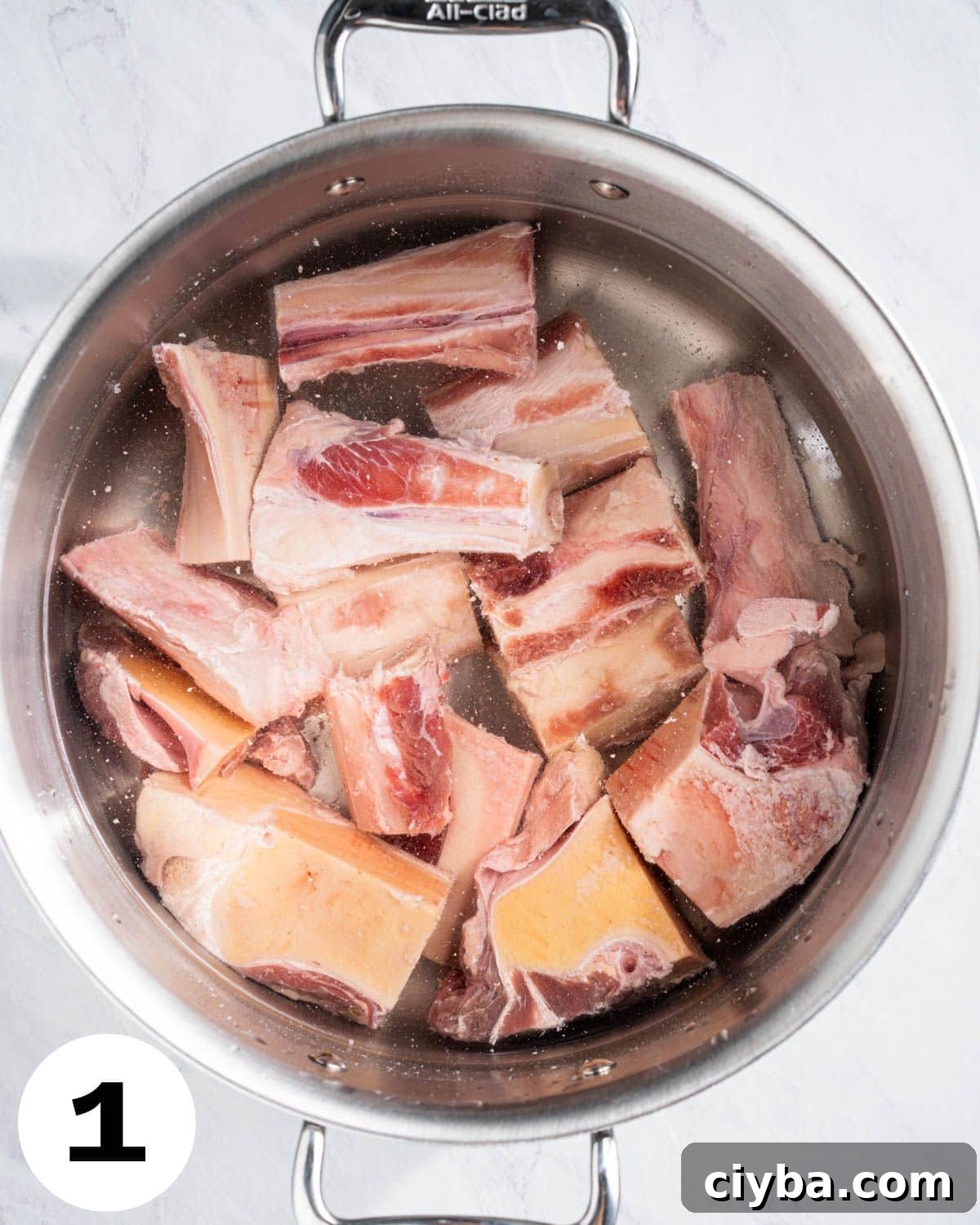
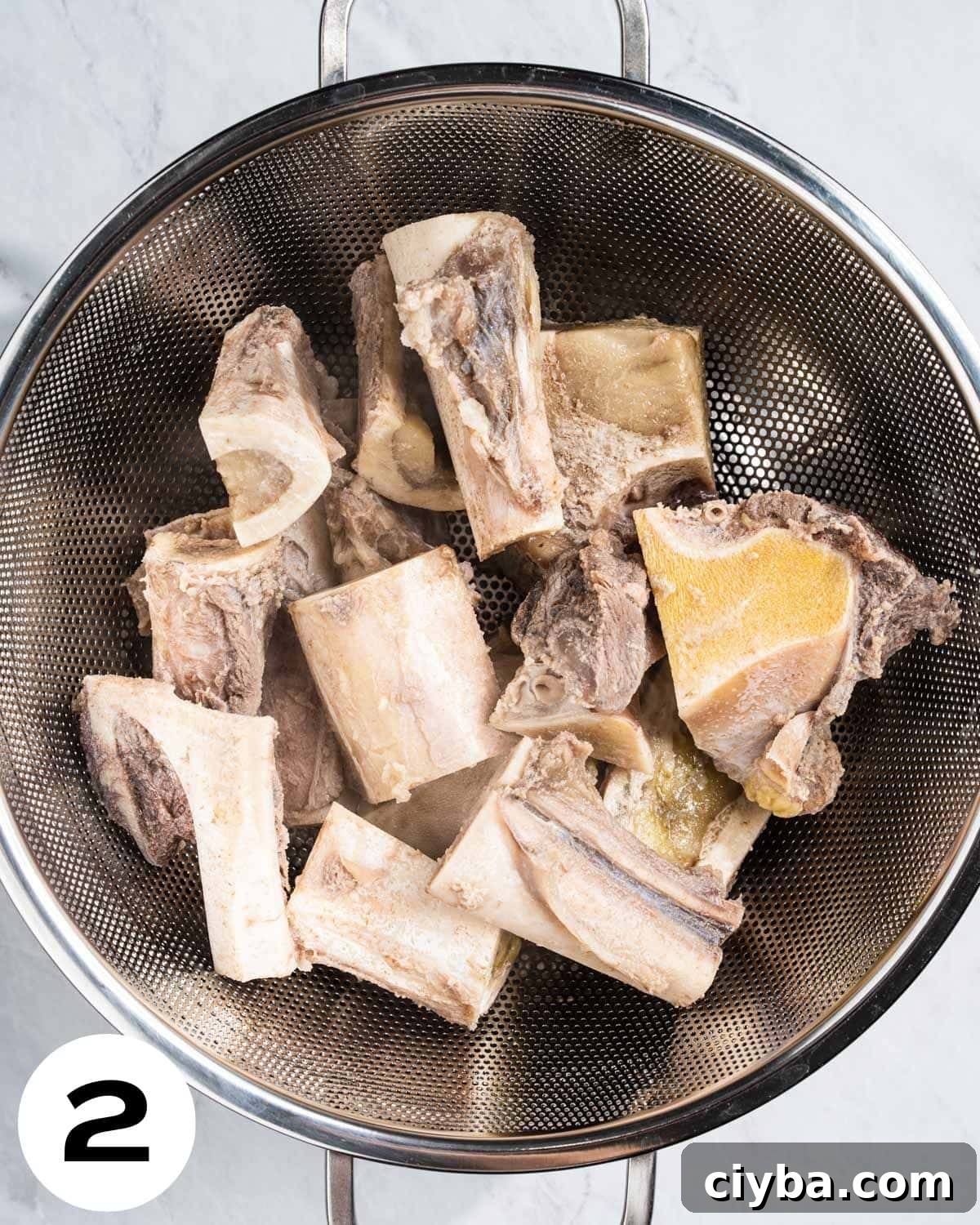
Begin by parboiling the bones and brisket, then rinsing them to remove impurities—this keeps the broth clear. While the bones parboil, char the onion and ginger and toast the spices so they’re ready to flavor the simmering stock.
Add fresh water, the cleaned bones, brisket, charred aromatics, rock sugar, fish sauce, and salt to a large pot. Bring to a boil, then reduce to a gentle simmer and skim the surface regularly. After roughly 1½ hours remove the brisket to cool. Add the toasted spices in a spice bag during the last hour so the broth picks up aromatic flavor without becoming bitter.
When the broth is finished, strain out solids for a clear stock. Cook the noodles separately, arrange noodles and sliced brisket in bowls, top with paper-thin raw beef, and ladle the steaming broth over the meat to cook it instantly. Add herbs and garnishes and serve immediately.
Exact measurements and timing are in the recipe card below.
Tips for the Best Homemade Beef Pho
✔️ Use bones with marrow for better body
✔️ Always parboil and rinse the bones
✔️ Char the aromatics until deeply fragrant
✔️ Toast spices gently to avoid bitterness
✔️ Simmer uncovered and skim often
✔️ Slice the beef very thin so it cooks instantly
Pho Tai Variations to Try
Once you’re comfortable with pho tai, try variations that use the same broth:
- Pho tai bo vien — adds beef meatballs for a heartier bowl
- Pho tai chin — combines rare beef with tender brisket
- Pho tai gan — includes tendon for a richer, gelatinous texture
- Pho tai nam — uses flank or skirt steak for a slightly chewier bite
You can mix and match toppings without changing the broth.
Frequently Asked Questions
You can, but it won’t taste the same. Homemade broth is what gives pho its characteristic depth and aroma.
Sirloin or tenderloin, sliced very thin against the grain.
No. The boiling-hot broth cooks the thinly sliced beef in the bowl so it finishes tender and gently cooked.
Add sriracha, sliced Thai chilies, or chili garlic sauce to your bowl or serve them on the side.
How to Serve Pho Tai
Serve pho tai immediately while the broth is piping hot so it cooks the beef in the bowl. Present a plate of herbs and lime on the side so each person can customize their bowl. For a larger meal, serve crisp appetizers like egg rolls alongside the soup.
How to Store, Reheat & Freeze
Store the broth separately from noodles and garnishes in the refrigerator for up to four days. The broth freezes well for up to three months; thaw and reheat gently on the stove until steaming before assembling bowls with freshly cooked noodles and raw beef slices.
Give This Pho Tai Recipe a Try!
Pho tai takes time but is straightforward. The results—clear, aromatic broth and tender beef—are worth the effort. If you try the recipe, leave a comment to share how it turned out.
RECIPE
Authentic Phở Tái (Vietnamese Beef Pho)
Quynh Nguyen
Ingredients
Aromatics
- 2 large onions, halved and peeled
- 1 large ginger root, sliced lengthwise (no need to peel)
Spices
- 5 star anise
- 2 cinnamon sticks
- 1 teaspoon whole cloves
- 1 teaspoon coriander seeds
Beef Bones
- 3 pounds beef marrow or knuckle bones
- 1 pound beef brisket
- 8 oz sirloin or tenderloin, (for serving, raw and thinly sliced)
Seasoning
- 2 tablespoons rock sugar (or granulated sugar)
- 1 tablespoon salt
- 3 tablespoons fish sauce
Noodles & Toppings (Per Bowl)
- Dried rice noodles
- Sliced brisket & raw sirloin
- Thai basil, cilantro, bean sprouts, lime wedges, jalapeño
- Hoisin sauce, sriracha (optional)
Instructions
-
Parboil the Bones and Brisket. Place the bones in a large stockpot, cover with cold water, bring to a rolling boil and cook 5 minutes to release impurities. Add the brisket for the last minute. Drain and rinse bones and brisket under running water. Clean the pot before continuing.
-
Char the Aromatics. Char the onions and ginger over a flame or under the broiler until blistered and dark in spots, about 5 minutes. Rinse lightly to remove loose burnt bits and set aside.
-
Toast the Spices. In a dry pan over low heat, toast star anise, cinnamon sticks, and cloves until fragrant, 2–3 minutes. Add coriander seeds for the last minute. Transfer to a spice bag or infuser.
-
Simmer the Broth. Return the cleaned bones and brisket to the pot with 6 quarts fresh water, charred aromatics, rock sugar, salt, and fish sauce. Bring to a boil, then reduce to a gentle simmer and skim foam regularly. After about 1½ hours remove the brisket and set aside. Continue simmering the bones.
-
Add Spices and Continue Simmering. During the last hour of cooking, add the toasted spices in a spice bag. Simmer uncovered or partially covered until the broth is clear and flavorful. Total simmer time: about 3½ to 4 hours.
-
Strain and Season. Remove bones, aromatics, and spice bag. Strain the broth through a fine-mesh strainer. Taste and adjust with more salt or fish sauce if needed.
-
Prepare Noodles and Beef. Cook rice noodles per package instructions (fresh: blanch 15–30 seconds; dried: boil 8–12 minutes). Rinse with cold water and drain. Thinly slice the cooled brisket and slice raw sirloin or tenderloin paper-thin (partially freeze to help).
-
Assemble and Serve. Divide noodles among bowls, top with sliced brisket and raw beef. Ladle piping-hot broth over the beef to cook it. Add herbs and garnishes and serve immediately.
Notes
- Use marrow or knuckle bones with some meat attached for better flavor and body.
- Parboil the bones first to remove impurities and keep the broth clear.
- Char the onion and ginger until blistered—this step adds depth and sweetness.
- Toast your spices just before adding them to release oils and aroma.
- Simmer low and slow with the lid partially off and skim often to avoid cloudiness.
- Slice beef super thin. Partially freezing it makes this easier.
- Cook noodles separately and rinse with cold water to prevent clumping.
- Ladle broth directly over raw beef—the heat will cook it to tender perfection in seconds.