
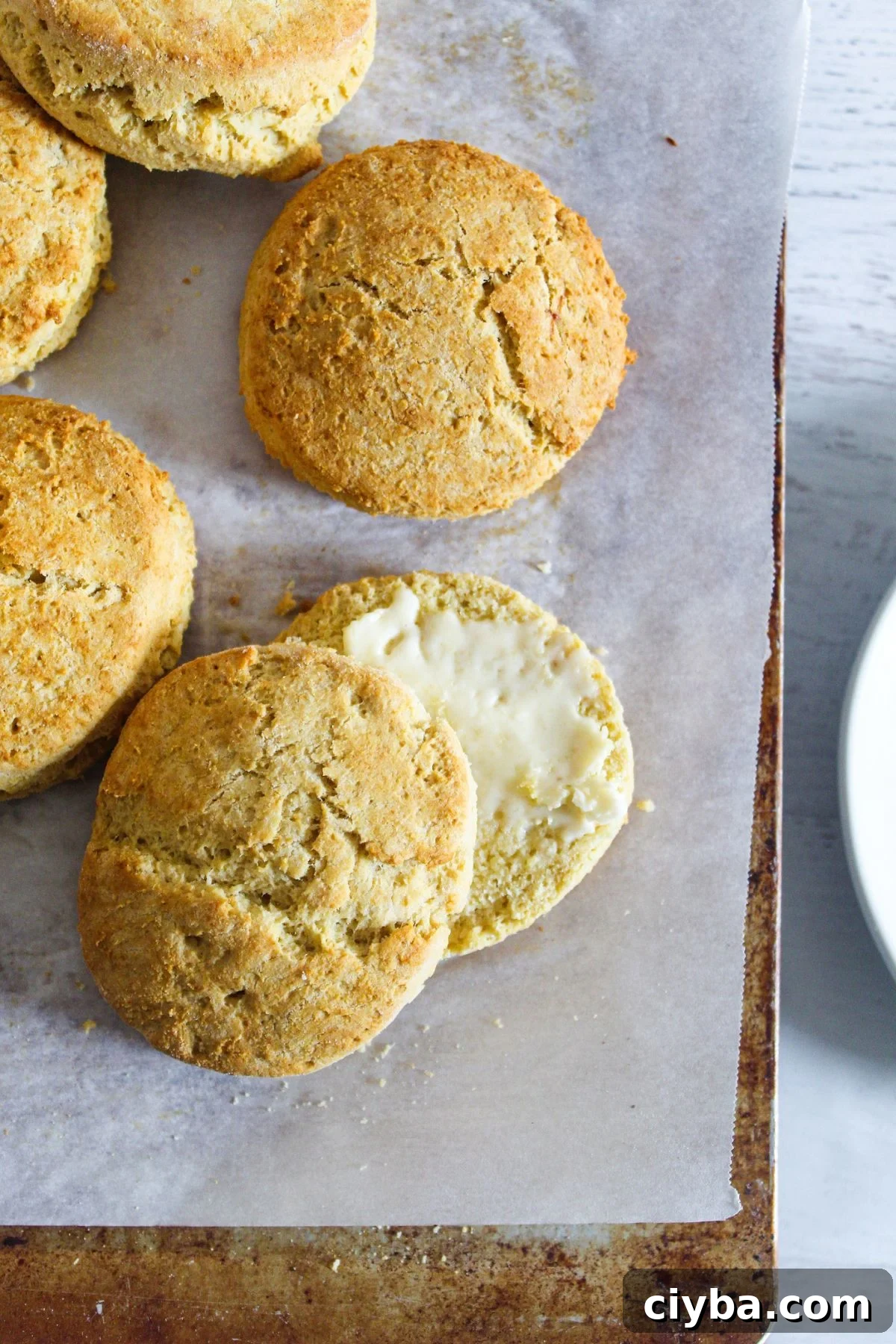
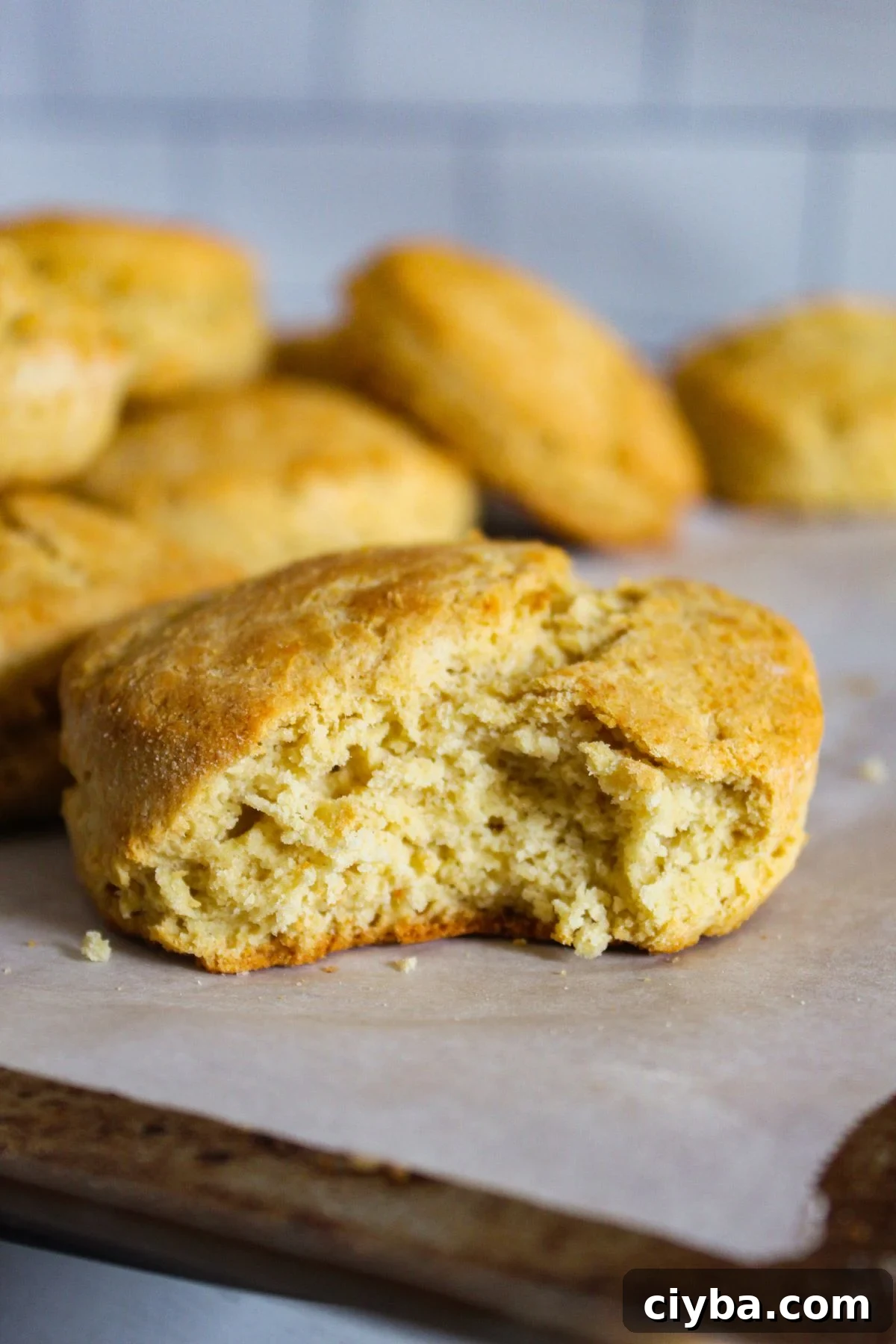
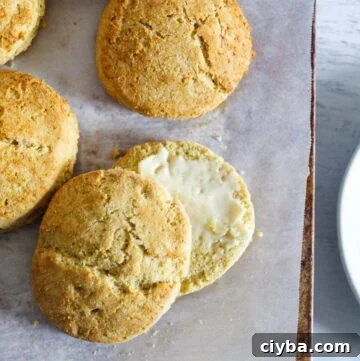
If your gluten-free biscuits usually turn out crumbly or dense, these millet biscuits will be a pleasant surprise. They bake up soft, fluffy, and golden, with a rich buttery flavor and a texture that feels genuinely homemade. This straightforward recipe uses simple ingredients and a few reliable techniques to deliver biscuits that are consistent, delicious, and perfect for breakfast, brunch, or dinner.
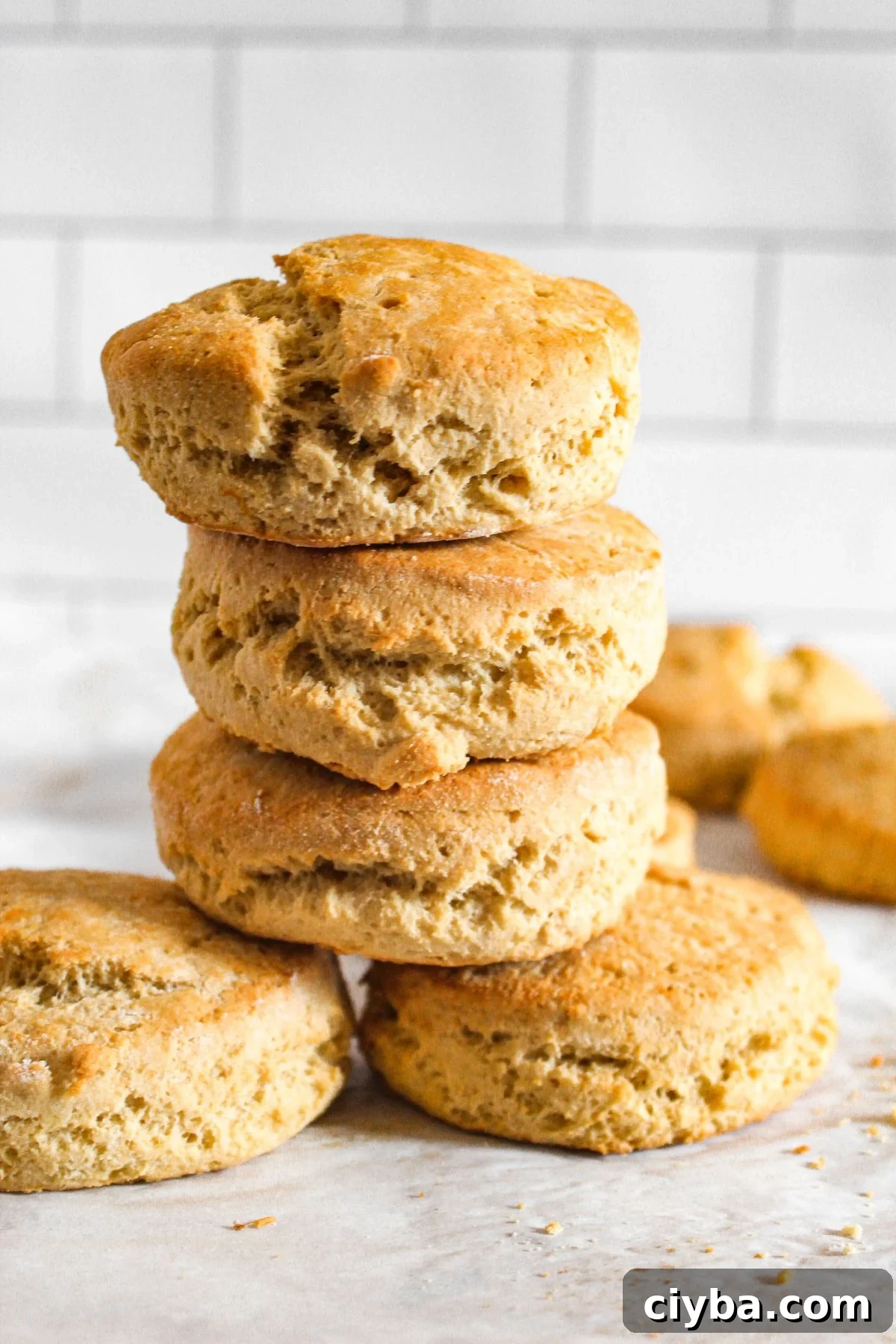
Biscuits are a quick, versatile bread that pairs well with many meals. With their great flavor and tender crumb, you won’t miss the gluten or dairy. These millet biscuits are also quick to prepare and can be ready from start to finish in under an hour.
Why This Recipe for Millet Flour Biscuits?
There’s nothing like warm, fluffy biscuits straight from the oven. This millet biscuit recipe is easy and uses just a handful of ingredients. Highlights of the recipe include:
- Only about 15 minutes of hands-on prep time.
- Gluten- and dairy-free (when using dairy-free substitutes).
- A great way to use millet flour in baking.
- Just a 10-minute rest time for the batter.
- Freezes well for easy make-ahead meals.
Equipment for Making Millet Biscuits
Useful tools to make preparing these biscuits easier:
- Digital scale (for accurate dry-ingredient measurement)
- Medium mixing bowl
- Stand mixer (optional; you can mix by hand)
- Whisk
- Parchment paper
- Rolling pin
- 2-inch biscuit cutter
- Baking sheet
Ingredients for Millet Biscuits
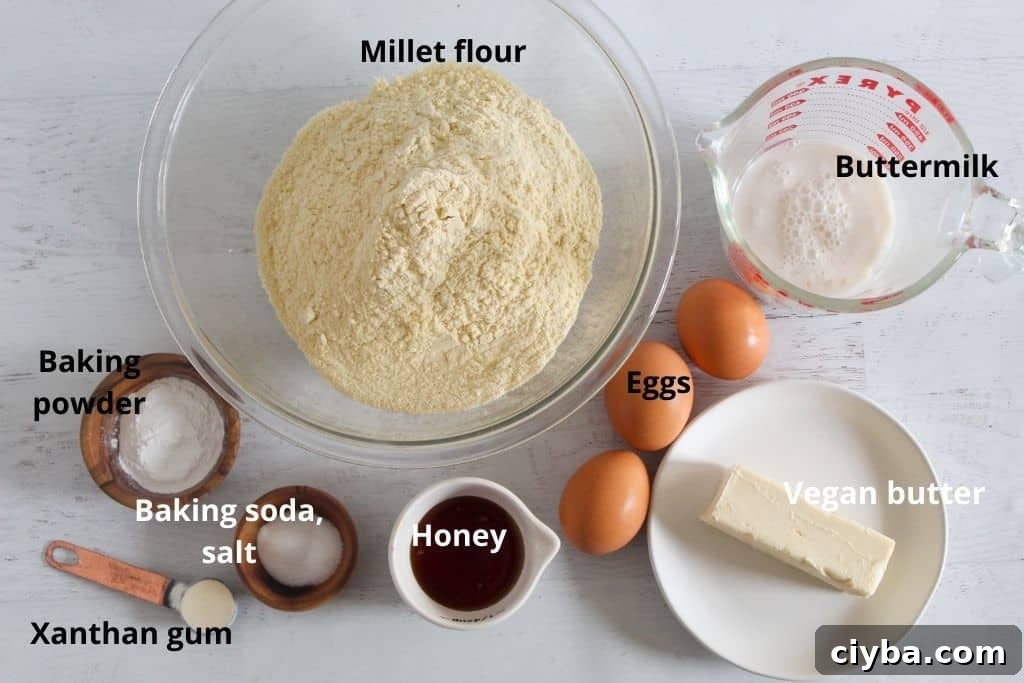
- Millet flour
- Baking powder
- Baking soda
- Xanthan gum
- Salt
- Vegan butter
- Dairy-free buttermilk
- Eggs
- Honey
About These Ingredients for Millet Biscuits
If you’re new to gluten-free baking, a few details help achieve the best texture. Gluten-free recipes are sensitive to ingredient ratios and the moisture-absorption and binding properties of different flours and gums. For that reason, precise measurements—ideally by weight—are useful.
Note: Small changes in dry-ingredient amounts can affect texture. A digital scale provides consistency.
Millet Flour
390 grams (about 3 cups) millet flour
Millet flour is a naturally gluten-free flour made from millet grain. Different millet varieties (pearl, finger/ragi, bajra) can vary in protein, fat, and fiber, which affects the final texture. This recipe works well with pearl millet flour because its higher protein and fat help provide structure and richness.
Baking Powder
3 teaspoons baking powder
Gluten-free biscuits commonly need extra leavening to achieve a light, tall rise. Baking powder supplies the chemical leavening that helps the dough expand quickly in the oven.
Baking Soda
1 teaspoon baking soda
Baking soda reacts with acid in the dough (provided by the buttermilk) to create additional lift and improve browning.
Xanthan Gum
1 teaspoon xanthan gum
Xanthan gum acts as a binder and helps mimic some of the structure that gluten provides. Use only the amount specified—too much can affect texture and digestion for some people.
Salt
1/2 teaspoon salt
A modest amount of salt balances and enhances flavor without making the biscuits salty.
Vegan Butter
6 tablespoons vegan butter
Vegan butter provides the fat these biscuits need. Use a softened, unsalted variety for best control over salt and texture.
Dairy-Free Buttermilk
1/2 cup dairy-free buttermilk
The acidic buttermilk reacts with baking soda and adds moisture and tang.
Eggs
3 large eggs
Eggs provide binding and structure to the dough.
Honey
2 tablespoons honey
A small amount of honey adds gentle sweetness without making the biscuits overtly sweet.
Printable Millet Biscuit Recipe Card
Ingredients
- 390 grams millet flour about 3 cups
- 3 teaspoons baking powder
- 1 teaspoon baking soda
- 1 teaspoon xanthan gum
- 1/2 teaspoon salt
- 6 Tablespoons vegan butter softened
- 1/2 cup dairy-free buttermilk
- 3 large eggs
- 2 Tablespoons honey
Instructions
- Whisk the millet flour, baking powder, baking soda, xanthan gum, and salt together in a medium bowl.
- In a stand mixer bowl, combine the vegan butter, dairy-free buttermilk, eggs, and honey. Mix about 2 minutes until no large chunks of butter remain; small pieces are okay.
- Add the flour mixture and mix for 15 seconds. Stop and scrape the sides, then mix another 15 seconds until there are no obvious dry lumps. Be careful not to overmix.
- Set the batter aside to rest for 10 minutes.
- Preheat the oven to 400°F (204°C). Line a baking sheet with parchment paper.
- Place a sheet of wax paper on the counter and dust it lightly with millet flour. Transfer the dough to the floured surface.
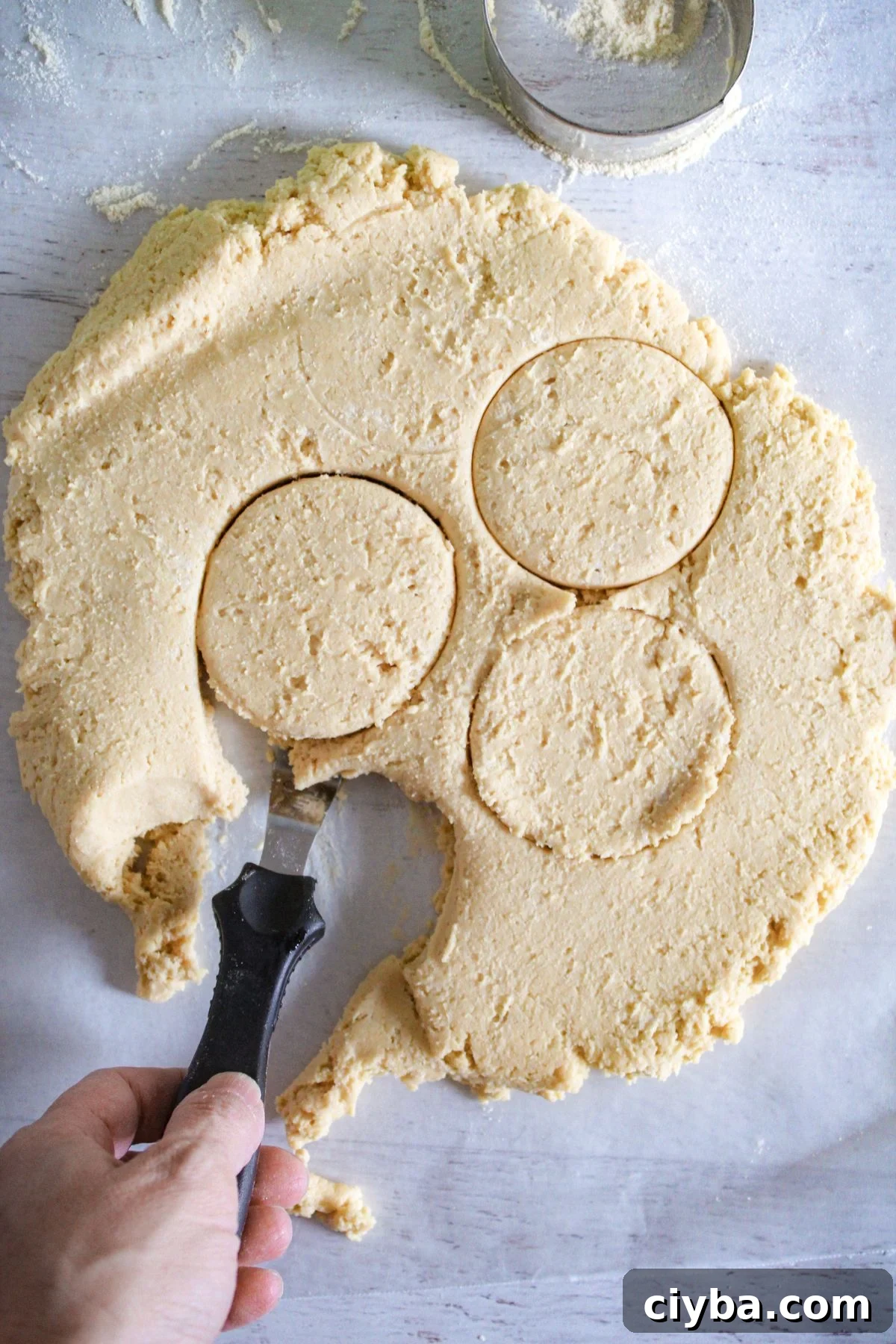
- Lightly roll the dough to about 1 inch thick. Avoid rolling it too thin so the biscuits stay tall and fluffy.
- Use a floured 2-inch biscuit cutter to cut biscuits and place them on the prepared baking sheet with a little space between each.
- Gather and reroll scraps and repeat until you’ve cut as many biscuits as you can from dough rolled to 1 inch thick.
- Bake 14–15 minutes until the biscuits are golden brown and a toothpick comes out clean in the center.
- Serve warm with your favorite toppings or alongside a meal.
Notes
No special notes.
Nutrition
Did you make and love this recipe? Give it your review and rating below!
How to Make Millet Biscuits
The process is straightforward and takes less than 45 minutes from start to finish.
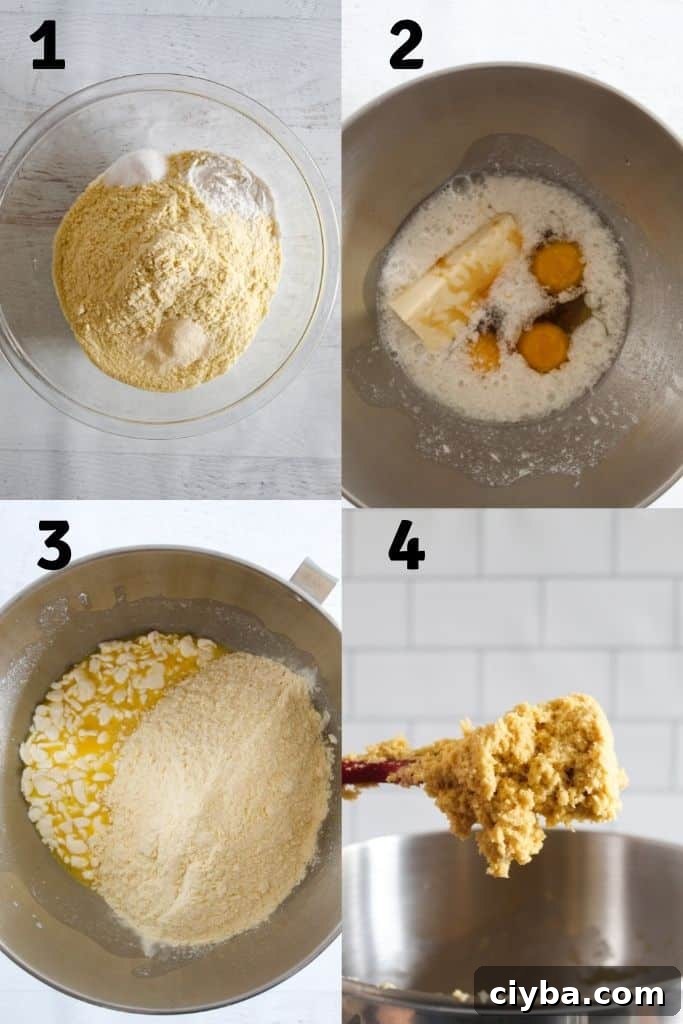
Step One: Mix Dry Ingredients
Whisk the millet flour, baking powder, baking soda, xanthan gum, and salt together in a medium bowl.
Step Two: Mix Wet Ingredients
Combine the vegan butter, dairy-free buttermilk, eggs, and honey in a stand mixer or by hand. Mix until mostly smooth and no large butter chunks remain.
Step Three: Add Dry Ingredients to Wet Ingredients
Add the dry mix and mix briefly—about 15 seconds—then scrape the bowl and mix another 15 seconds. Stop as soon as the dry ingredients are incorporated to avoid toughness.
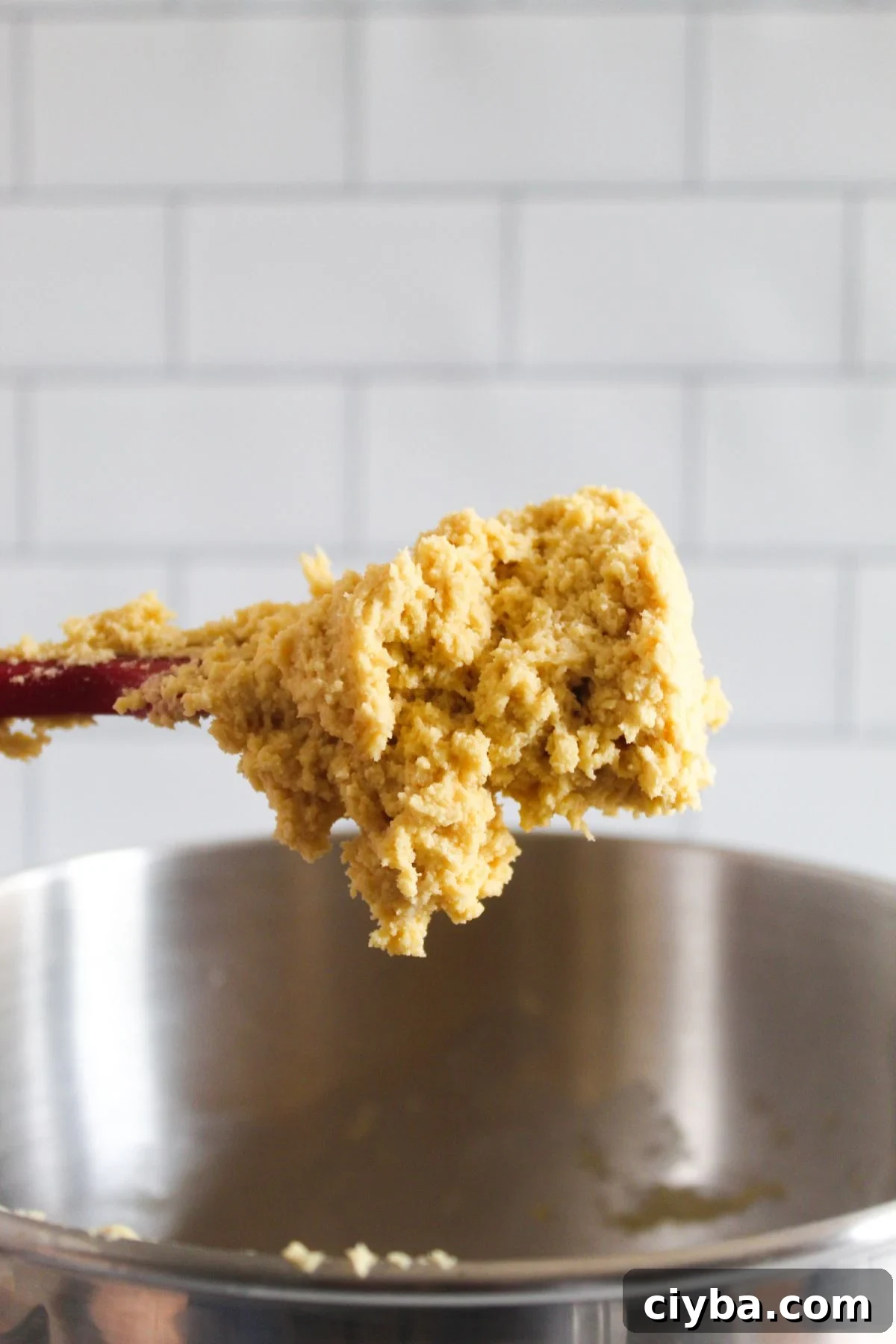
Step Four: Let Batter Rest for 10 Minutes
Allow the batter to rest for 10 minutes so the flour can absorb the liquids and the texture firms up.
Step Five: Preheat Oven and Prepare Baking Sheet
Preheat the oven to 400°F (204°C). Line a baking sheet with parchment paper.
Step Six: Prepare Work Surface
Lay a piece of wax paper on the counter and dust it with a little millet flour.
Step Seven: Roll Dough Out
Place the rested dough on the floured wax paper and roll to about 1 inch thick. Keeping the dough thick helps maintain a fluffy interior.
Step Eight: Cut Out Biscuits
Use a floured 2-inch cutter to cut biscuits and place them with a small gap on the baking sheet. Reroll scraps and cut more biscuits until done.
Step Nine: Bake Biscuits
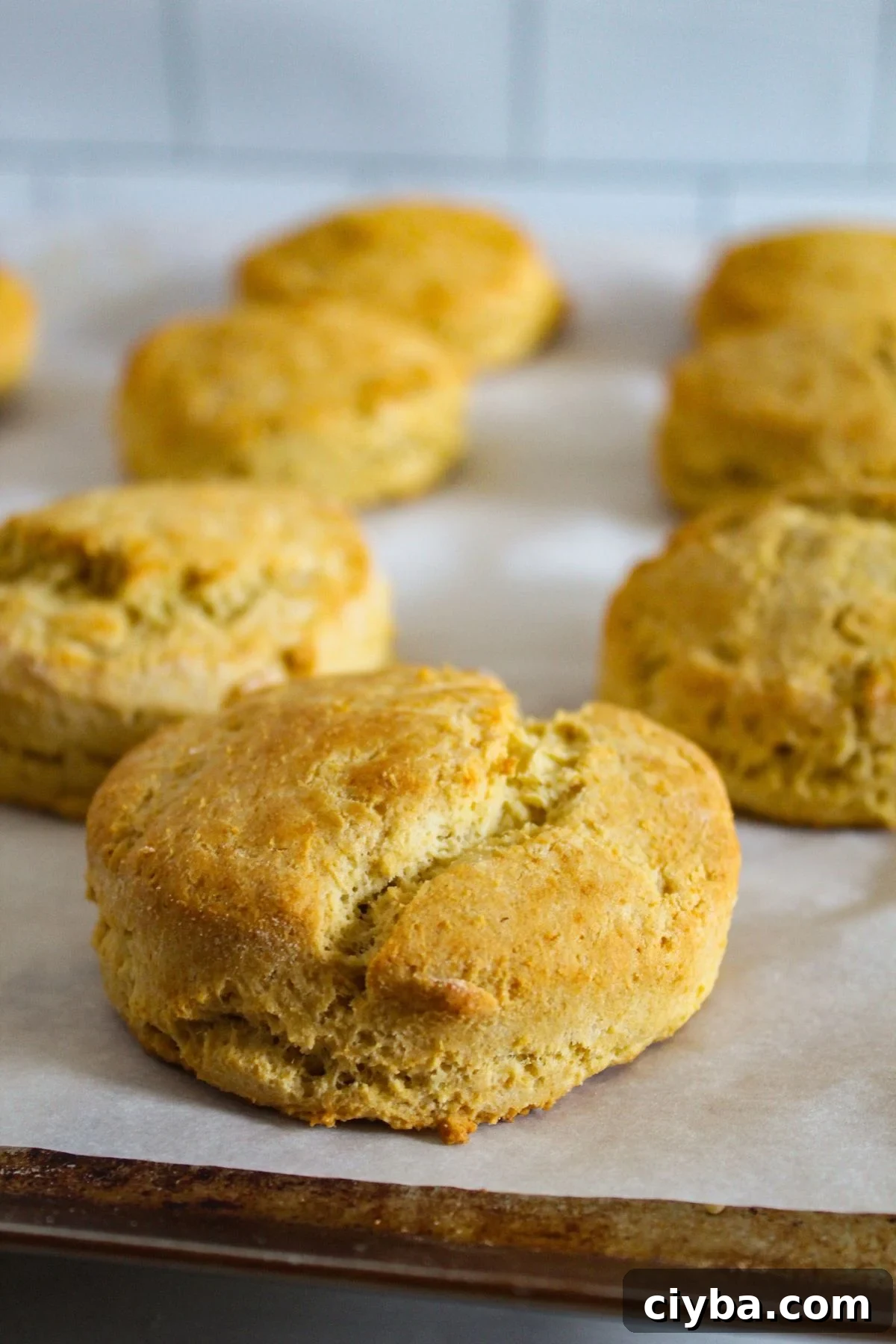
Bake 14–15 minutes, until golden brown and a toothpick inserted into the center comes out clean.
Step Ten: Serve Warm With Favorite Meals or Toppings
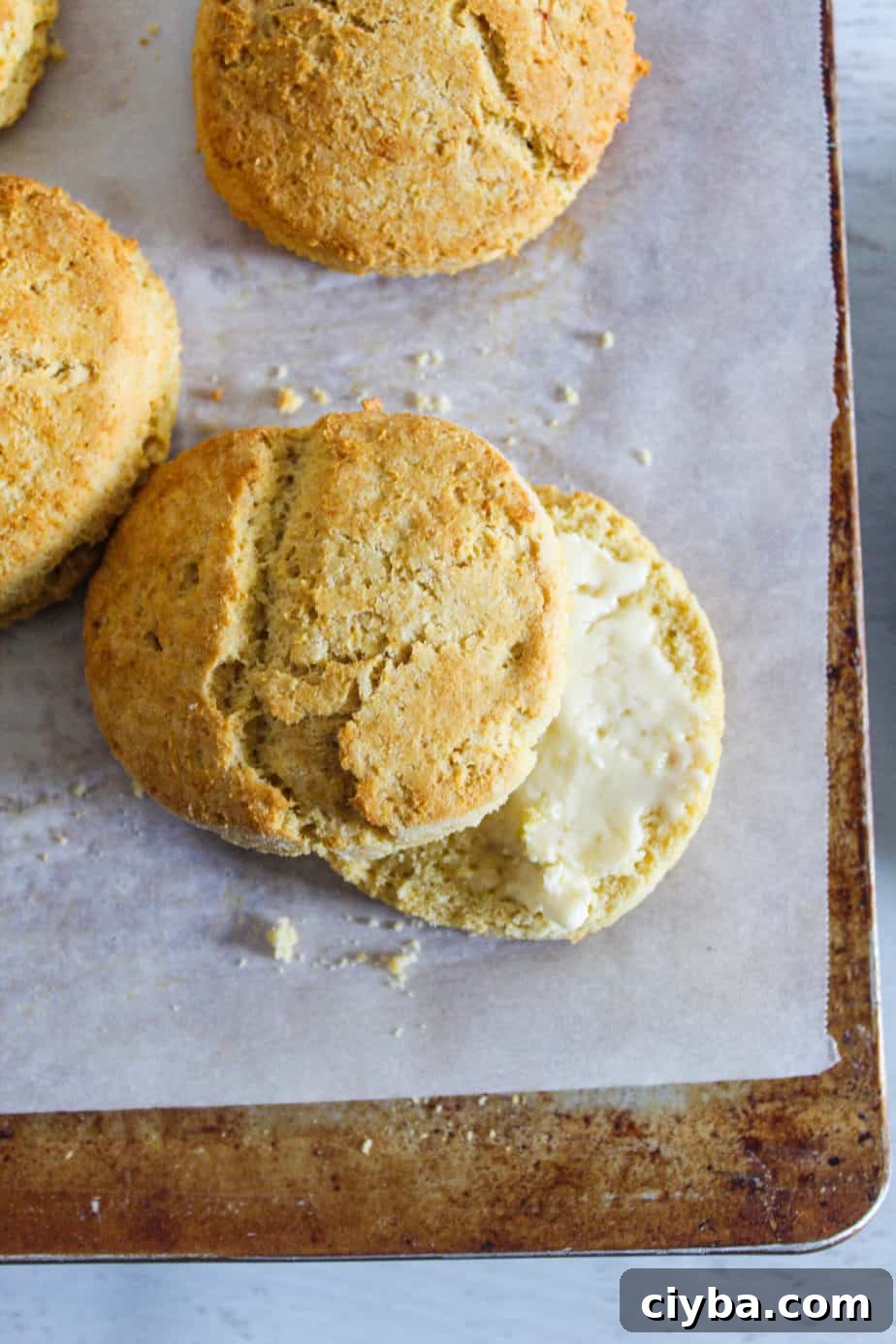
Serve these biscuits warm. They make excellent breakfast sandwiches, pair well with sausage gravy, and are comforting alongside soups or stews.
Substitutions for This Millet Biscuit Recipe
If you need to replace xanthan gum, psyllium husk powder is a good alternative and performs similarly as a binder. Dairy butter can replace vegan butter if you don’t need the recipe to be dairy-free, and regular buttermilk can replace dairy-free buttermilk if preferred.
Variations for Millet Biscuits
Drop Biscuits: Spoon the dough onto a baking sheet for quick drop biscuits; bake at the same temperature and time.
Sweet Biscuits: Add an extra teaspoon of honey for a sweeter biscuit and adjust liquid if needed.
Savory Biscuits: Fold in dried herbs like rosemary or thyme for an herbal twist.
Toppings: Brush warm biscuits with melted butter and sprinkle cinnamon sugar for sweet or Everything Bagel seasoning for savory.
Storing Millet Biscuits
Store biscuits in an airtight container at room temperature for up to 3 days. For longer storage, freeze them. Thaw in the refrigerator overnight or, if sliced, toast directly from frozen to save time.
FAQs About Millet Biscuits
Here are answers to common questions to help troubleshoot and get great results every time.
Why didn’t my millet biscuits rise?
Common causes: overmixing, expired or insufficient leavening agents, or insufficient rest. Mix the dry ingredients in briefly after adding them and allow the 10-minute rest so the leavening can start working.
Why are my millet biscuits dry or crumbly?
Too much flour, too little liquid, or overbaking can cause dryness. If the batter feels too dry, add a tablespoon of water at a time until it reaches the right consistency. Watch baking time closely.
Why was my biscuit dough too sticky to work with?
Dough can be sticky before resting. The 10-minute rest allows the flour to absorb liquid and becomes easier to handle. Lightly dust hands or the work surface if needed, but avoid adding too much extra flour.
My biscuits spread out more than I thought they would, and now they’re stuck together! What happened?
Possible reasons: batter that’s too soft or warm, or biscuits placed too close together on the baking sheet. Keep butter softened but not melted and space the biscuits so they have room to rise.
Why are my millet biscuits dense instead of light and fluffy?
Density usually results from packing in too much flour, skipping the rest time, overmixing, or pressing the dough too firmly when rolling and cutting. Handle the dough gently and follow rest and mixing times.
Why did my biscuits turn out gummy in the middle?
Gummy centers come from too little flour, too much liquid, or underbaking. Measure ingredients accurately—preferably by weight—and bake until the biscuits are a clear golden brown and the centers are set.
Some Ideas to Accompany Your Biscuits
These biscuits pair well with hearty breakfasts like biscuits and gravy, breakfast sandwiches, soups, stews, casseroles, or simply a smear of butter and jam.
How Did You Serve Yours?
Share your experience in the comments: did you serve them with gravy, use them for sandwiches, or enjoy them with soup? Your ideas may inspire someone else’s next meal.