
Gnocco Fritto (also called Crescentine) is a classic snack from Italy’s Emilia-Romagna region. These are light, crispy pillows of savory fried dough best served warm alongside cured meats and soft cheeses.

Emilia-Romagna is famous for Parmigiano Reggiano, Parma ham and Mortadella, and for dishes like Ragu alla Bolognese and Tortellini in Brodo. Gnocco Fritto is one of the region’s simple pleasures: fried dough that puffs up, becoming crisp on the outside and soft inside, perfect with charcuterie and cheese.
If you haven’t tried Gnocco Fritto before, be warned—they can be addictive. Served hot with a sprinkle of salt, they work beautifully as an aperitivo or as part of an antipasto spread at family meals, festivals, or Sunday lunches.
Below you’ll find the full recipe with ingredient notes, step-by-step instructions, tips, variations and a video. For a printable version, see the recipe card at the bottom.
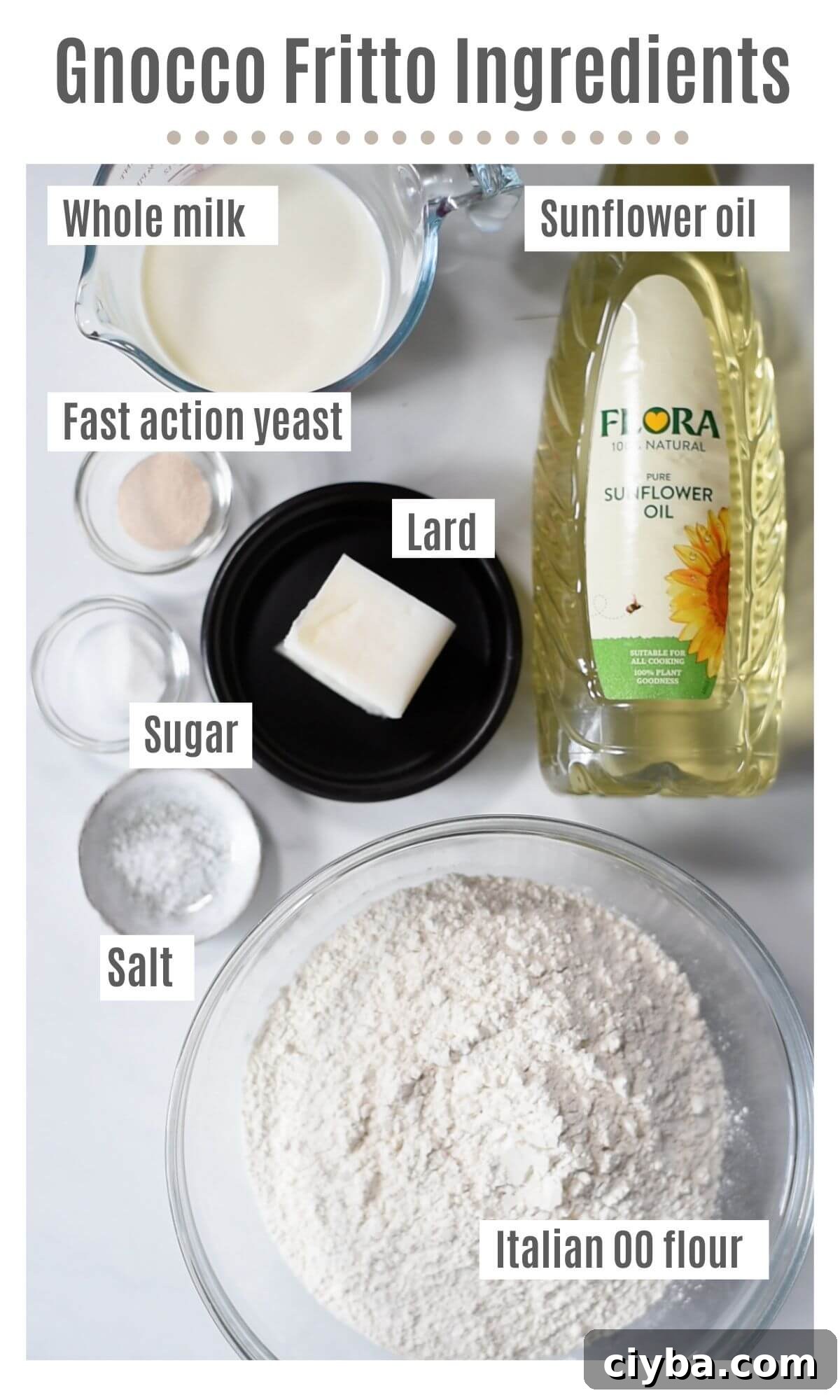
Ingredients
Ingredient notes and substitutions
- Italian 00 flour – can be substituted with bread flour or all-purpose flour if needed.
- Lard – traditional and gives a characteristic texture, but unsalted butter can be used as an alternative.
- Whole milk – warm (not hot) to help the dough rise.
- Yeast – fast-action (instant) yeast is used here; follow your packet’s instructions if yours requires activation in liquid first.
- Sugar and salt – add separately; avoid placing salt directly on fresh yeast as it can inhibit proving.
- Sunflower oil – used for frying for convenience; traditionally lard was used for frying in some areas.
Step by step photos and instructions
Warm the milk in a small saucepan, then remove from the heat and let it cool until warm but not hot.
Combine the flour, yeast and sugar in a large bowl. Make a well in the centre and pour in the warm milk. (If your yeast requires activation, dissolve it in the warm milk for 5–10 minutes first.)
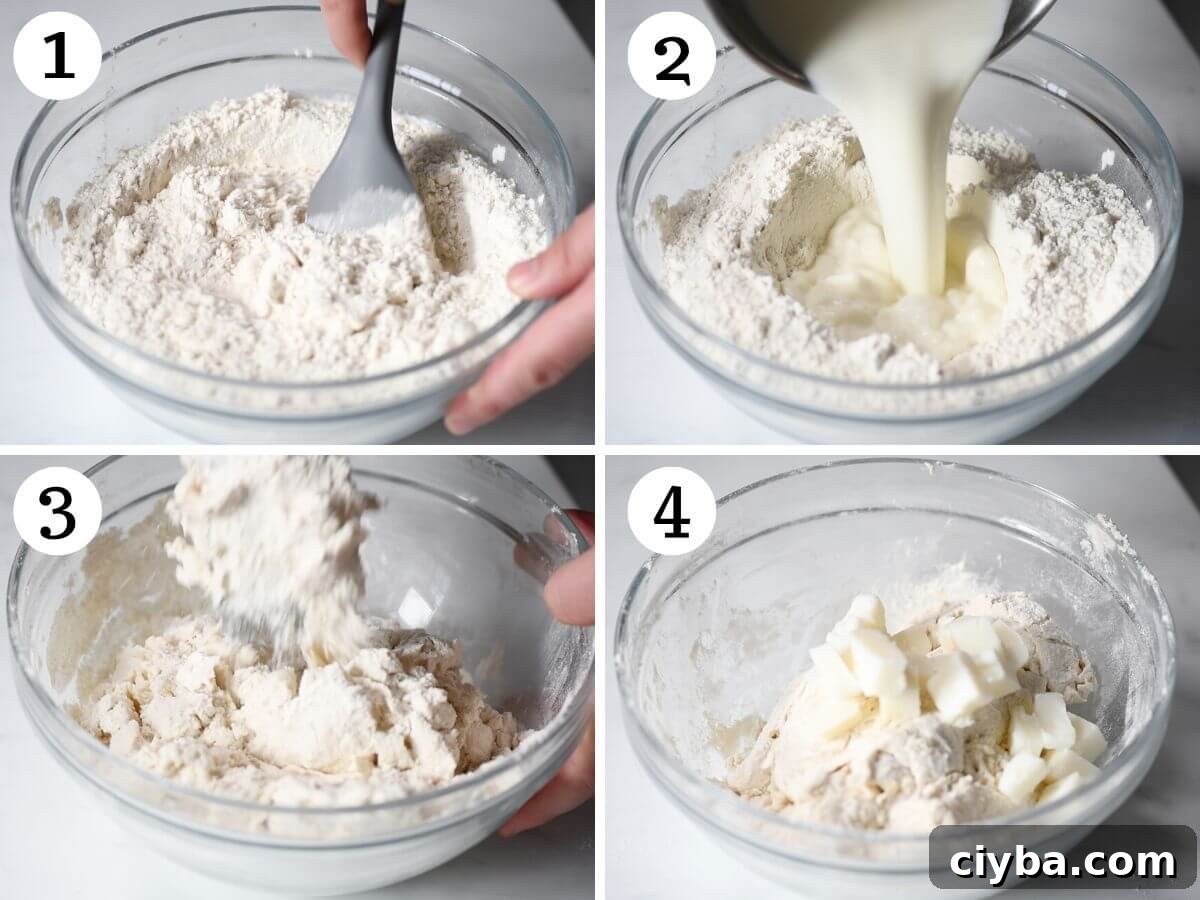
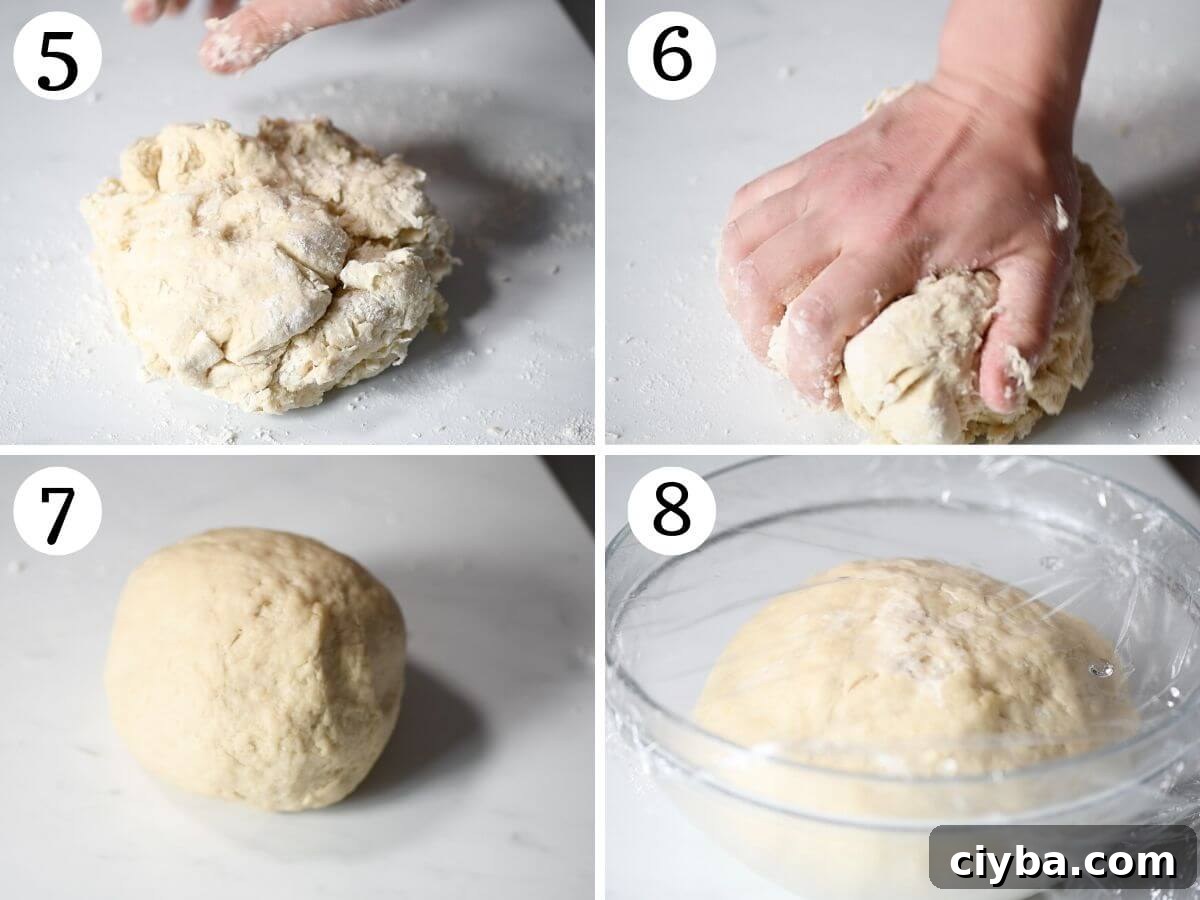
Stir until a rough dough forms. Add the lard (or butter) and the salt, then knead by hand until the fat is fully incorporated and the dough is smooth.
Place the dough in a clean bowl, cover with plastic wrap, and leave to rise at room temperature for about 2 hours, until noticeably puffed.
Pour sunflower oil into a deep frying pan to a depth of about 2 inches (5 cm) and heat to 180°C (use a thermometer for accuracy).
Lightly flour a work surface and roll the dough out to roughly 3mm thickness.
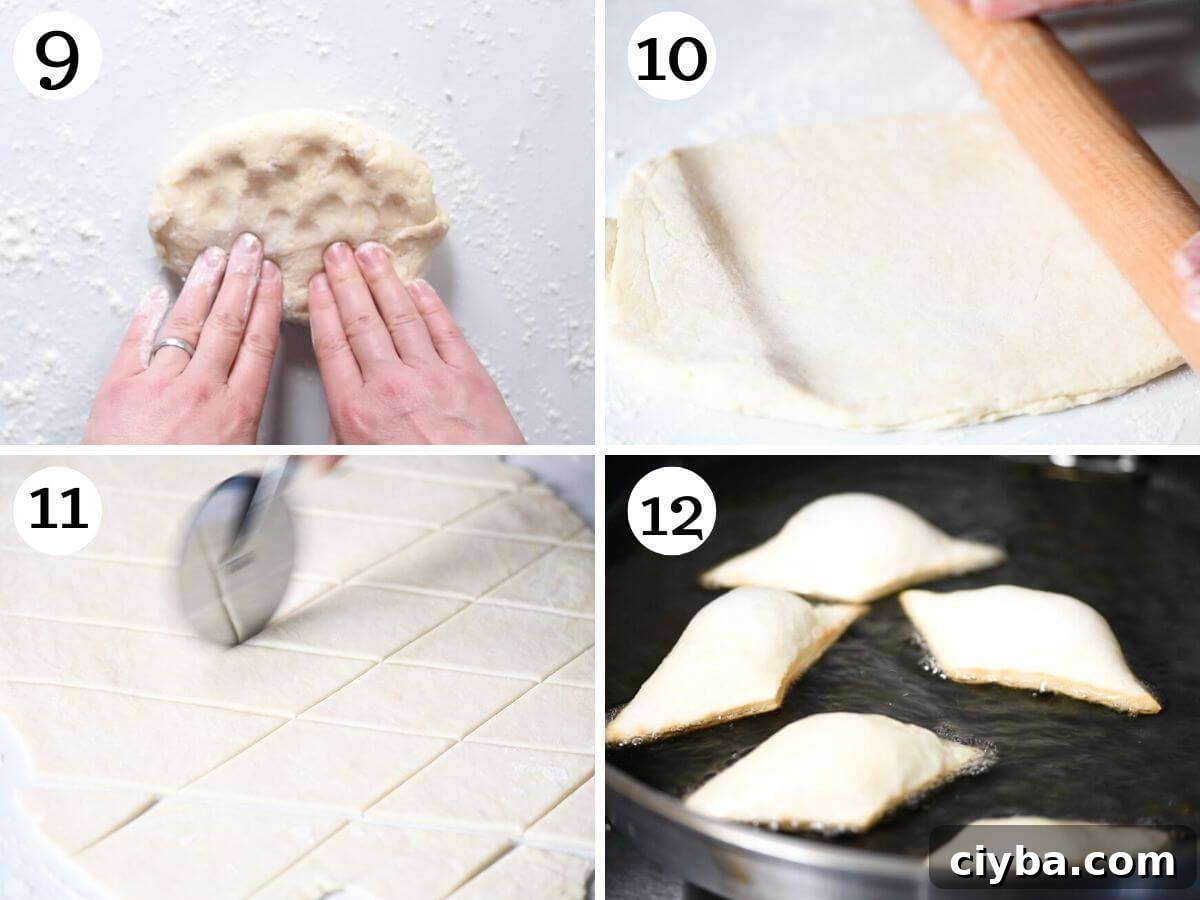
Cut the dough into rough squares about 5–6cm across using a pizza cutter or knife. Fry in small batches until each piece puffs and turns golden, about 1–2 minutes per side. Drain on kitchen paper and serve immediately with your choice of cured meats and cheese.
How to serve Gnocco Fritto
Serve Gnocco Fritto hot, lightly salted and paired with an aperitivo such as an Aperol Spritz, or alongside sparkling Lambrusco. They’re traditionally offered with Prosciutto crudo, Mortadella or Coppa and soft cheeses like Stracchino or Squacquerone. For a sweet option, try them as a dessert with a spoonful of Nutella.
Recipe tips
- Yeast: check whether your yeast needs activating. If so, dissolve it in a small amount of warm milk first.
- Proving: let the dough rise at room temperature away from direct sunlight for a steady proof.
- Frying temperature: use a thermometer to maintain oil at about 180°C and fry in small batches to avoid overcrowding.
- Accuracy: weigh flour where possible — scales give more reliable results than cups.
Recipe FAQs
The dish is known by different names across Emilia-Romagna: Gnocco Fritto in Modena, Crescentine in Bologna, Torta Fritta in Parma, and Chizza Fritta in some areas.
Leftover dough can be refrigerated for 1–2 days or frozen. Thaw in the fridge and bring to room temperature before rolling and frying.

More Italian bread recipes
Bread & Savory Bakes
La Piadina: Italian Flatbread
Pizza
Rosemary Focaccia Bread
Antipasti
Grissini – Italian Breadsticks
Antipasti
Taralli Pugliesi (Italian Snack)
If you try this Gnocco Fritto recipe or any other on the site, please rate it and leave a comment to share how it went. I enjoy hearing your feedback. You can follow the blog on social channels or sign up to the newsletter to receive new recipes.
Step By Step Photos Above
Most recipes include step-by-step photos, tips and a video tutorial.
Gnocco Fritto (Italian Fried Dough)
By Emily

Ingredients
- 500 g Italian 00 flour (about 4 cups)
- 1 teaspoon sugar
- 1 teaspoon fast-action (instant) yeast
- ½ teaspoon fine salt
- 250 ml whole milk (about 1 cup + 1 tbsp), warmed
- 70 g lard or unsalted butter (about 5 tbsp)
- Sunflower oil for frying
For serving
- Prosciutto crudo or other cured meats
- Stracchino or Crescenza cheese
Instructions
- Warm the milk until lukewarm, then remove from the heat.
- Mix flour, yeast and sugar in a bowl. Make a well and add the warm milk (activate yeast first if required by packet instructions).
- Stir to form a rough dough, add the lard (or butter) and salt, then knead until smooth and the fat is fully incorporated.
- Cover the dough and leave to rise at room temperature for 2 hours.
- Heat sunflower oil in a deep pan to 180°C. Roll the dough out to about 3mm thickness on a floured surface.
- Cut into 5–6cm squares and fry in small batches until puffed and golden, about 1–2 minutes per side. Drain and serve with cheese and prosciutto.
Video
Notes
- Yeast: check packet instructions; some instant yeast types don’t need activating.
- Proving: rise at room temperature away from direct sunlight.
- Frying: keep oil at 180°C and fry in small batches for even puffing and colour.
- Storage: Gnocco Fritto are best served fresh but will keep in an airtight container for 1–2 days. Dough can be refrigerated for 1–2 days or frozen.
Helpful Info for All Recipes
- Extra virgin olive oil is used in recipes unless otherwise stated.
- When using canned tomatoes, brands like Cirio or Mutti are recommended for consistent flavour.
- Vegetables are medium-sized unless noted.
- Recipes are developed using a fan (convection) oven unless specified.
- Nutrition is calculated automatically and should be treated as an approximation.
Nutrition
Carbohydrates: 8 g |
Protein: 1 g |
Fat: 3 g
Nutrition information is an approximation.