
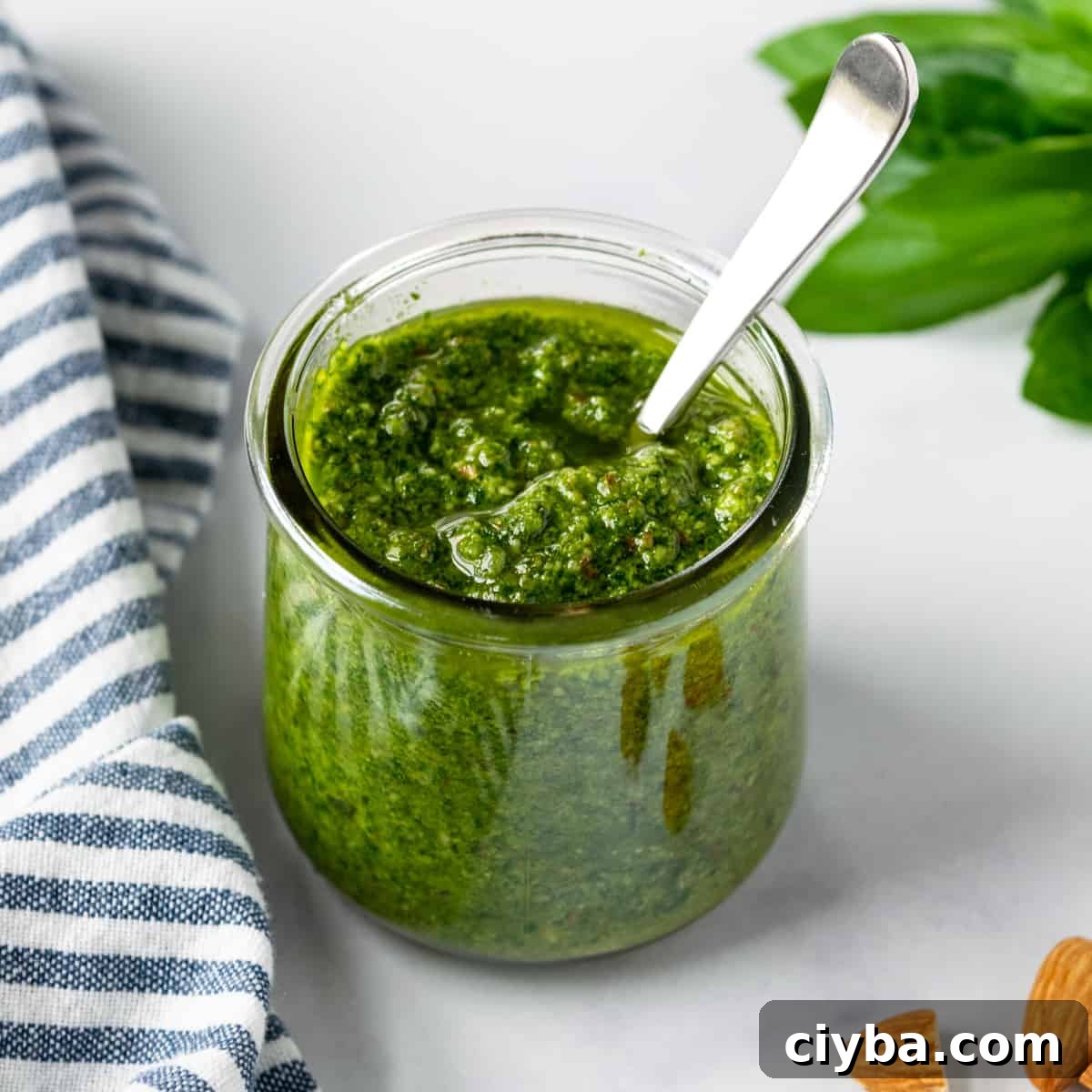
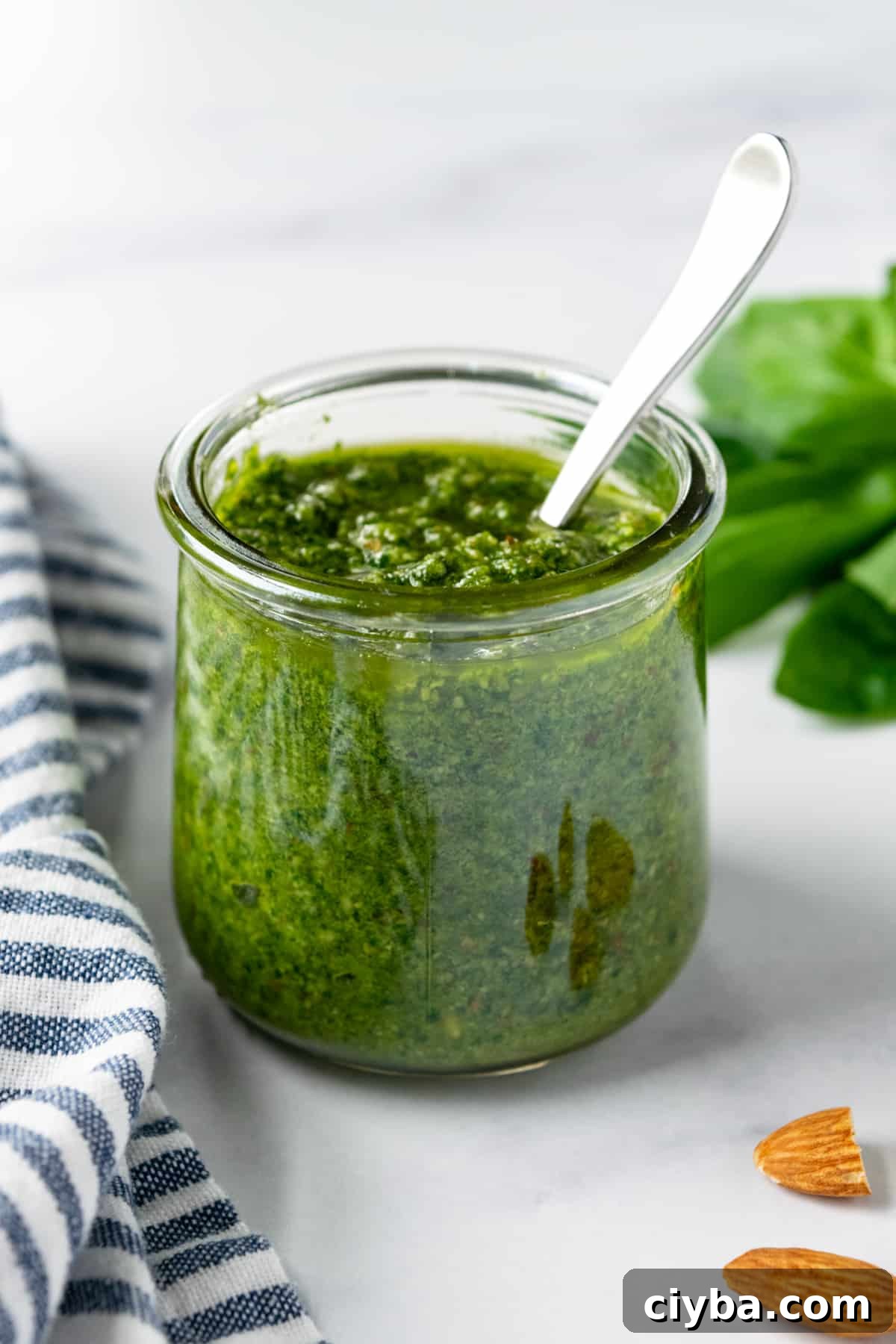
Almond Basil Pesto is a fresh take on classic Italian basil pesto. Replacing pine nuts with almonds adds a warm, nutty depth and a pleasant texture that complements pasta, pizza, roasted vegetables, and sandwiches. This simple, versatile sauce is a flavorful way to use abundant summer basil, but it’s equally welcome year-round with store-bought basil.
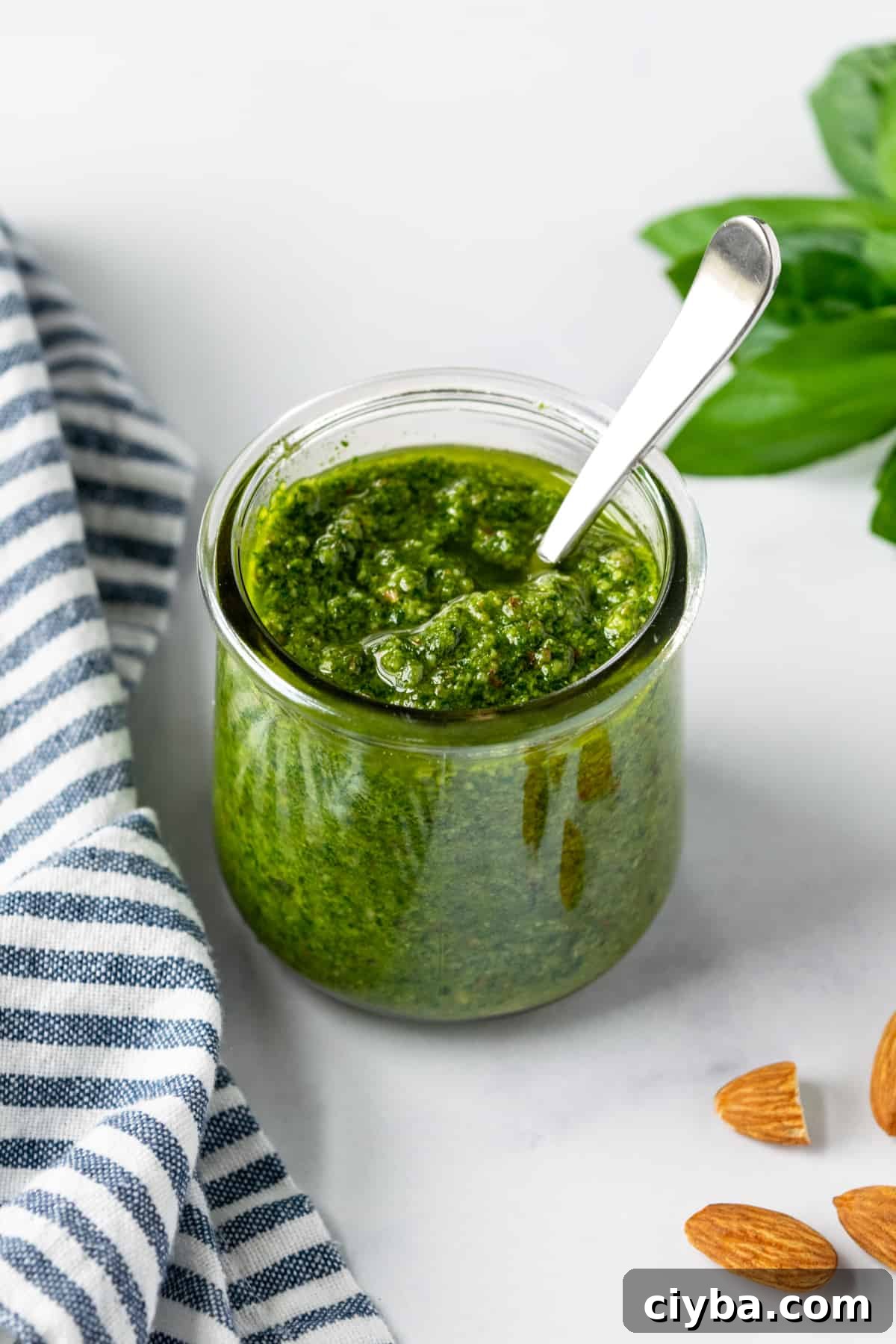
Why you’ll love this recipe
This Almond Basil Pesto is fast to make, requires just a handful of ingredients, and delivers bright herbal flavor with a satisfying nutty base. Almonds are often easier to find and more economical than pine nuts, and they toast beautifully if you want to boost the aroma. The pesto is naturally gluten-free, easily adapted to be nut-free with seeds, and can be adjusted for a smoother or chunkier texture depending on how long you process it.
Make a batch when basil is abundant—then refrigerate or freeze portions so you have a concentrated burst of fresh flavor any time. It’s a perfect pantry-friendly sauce to keep on hand for quick weeknight meals, weekend entertaining, or to brighten simple roasted vegetables.
Ingredients
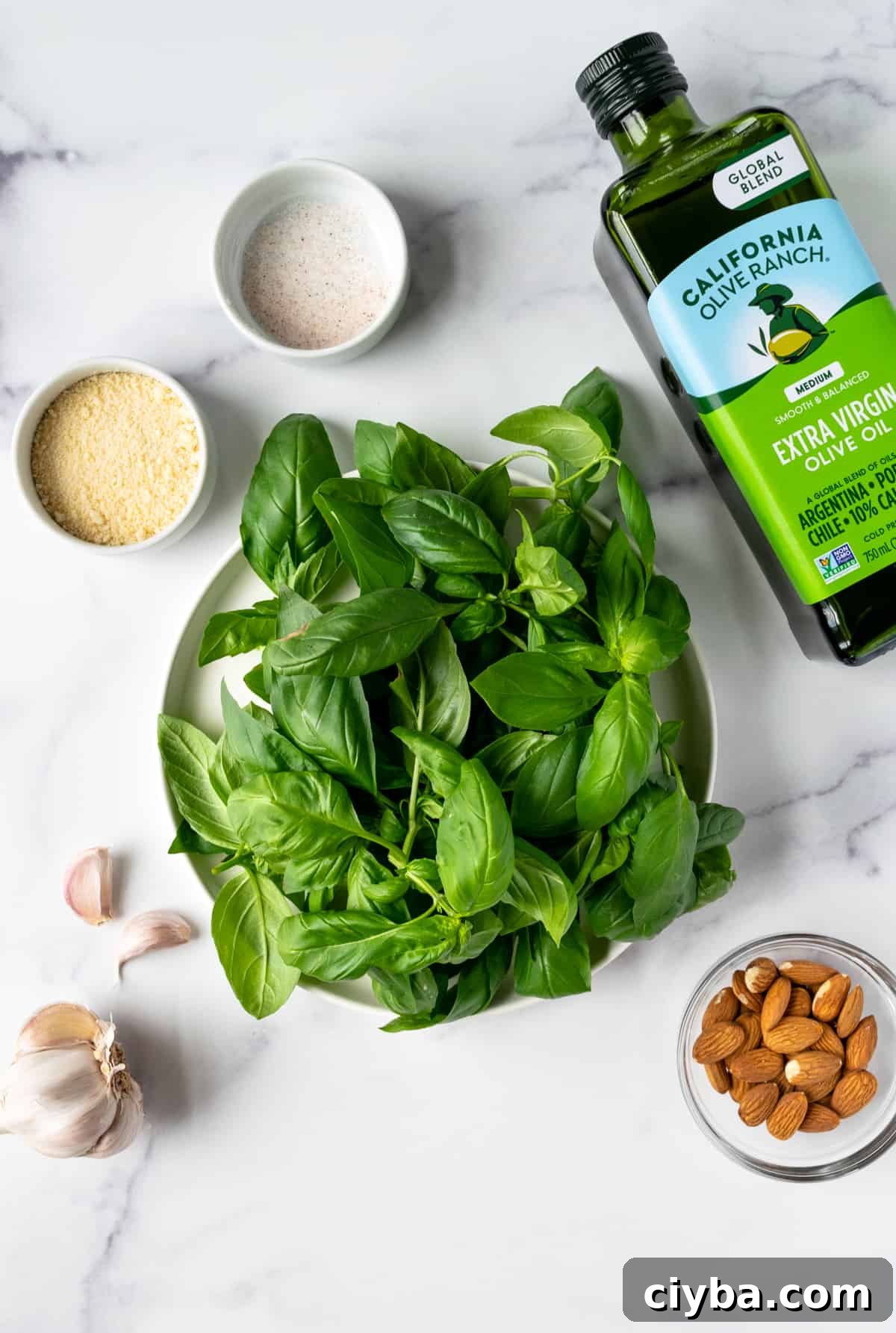
This Almond Basil Pesto comes together with just six straightforward ingredients. Use the freshest basil you can find for the best flavor.
- Basil: Fresh basil leaves, lightly packed.
- Almonds: Raw or toasted almonds both work; toasting enhances flavor.
- Parmesan cheese: Freshly grated parmesan adds savory tang.
- Garlic: Raw garlic for pungency; mince or add whole to the processor.
- Extra virgin olive oil: A good quality olive oil brings richness and mouthfeel.
- Sea salt: To taste; salt balances and lifts the flavors.
Full measured amounts are listed in the recipe card below.
Step-by-step instructions
A few simple steps produce a vibrant, aromatic pesto.
- Place the basil leaves, almonds, grated parmesan, and garlic into a small food processor or blender. Pulse until the mixture is roughly chopped.
- With the processor running, slowly stream in the olive oil until the mixture is evenly combined. If using a blender, add the oil in stages and blend between additions until you reach the desired texture.
- Taste and season with sea salt as needed. If you prefer a thinner pesto, add a little more olive oil and blend until smooth.
Storage: Transfer pesto to an airtight container and refrigerate for up to one week. For longer storage, freeze for up to three months.
Variations
- Toast the almonds: Toasting enhances nuttiness and aroma—toast briefly in a dry skillet over medium heat until fragrant and lightly golden.
- Nut-free option: Omit nuts and substitute seeds such as shelled sunflower seeds or pepitas for a similar texture and flavor profile.
- More greens: Replace half the basil with baby spinach or arugula for a milder or pepperier taste and added volume.
- Lemon brightness: A squeeze of fresh lemon juice lightens and brightens the pesto’s flavor.
- Spicy kick: Add a pinch of crushed red pepper flakes or a small jalapeño for heat.
Serving suggestions
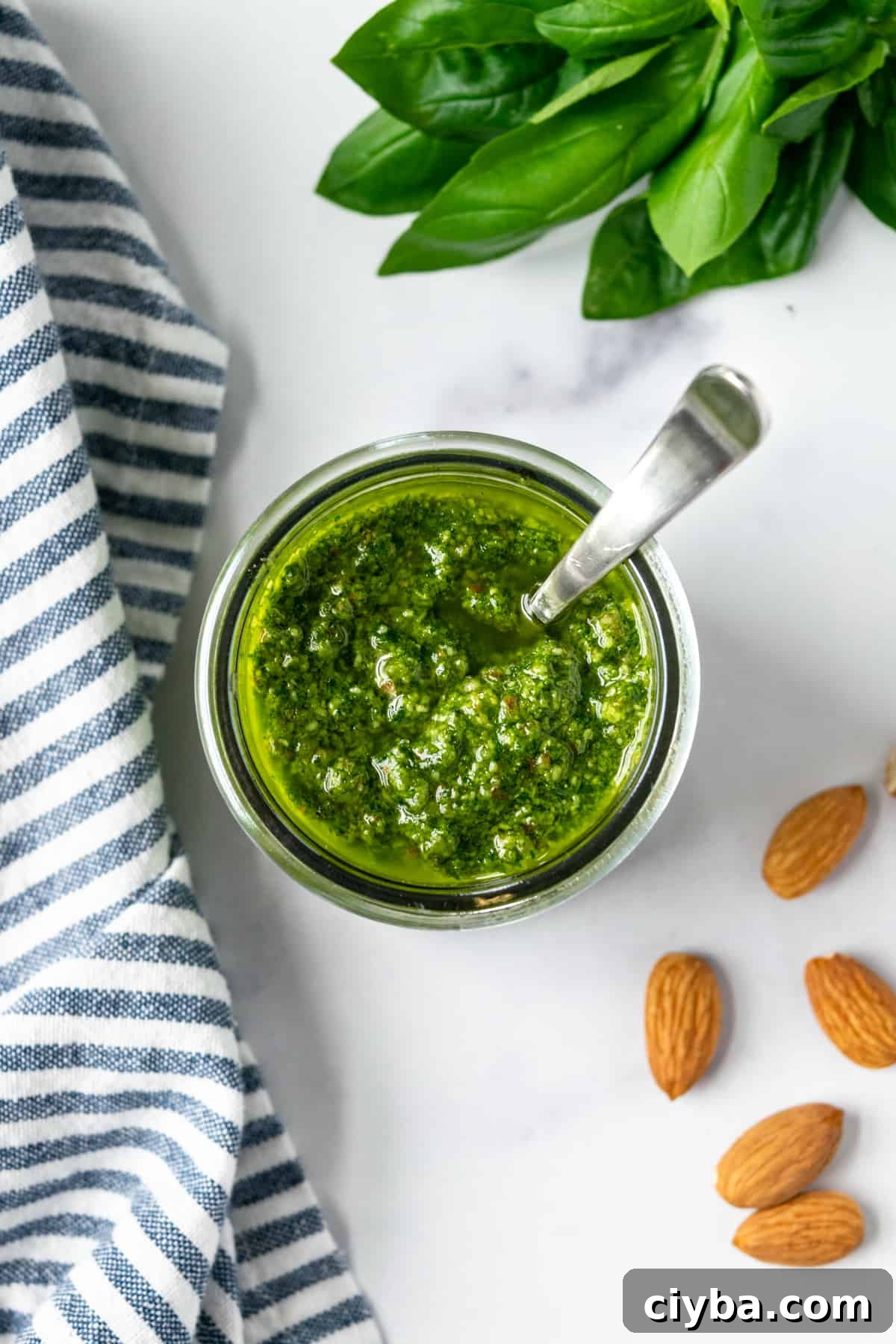
Almond Basil Pesto is a multi-purpose condiment that brightens many dishes. Toss it with warm pasta and a splash of pasta water for a quick sauce, spread it on pizza or flatbreads, or use it as a finishing drizzle over grain bowls. It’s excellent folded into salads, spread on sandwiches, dolloped on roasted or grilled vegetables, spooned over baked chicken or fish, and even served with eggs.
If you try a new way to use the pesto, consider noting the pairing so you can repeat your favorite combinations.
How to freeze pesto
Freezing pesto preserves the fresh basil flavor long after the season ends. Portioning is key so you can defrost only what you need.
Spoon pesto into ice cube trays and freeze for several hours. Once frozen, transfer the pesto cubes to a resealable freezer bag or airtight container and freeze for up to three months. When ready to use, add a cube directly to hot pasta, or let it thaw at room temperature for spreading or tossing into recipes.
Frequently asked questions
You can substitute pine nuts with many other nuts such as almonds, walnuts, or pistachios. For a nut-free pesto, use seeds like shelled sunflower seeds or pepitas. Each option will slightly change the flavor and texture but will still create a delicious pesto.
More recipes
If you enjoy this Almond Basil Pesto, try experimenting with other herb-based sauces and pesto variations. Combining different greens or proteins with pesto can create a variety of satisfying meals.
Recipe card
- 3 cups fresh basil leaves, lightly packed
- 3 tablespoons raw almonds
- 2 tablespoons grated parmesan cheese
- 2 cloves garlic, minced
- 1/3 cup extra virgin olive oil
- sea salt, to taste
- Add basil, almonds, parmesan, and garlic to a small food processor or blender and pulse until coarsely chopped.
- With the motor running, slowly add the olive oil until combined and the pesto reaches desired consistency. For a smoother texture add more oil.
- Season with sea salt to taste and serve, or store as directed.
Notes: For a thinner pesto add more oil. Store in an airtight container up to one week in the refrigerator or freeze up to three months. Nutritional values are approximate.
- Serving Size: 2 tablespoons
- Calories: 218
- Sugar: 0.4 g
- Sodium: 202.8 mg
- Fat: 23 g
- Saturated Fat: 3.4 g
- Carbohydrates: 2.8 g
- Fiber: 1.2 g
- Protein: 3 g
- Cholesterol: 2.7 mg