
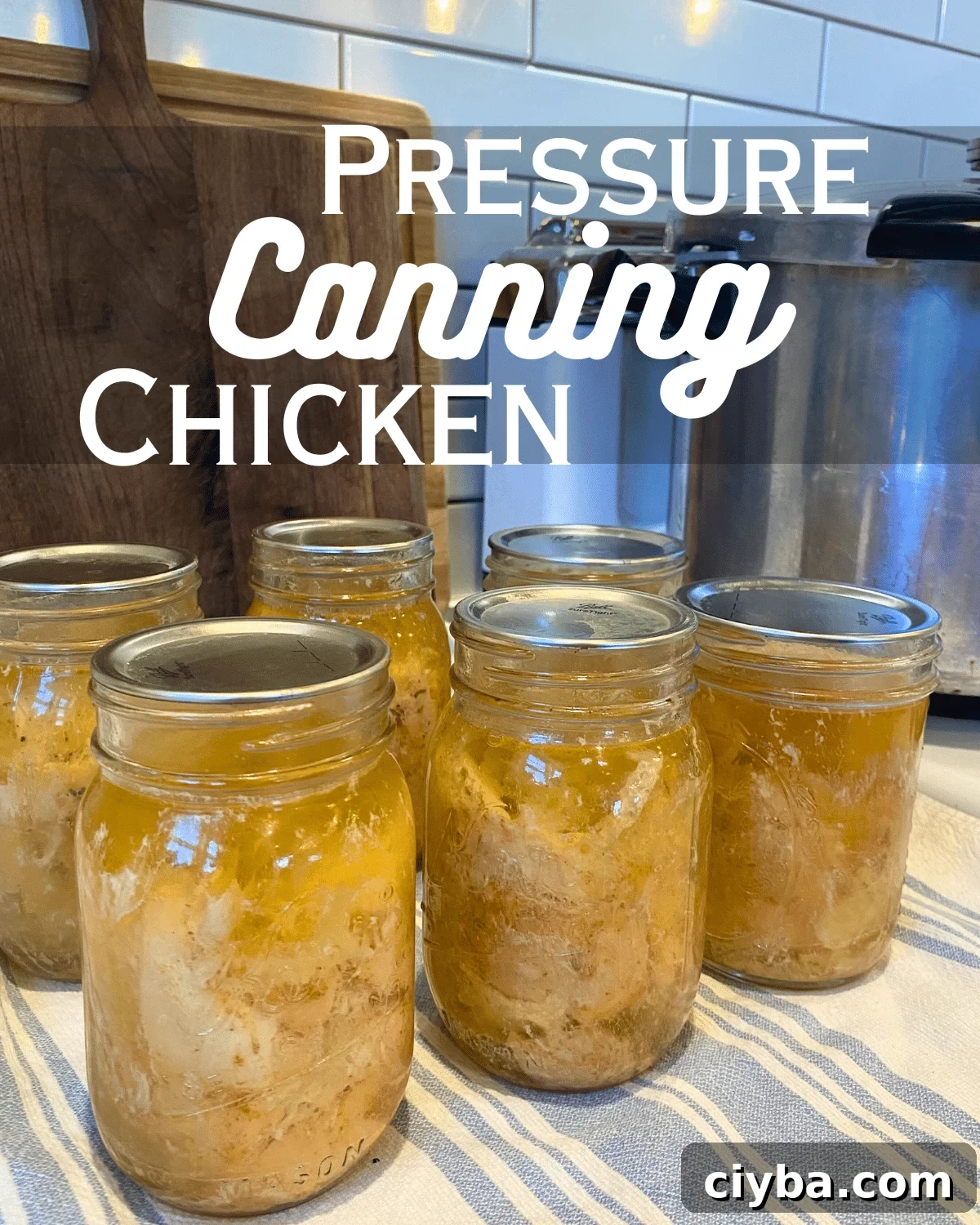
This easy chicken canning method yields tender, fall-apart chicken seasoned to your taste and preserved safely for long-term pantry storage. Use it to keep convenient, shelf-stable protein on hand for soups, salads, casseroles, and quick weeknight meals.
Pressure Canning Chicken
Pressure canning chicken is an efficient and reliable way to preserve cooked or raw chicken for use year-round. Properly processed, it gives you quick access to a high-quality protein source without worrying about refrigeration until opened.
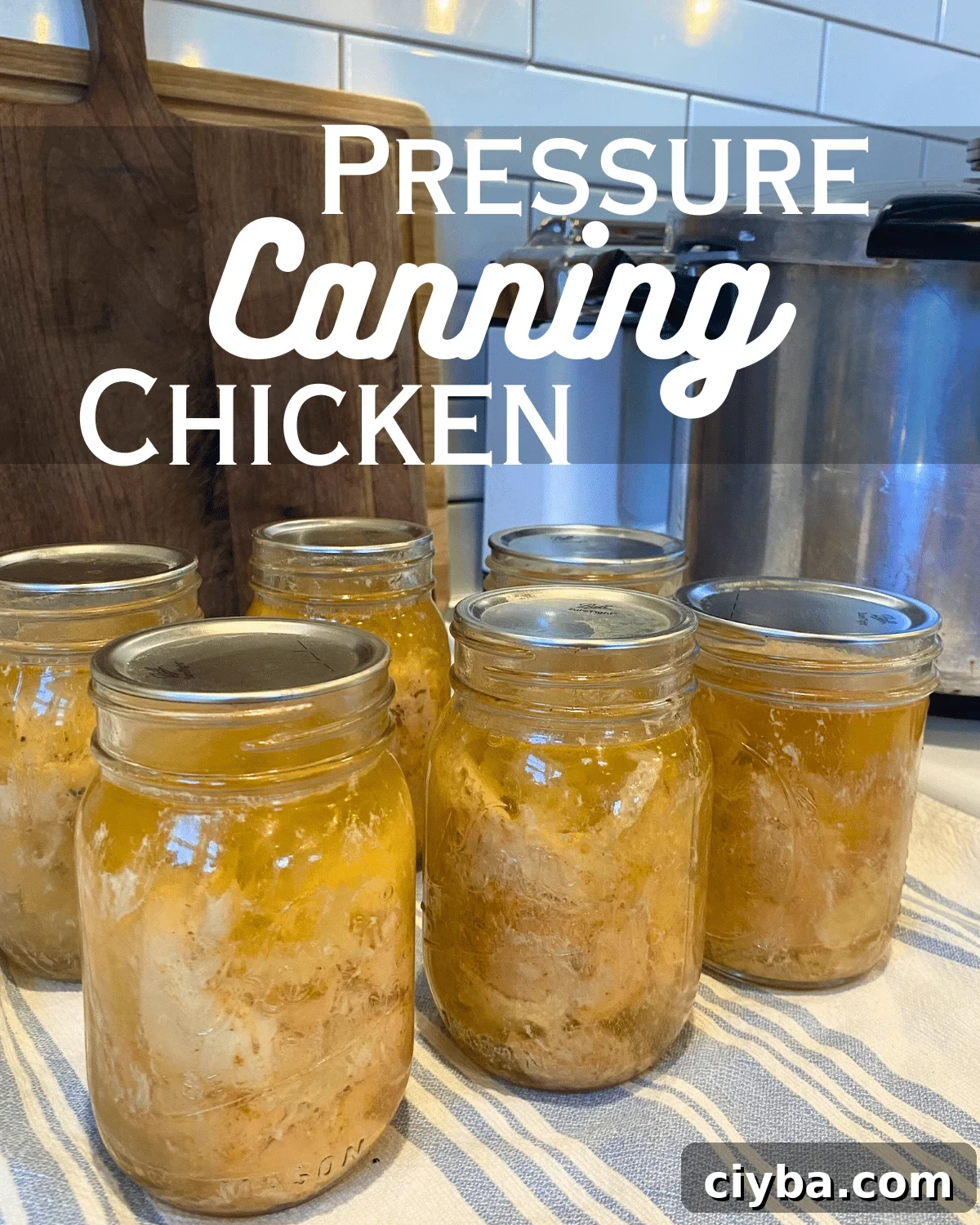
Easy Raw Pack Pressure Canned Chicken (Pints & Quarts!)
Raw pack pressure canning is a beginner-friendly approach: you pack raw, trimmed chicken into jars, add water or broth, and process in a pressure canner. It’s quicker than hot pack and produces tender, versatile chicken that will be ready for many recipes.
Why You’ll Love This Recipe
- Effortless Convenience: Raw pack saves time compared to hot pack canning.
- Versatile Protein: Use home-canned chicken in soups, salads, casseroles, and more.
- Long-Term Storage: Properly canned chicken stores well in a cool, dark pantry for months.
Tools You’ll Need
- 6 pint jars or 3 quart jars, clean (hot soapy water is fine; sterilizing isn’t required if processing immediately)
- New lids and bands
- Fresh chicken breasts or boneless chicken (trim fat; remove bones if desired)
- Optional: 1 teaspoon salt per jar
- 3 quarts water + 2 tablespoons vinegar (for a 7-quart Presto canner)
- Pressure canner (mandatory—do not use a water bath for low-acid foods)
- Butter knife or bubble remover
- Jar lifter
- Chicken stock or cold water
- Canning funnel
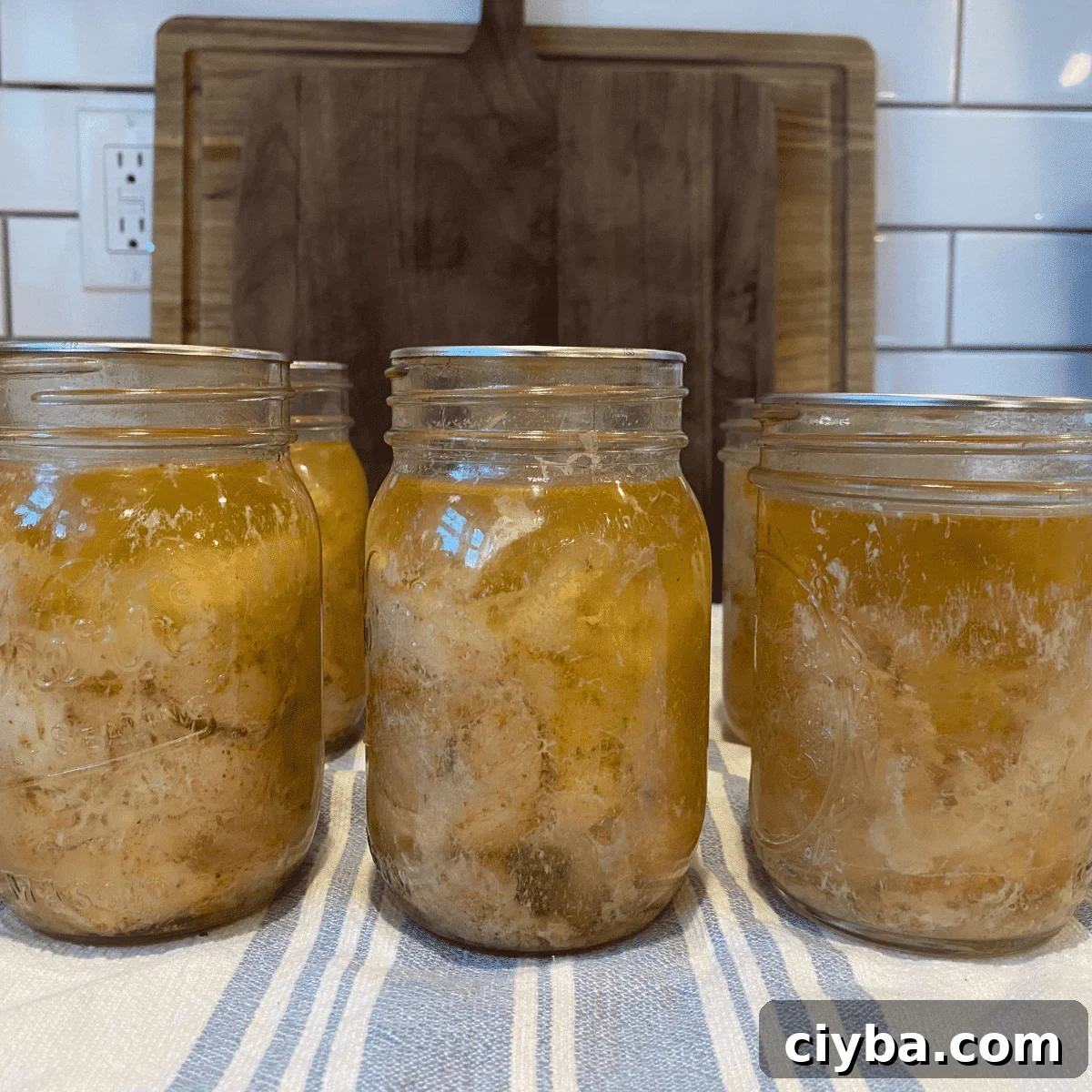
Tips & Tricks
- Warm jars with the canner or hot water before loading to avoid breakage from cold-to-hot temperature shock.
- Let the canner depressurize naturally after processing to reduce liquid loss and ensure good seals.
- Home-canned chicken is excellent in chicken salad, pot pie, and chicken noodle soup.
- You can can whole chicken pieces; just remove meat from bones and trim excess fat before packing.
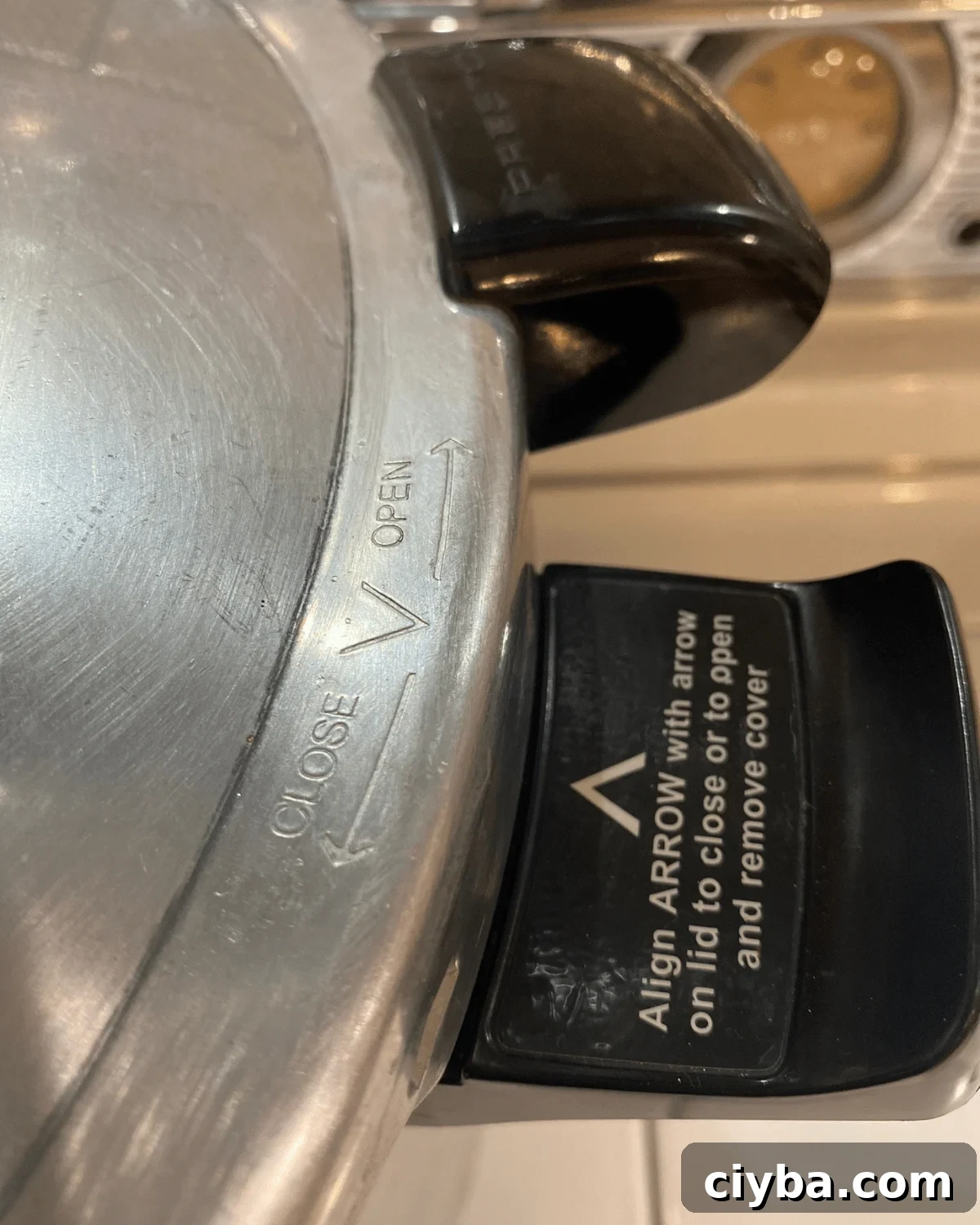
Pressure Canning Chicken vs. Water Bath Canning
Chicken is a low-acid food and must be processed in a pressure canner to reach temperatures high enough to destroy Clostridium botulinum spores. Water bath canning does not achieve those temperatures and is unsafe for meats and other low-acid foods.
The Science of Safety: Pressure canners raise the temperature well above boiling by trapping steam under pressure, ensuring safe preservation. Use a well-maintained canner, follow trusted processing times, and adjust pressure for your altitude.
- Follow a tested recipe for raw or hot pack methods.
- Use a reliable pressure canner with correct gauges and intact seals.
- Process for the exact times specified for your jar size and altitude.
- Allow the canner to depressurize naturally before opening.
Pressure canning is an investment in food safety and shelf-stable meals—there are no shortcuts when preserving low-acid foods.
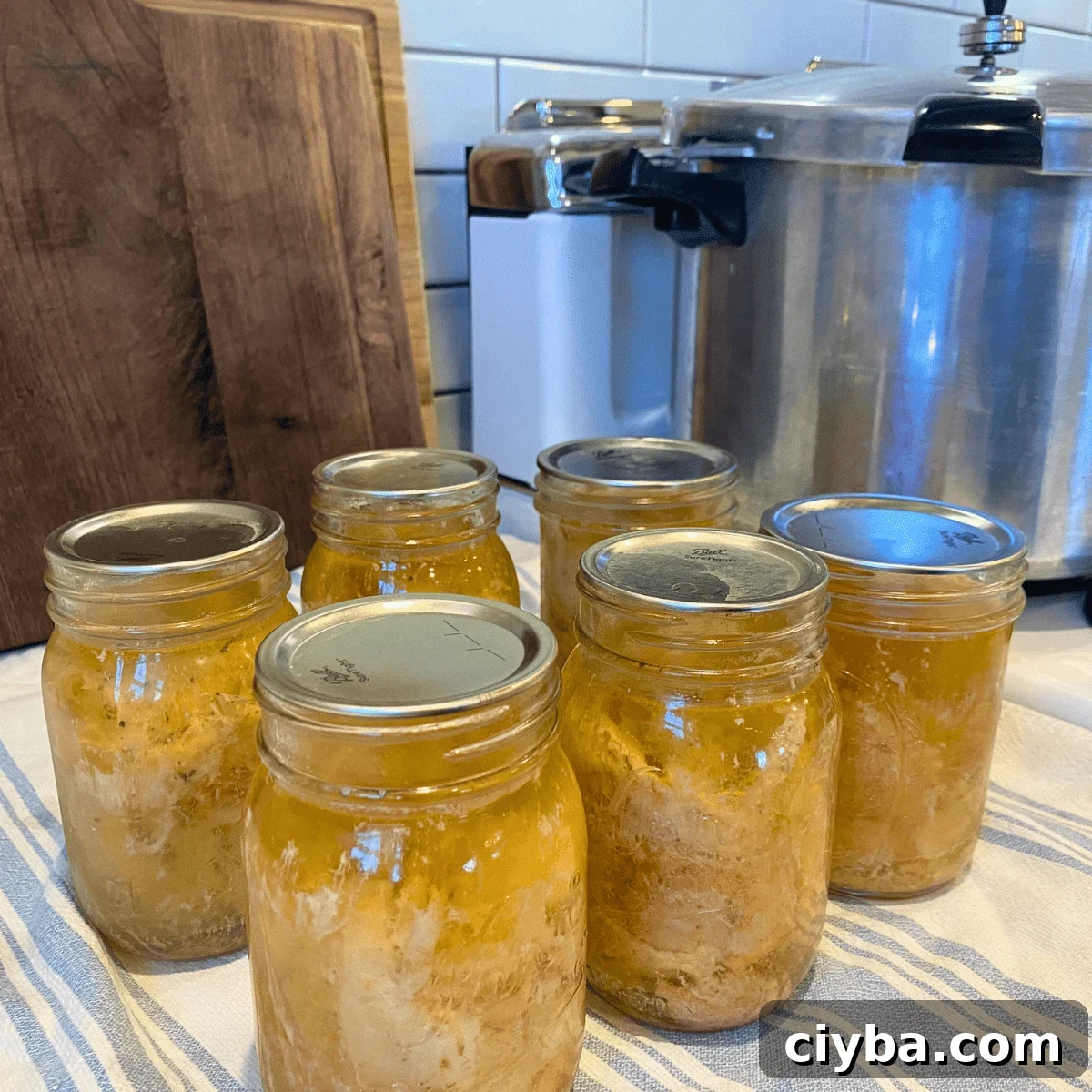
Hot Pack vs. Raw Pack
Both hot pack and raw pack methods produce safe, shelf-stable chicken when processed correctly. Choose the method that best fits your priorities—longer shelf life and texture consistency (hot pack) or speed and flexibility (raw pack).
Hot Pack Benefits:
- Precooking reduces air in jars and can extend shelf life.
- Texture may remain firmer over extended storage.
- Simmering in seasoned broth infuses flavor before sealing.
Hot Pack Drawbacks:
- Requires additional prep time to precook.
- Possible overcooking if not timed carefully.
- Broth flavor is set before storage, offering less flexibility later.
Raw Pack Benefits:
- Faster and simpler—no precooking step.
- Meat often retains more natural juiciness and tenderness.
- Allows you to season and flavor broth later when using the chicken.
Raw Pack Drawbacks:
- May have a slightly shorter ideal shelf life than hot pack.
- Some softening in texture can occur over long storage.
- Chicken is relatively neutral in flavor, so seasoning when used is often needed.
For long-term storage, hot pack may offer advantages, but raw pack is excellent for speed and flexibility. Both are safe when you follow recommended processing guidelines.
Processing Time
Processing time depends on jar size and altitude. The pressure you use is the variable to adjust for altitude; processing minutes remain the same for this recipe.
How Long to Pressure Can Chicken
Baseline processing times (adjust pressure for altitude):
- Pints: 75 minutes at pressure appropriate for your altitude.
- Quarts: 90 minutes at pressure appropriate for your altitude.
Altitude adjustments:
- Sea level to 2,000 ft: use the base pressure for your canner type.
- 2,001 to 4,000 ft: add about 5 minutes of pressure in some guidelines, but with this recipe the processing minutes remain 75/90; increase the pressure as recommended below.
- Above 4,000 ft: increase pressure per canner manufacturer or USDA/NCHFP guidance.
Processing times are the same for boneless and bone-in chicken. The critical factor is achieving and maintaining the correct pressure for your altitude and canner type.
Canned Chicken Shelf Life
The common guideline is to use home-canned chicken within about one year for best quality. Shelf life can vary depending on method, storage conditions, jar seal integrity, and ingredient quality.
- Processing method: Hot pack can extend shelf life slightly; raw pack may be best used within 8–12 months for peak quality.
- Storage: Store jars in a cool, dark, dry place to preserve flavor and safety.
- Seals: Discard any jars with broken seals, bulging lids, or other signs of spoilage.
- Ingredients: Use fresh, high-quality chicken for best shelf life and flavor.
If you have any doubt about the safety of a jar, discard it. Label jars with processing date and contents to keep track of freshness.
Canning Recipes
Applesauce Canning Recipe without Sugar
Pie Cherry Canning Recipe
Mild Salsa Canning Recipe
Chunky Salsa Canning Recipe
Zesty Salsa Canning Recipe
Sweet Salsa Canning Recipe
Crushed Tomato Sauce Canning Recipe
Tomatillo Salsa Verde Canning Recipe
Cowboy Candy Jalapeno Canning Recipe
Source
National Center for Home Food Preservation guidance is the standard reference for safe home canning practices.
Let me know what you think!
Share your tips and experiences in the comments. Did you try any seasoning variations or use the canned chicken in a favorite recipe? Feedback helps others learn and adapt the method.
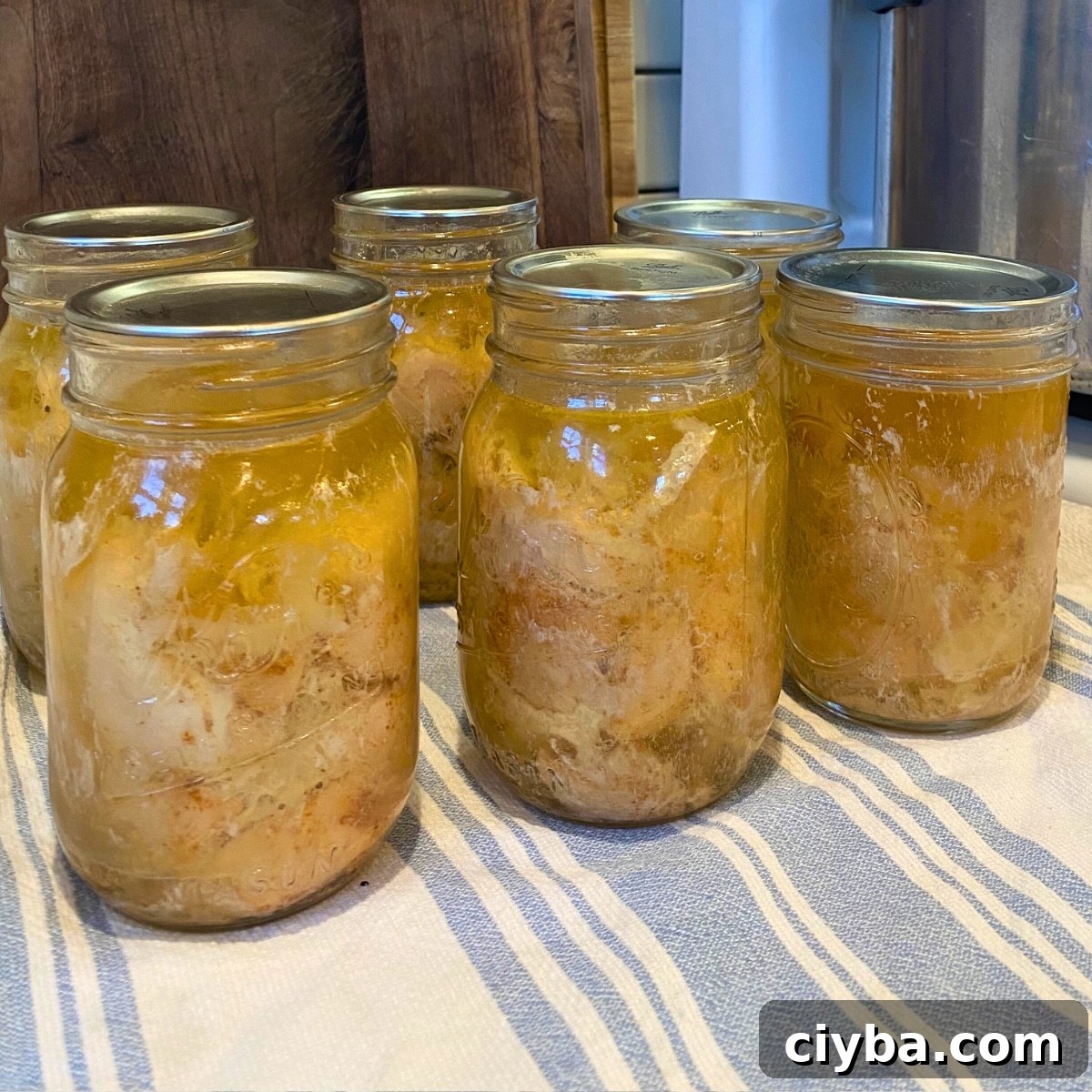
Chicken Canning Recipe – Raw Pack, Pressure Canned
Print
Pin
Rate
Ingredients
- 6 large chicken breasts
- *optional – 2 teaspoons taco seasoning or your favorite chicken seasoning
- *optional – 2 teaspoons “The Usual” seasoning
- About 2 cups water or broth
Instructions
-
Inspect your canner: check the rubber gasket, vents, and other parts for damage or wear.
-
Clean jars and prepare new lids.
-
Trim fat and cut chicken into 1–2 inch cubes.
-
Optional: season portions of the chicken as desired.
-
Pack chicken cubes evenly into jars.
-
Add water or broth to leave 1 inch headspace.
-
Use a butter knife or bubble remover to remove trapped air and confirm 1 inch headspace.
-
Wipe jar rims with a clean towel and a little vinegar to ensure a clean sealing surface.
-
Place a clean, new lid on each jar and apply the band finger-tight.
-
Pour 3 quarts water and 2 tablespoons vinegar into a 7-quart Presto canner (or follow your canner’s water recommendation). Vinegar helps keep jars clear of film.
-
Load jars into the canner, secure the lid, and heat over medium–high until steam vents freely.
-
Vent steam for 10 minutes, then apply the weight or close the regulator. Set pressure according to your altitude and canner type.
-
When the canner reaches the correct pressure (indicator or gauge), start timing: 75 minutes for pints, 90 minutes for quarts.
-
When processing finishes, turn off the heat and allow the canner to depressurize naturally until the gauge reads zero or the vent drops. This can take 30–45 minutes.
-
Wait an additional 10 minutes, then carefully open the canner away from your face to avoid steam burns.
-
Remove jars with a jar lifter and place them on a wire rack or towel-lined counter. Let them cool undisturbed for 12–24 hours.
-
After cooling, check seals by pressing the center of each lid; it should not flex. Refrigerate and use immediately any jars that did not seal.
Notes
Weighted gauge canners typically require 10 psi at low elevations and 15 psi above certain elevations; dial gauge canners use specified psi that increases with altitude. Follow your canner manufacturer or USDA/NCHFP guidance for exact pressure adjustments.
If you have a Weighted Gauge Canner
(Rocking or jiggling weight)
| Altitude (feet) | Pressure (psi) |
| 0 to 1,000 | 10 |
| Above 1,000 | 15 |
If you have a Dial Gauge Canner
| Altitude (feet) | Pressure (psi) |
| 0 to 2,000 | 11 |
| 2,001 to 4,000 | 12 |
| 4,001 to 6,000 | 13 |
| 6,001 to 8,000 | 14 |
| 8,001 to 10,000 | 15 |
Allow the pressure to release naturally. Rapid release can cause loss of liquid and may compromise seals.