
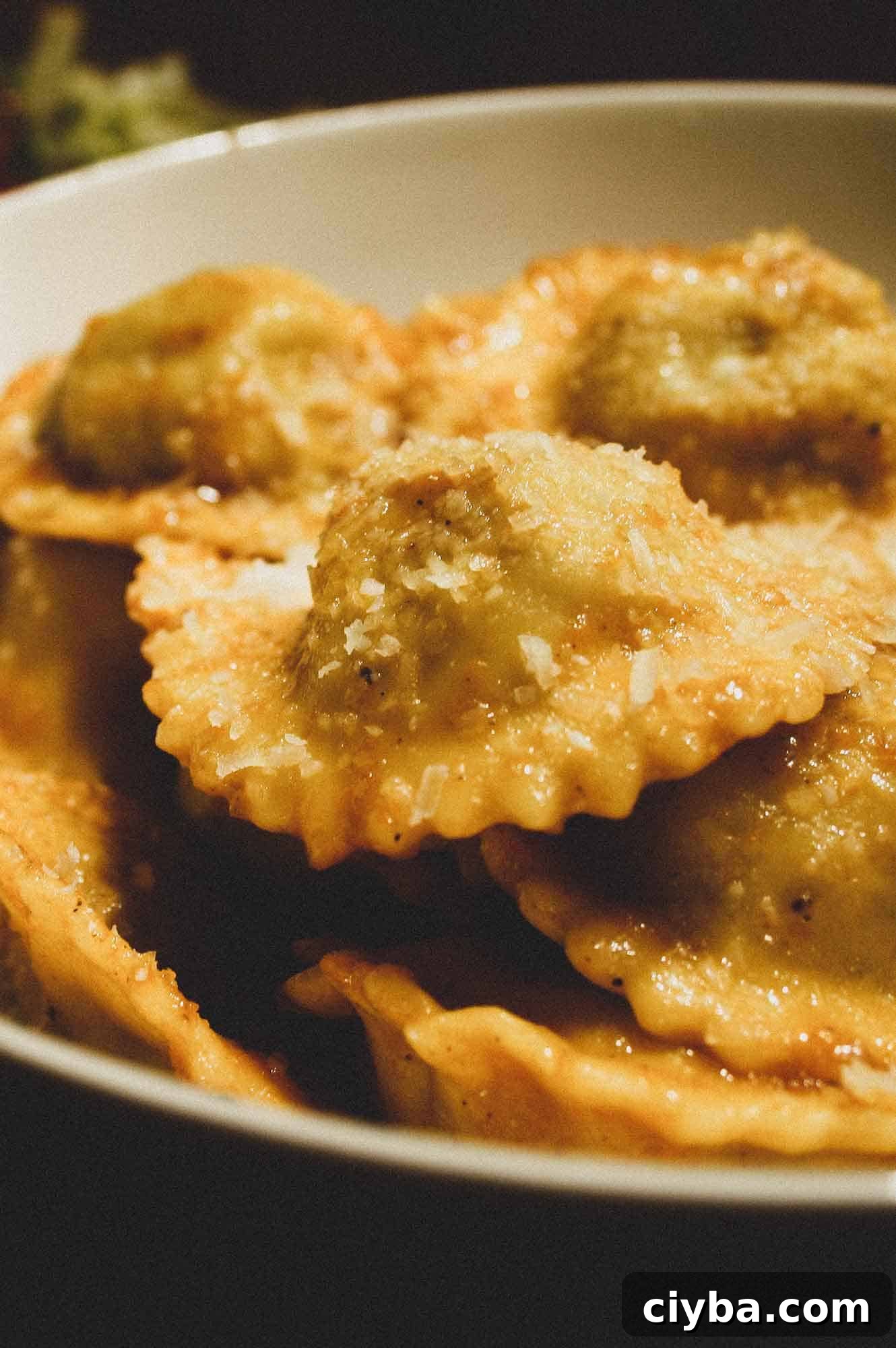
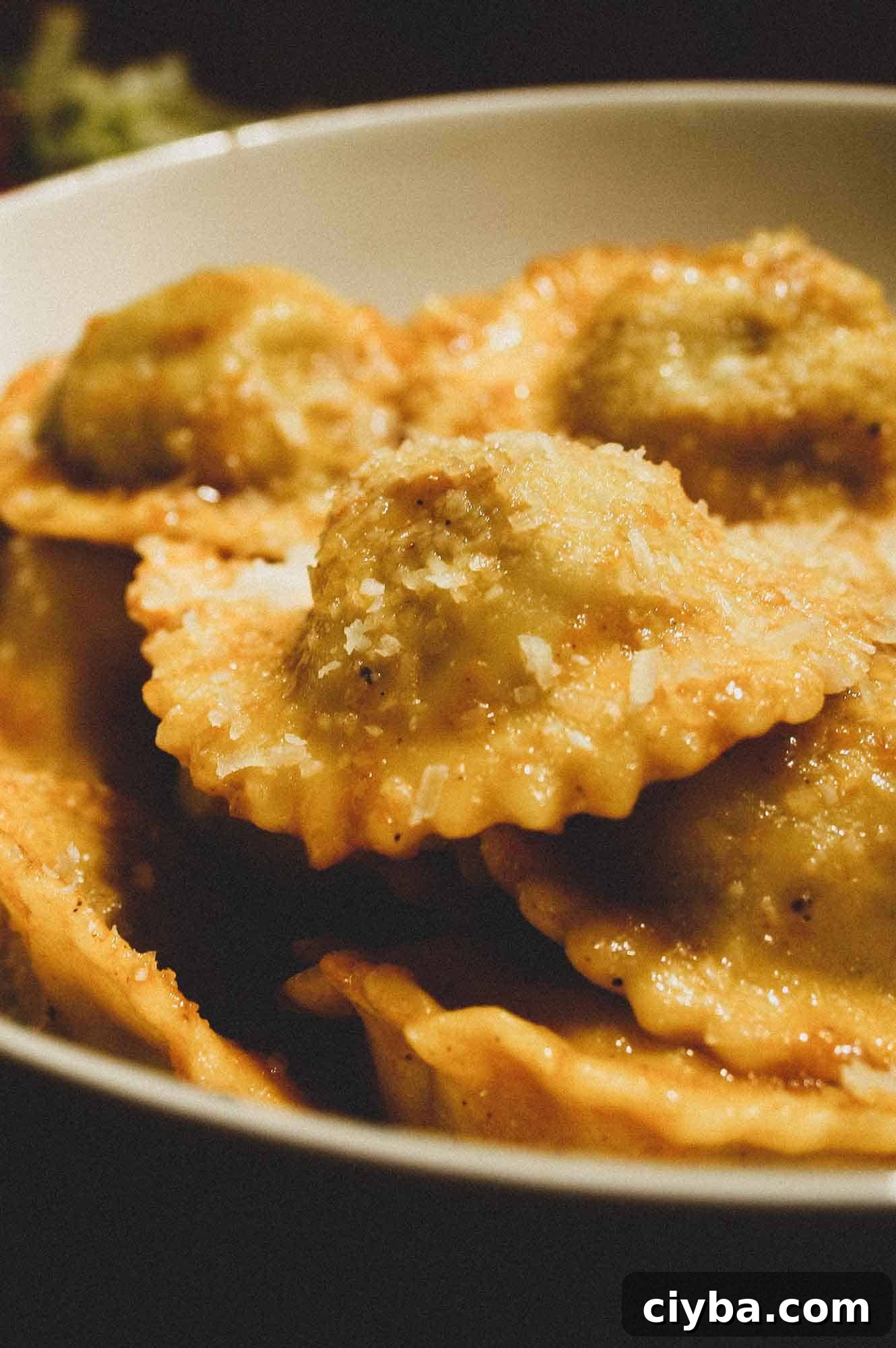
Osso Buco Ravioli
By Lee Jackson ↣ Published on: October 11, 2019
Osso buco that has been braised until tender becomes the star ingredient in these ravioli parcels. The shredded, flavorful meat combined with a reduced braising sauce makes for rich, satisfying pockets of pasta. Serve simply tossed in the sauce for a memorable course.
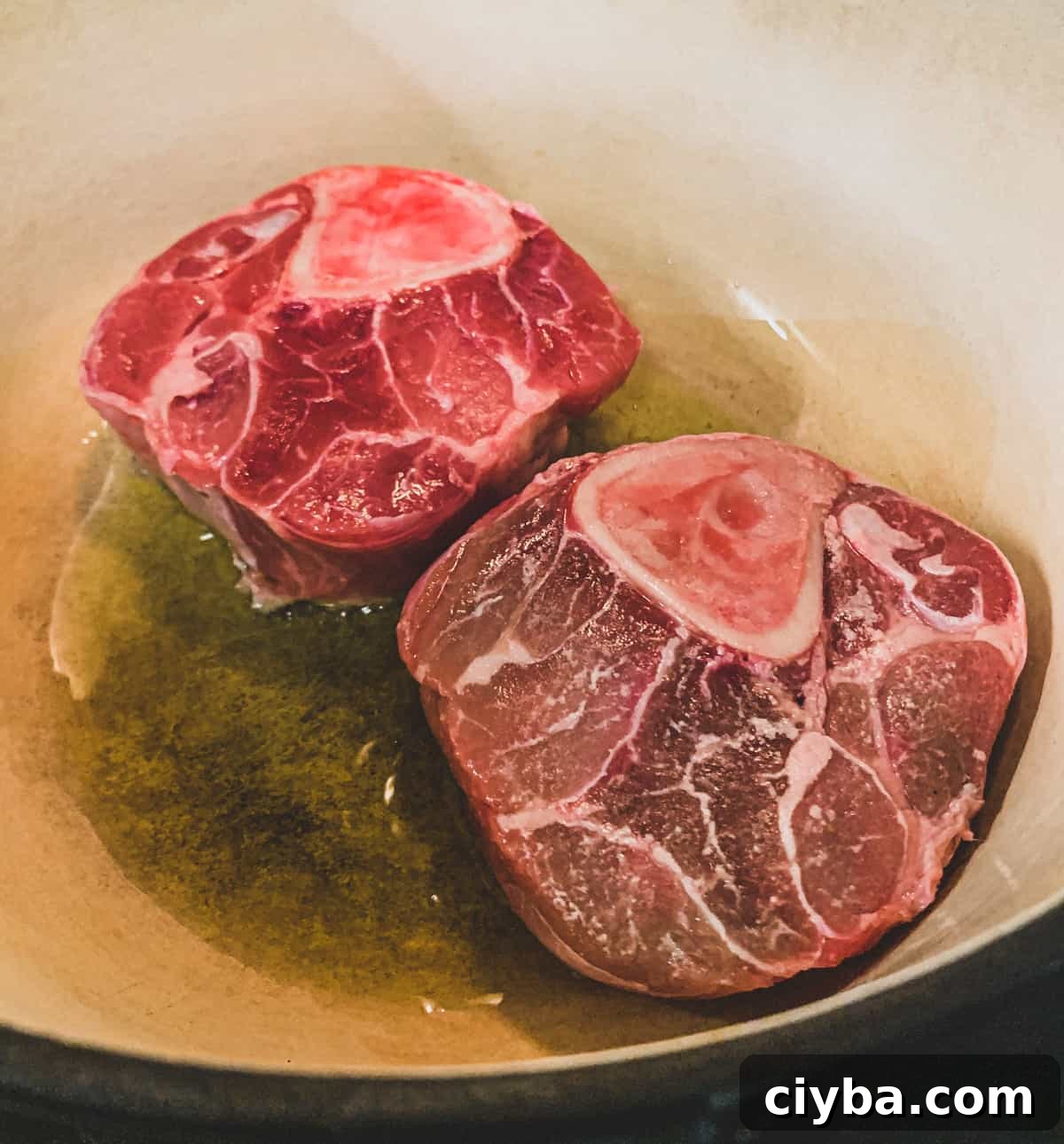
Few dishes match the comfort and depth of osso buco: veal (or beef) shanks braised slowly until the meat is fall-off-the-bone tender and the pan juices become a rich gravy. Occasionally you’ll find a pocket of marrow in the shank — an extra treat that melts into the sauce.
Rather than serving the ragù only with risotto or polenta, stuffing it inside fresh egg pasta elevates the dish. The concentrated meat and a touch of grated Parmigiano Reggiano make a luxurious ravioli filling — hearty but refined.
This recipe is ideal for special occasions. It requires some time and care, but the payoff is beautiful: delicate pasta pockets filled with intensely flavored braised meat, finished in the reduced braising sauce.
What’s Ahead?
What is Osso Buco?
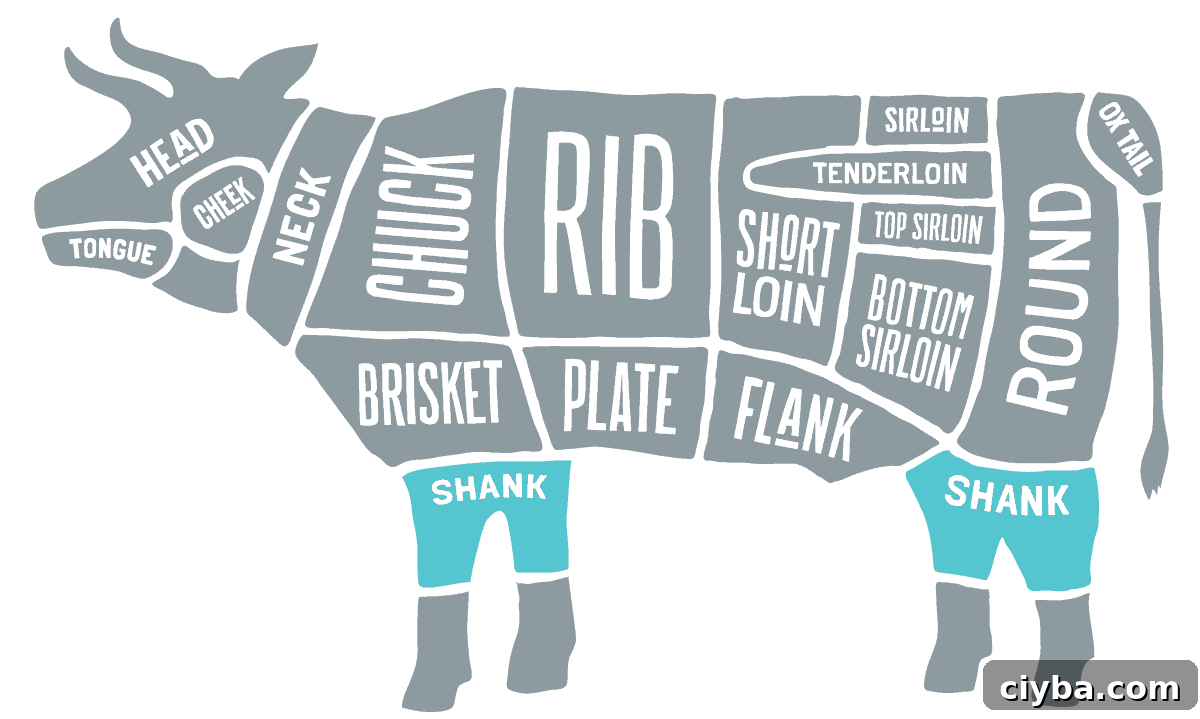
Osso buco refers to the shank — a thick cut from the upper part of a leg that includes a central bone. Because it’s a well-exercised muscle, it benefits from long, gentle cooking. Braising transforms the cut into tender, flavorful meat often served with risotto Milanese, polenta, and gremolata. In this recipe, the braised meat becomes a ragù that fills fresh egg pasta ravioli.
Why it works?
Combining braised osso buco with fresh pasta gives you two delights in one: the concentrated, slow-cooked ragù and delicate, silky ravioli. The braising liquid reduces into a fragrant sauce that perfectly coats each parcel.
The perfect ragù, without tomato?
Some regions favor a tomato-based braise while others keep it without tomatoes. Both are traditional in Italy. For this ravioli I prefer a tomato-free osso buco so the filling remains pure, savory, and focused on the meat and aromatic braising liquid. Either approach works — use the one you enjoy most.
Step by Step
This recipe has three main stages. You can spread them over a couple of days if preferred: make the ragù ahead, prepare the fresh pasta, and then roll, fill and cook the ravioli on the day you serve them.
- Make and cook the osso buco ragù. It keeps well in the fridge for 2–3 days or freezes for several months.
- Prepare fresh egg pasta dough. Rest the dough, then roll into thin sheets for filling.
- Roll, stuff, and cook the ravioli. Best done the same day you plan to serve them.
Pro Tips
- If you want to speed up shaping, a ravioli cutter helps, but a circular cookie cutter, small glass or cup works fine too.
- Work in stages: make and freeze the ragu or pasta separately, then assemble and cook when ready. Freezing filled ravioli on a tray first prevents them from sticking together.
Serving & Storage Suggestions
This recipe works as a generous pasta course or a substantial main. The reduced braising liquid is the ideal sauce to toss with the ravioli.
- Leftovers: Best eaten fresh. Ravioli sitting in sauce will firm up and lose some appeal, so serve promptly.
- Freezing: Freeze shaped ravioli in a single layer on a tray lined with greaseproof paper. Once firm, transfer to a freezer bag for up to 3 months. Cook from frozen: when ravioli float, continue cooking 3–4 minutes to ensure the filling is heated through.
- Use the leftover sauce: After filling the ravioli, the remaining ragù is excellent with wider pastas like pappardelle or fettuccine, finished with Parmigiano Reggiano or Pecorino.

Ready to get cooking?
Osso buco ravioli is a labor of love that rewards you with a showstopping plate. It’s a great choice for celebrations or when you want to impress family and guests. Follow the steps, enjoy the process, and serve hot with plenty of grated cheese.
More Italian recipes
If you enjoy this dish, explore other Italian favorites for more inspiration and techniques to build your comfort-food repertoire.
This recipe uses affiliations and may receive a commission based on your activity (link clicks).

Osso Bucco Ravioli
Rate this recipe
Print RecipePin Recipe
Ingredients
For the ragu
- 2 1/2 lb (around 1kg) Osso Bucco (veal or beef)
- 2 tbsp olive oil
- 1 large onion (diced)
- 2 celery sticks (diced)
- 2 carrots (diced)
- 4 garlic cloves (peeled and chopped)
- 1 bouquet garni
- 1 tsp fennel seeds
- 1 cup dry white wine
- 4 cup beef broth/stock
- salt & pepper
For the fresh pasta
- 8 oz (220g) 00 flour (or plain, all-purpose flour)
- 5 eggs (2 whole eggs, 3 yolks)
For the pasta stuffing
- 1/2 cup finely grated Parmigiano Reggiano (parmesan)
Instructions
For the Osso Bucco
-
Heat oil in a large casserole over medium heat. Brown the osso buco pieces on all sides, working in batches if necessary, then remove.
-
Add onion, celery, carrot and garlic to the pan and cook 2–3 minutes to soften and release the browned bits from the pan. Return the meat to the pan.
-
Pour in wine and stock so the meat is just covered. Add the bouquet garni, fennel seeds, and season with salt and pepper. Bring to a boil, then reduce to a very gentle simmer, cover and cook for about 4 hours, stirring occasionally, until the meat is falling-apart tender.
-
Remove the meat and let cool slightly. Discard bones and excess fat, but scrape any marrow into the meat. Shred and chop the meat finely.
-
Mix the shredded meat with finely grated Parmigiano and a few spoonfuls of the braising liquid until you have a thick, spreadable mixture for filling.
Making the pasta
-
Make a well of flour and whisk eggs into the centre, gradually drawing in flour. When too thick, use hands to form a dough.
-
Knead 10–15 minutes until smooth and elastic. Rest wrapped in the fridge for 30 minutes.
Rolling and stuffing
-
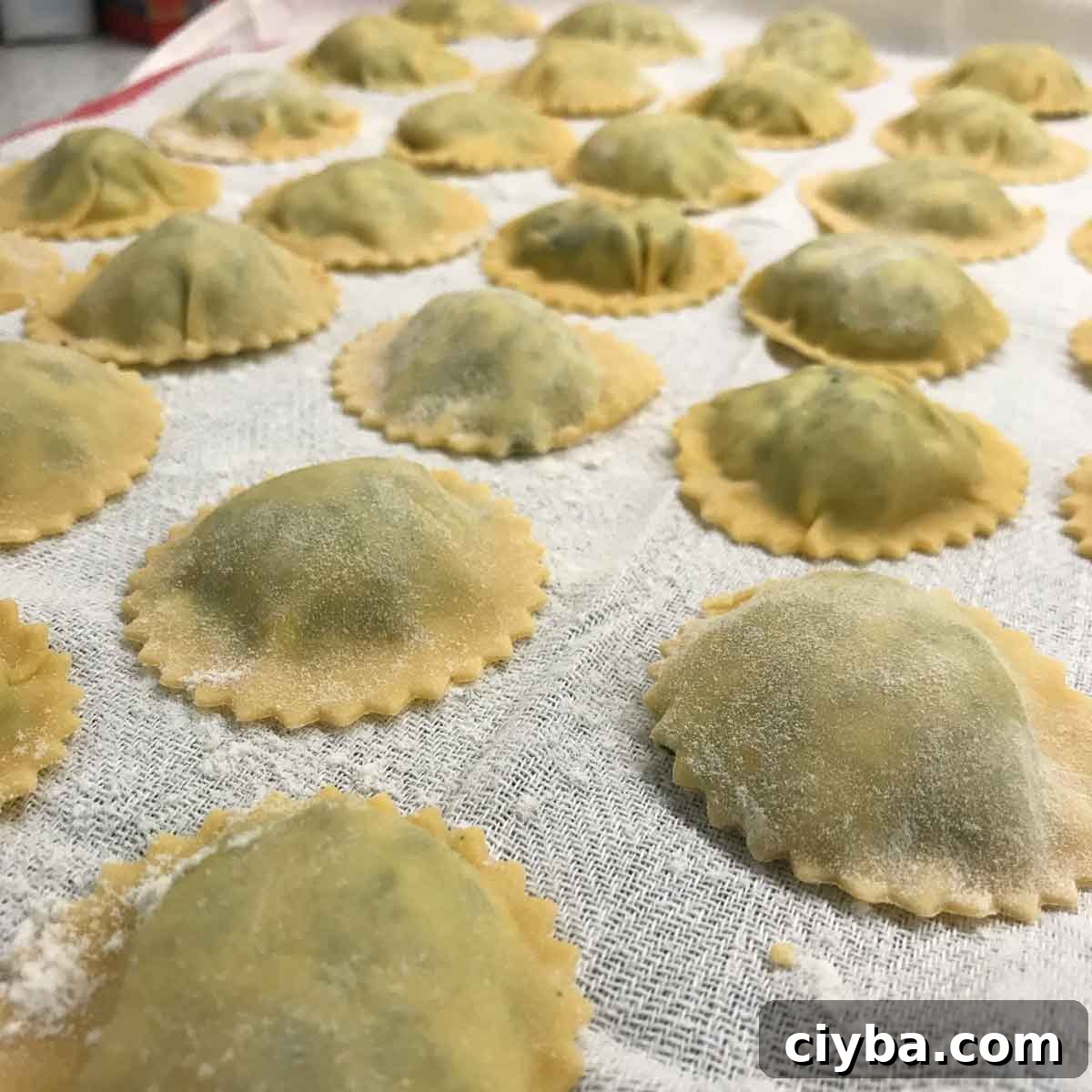
Roll dough through a pasta machine to near-thin sheets. Place small mounds of filling spaced evenly on one sheet, moisten around them, fold and press to seal, removing as much air as possible. Cut into individual ravioli and place on a tray covered with a towel.
Cooking
-
Warm several ladles of the braising sauce with half a stick of butter in a frying pan and keep warm. Cook ravioli in plenty of salted boiling water until they float, about 2–3 minutes. Remove with a slotted spoon and finish in the sauce, tossing gently to coat. Serve with extra grated Parmigiano Reggiano.