
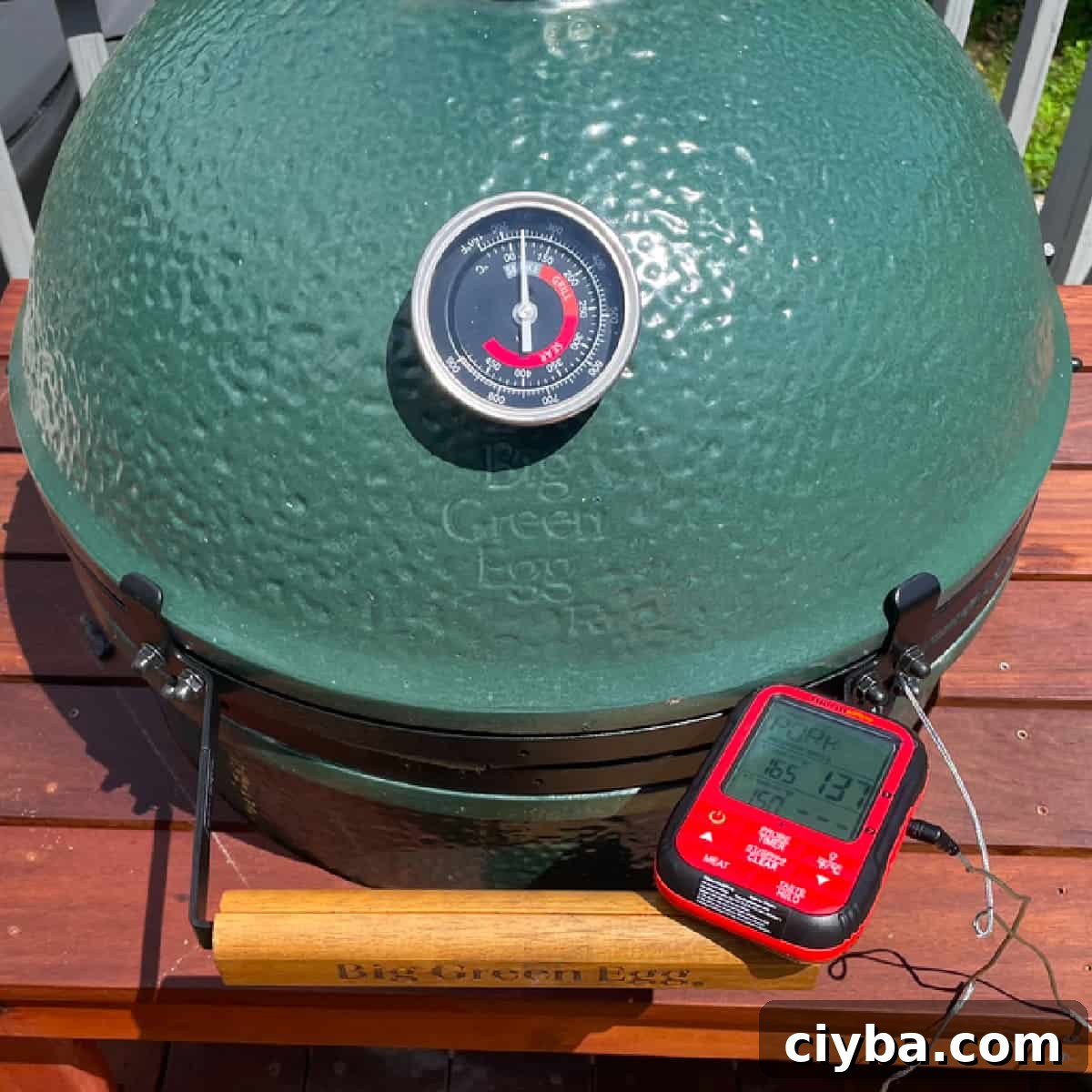
You don’t need to be a championship pitmaster to enjoy the Big Green Egg, but learning a few reliable techniques will make your cooking more satisfying and enjoyable. With some basic preparation and practice, you can confidently smoke, grill, and bake outstanding food on your kamado ceramic cooker.
Watch a few tutorial videos, try a couple of recipes, and you’ll quickly gain the skills that make the Egg so rewarding. Below are practical preparation tips and ten essential skills that will help you get the most from your Big Green Egg.
Preparation Then Execution
Before diving into advanced techniques, cover the fundamentals of preparation. Choose the Egg size that suits your needs—Mini, MiniMax, Small, Medium, Large, XLarge or 2XLarge—based on the number of people you usually cook for and whether you value portability or a permanent backyard setup.
Understand your meats, their storage, and safe thawing practices. Proper thawing prevents bacteria growth and helps ensure predictable cooking times. Learn the different cuts of beef and pork and how their size affects cook time. Decide early if you want Kansas City–style ribs or baby backs so you can plan the seasoning and timing accordingly.
Prep in advance: tenderize, marinate, and brine when appropriate. A sirloin that soaks in a good marinade for an hour will reward you when it hits the grill. Have a cooking order planned so that everything finishes when it should—put vegetarian items or quick-cook sides on last, for example.
Gradually assemble accessories to enhance your setup. Start with the basics and add tools as you learn the Egg’s behavior. Accessories are helpful, but mastering the cooker first will give you the biggest improvements in results.
Invite friends and family to share the results. With planning and practice, you’ll be ready to deliver memorable meals.
The 10 Skills You Need to Know
Develop these ten core skills to elevate your smoking, grilling, and baking on the Big Green Egg:
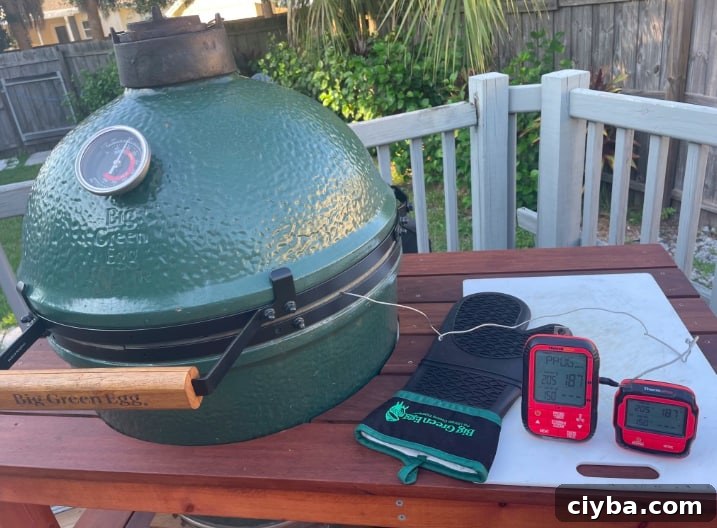
1. Temperature control is critical.
Controlling heat on a ceramic cooker is essential. Because airflow drives the fire, opening the top and bottom vents raises temperature while closing them lowers it. Avoid overheating—bringing a ceramic cooker back down from an overshoot can be difficult. Use a reliable dual-probe thermometer to monitor both ambient grill temperature and internal meat temperature. Learn manual control before investing in fully automated controllers.
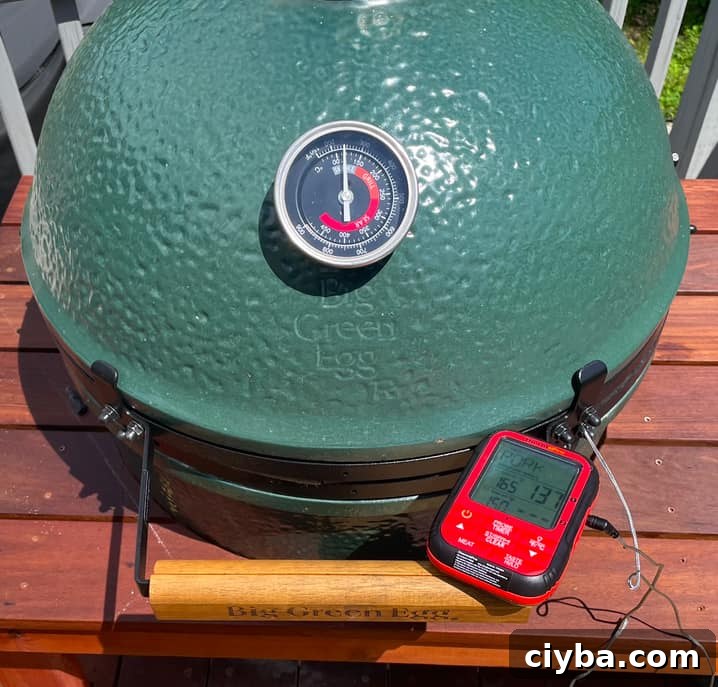
2. Timing.
Good timing is planning combined with experience. Know when to thaw, when to start fuel, and how long each cut takes. Typical ranges to guide planning: wings may take around 1–1.5 hours, a 6–7 lb pork shoulder 10–12 hours, baby back or spare ribs around 4 hours using common methods, and a 6 lb trimmed brisket can take 12–13 hours depending on temperature and technique.
3. Fire building.
Always use natural lump charcoal—avoid briquettes and lighter fluid. Start with larger pieces as a base and add a few starter cubes or natural starters. For long smokes, build the charcoal stack up and bring the temperature up slowly. Don’t plan to add charcoal mid-cook; start with more rather than less. For searing, build a strong direct-heat fire and keep the lid open during the initial flare-up phase.
4. Always spatchcock your poultry.
Spatchcocking poultry flattens it for quicker, more even cooking and better skin exposure for crisping. Brine and season the bird well so flavors penetrate. Spatchcocking is especially useful for larger birds when even cooking and shorter time are priorities.
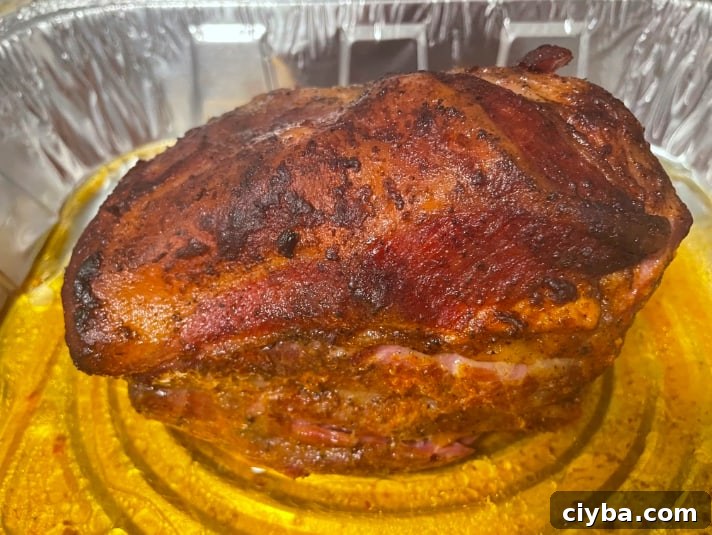
5. Low and slow.
When time allows, target 225–235°F for smoking. Lower temperatures yield more predictable tenderness for brisket and pork shoulder. For ribs, classic methods like the 3-2-1 approach—three hours smoke, two hours wrapped with liquid, one hour sauced—produce consistent results. Keep the lid closed unless necessary to preserve steady heat and smoke.
6. Moisture is your friend.
Steam and humidity help maintain juiciness during long smokes. Use a water pan or diffuser to create a moist environment—common practice is a mix of water and apple juice or other aromatics. Position the convEGGtor and pan to keep the meat elevated and indirect from the coals for even cooking.
7. Beef brisket, Texas style.
For a simple, traditional brisket approach, inject and generously rub with salt, pepper, and garlic. This minimalist seasoning showcases the meat and smoke. Different brisket styles exist, but mastering basic injection, rub, and low-and-slow smoking will make a dramatic difference in results.
8. Use good wood.
Quality wood shapes flavor. Match wood types to proteins—apple or fruit woods work beautifully with pork, while oak or hickory pair well with beef. Use large chunks and add them on top of the initial charcoal for a steady, clean smoke rather than small chips that burn too quickly.
9. EGGspander versatility.
The EGGspander system lets you build vertical cooking tiers to maximize space. Experiment with grid configurations to cook multiple items at once—meat on the base grid, vegetables or smaller items on higher racks. Use a pizza stone or other accessories to expand the Egg into a wood-fired oven when needed. Vertical cooking greatly increases capacity and flexibility.
10. Maintenance and care.
Proper care extends the life of your Egg. Prevent cracks in the ceramic shell, firebox, and fire ring by avoiding thermal shocks and rough handling. Remove ash before each cook to ensure good airflow, clean cooking surfaces while warm, and cover the unit when not in use. Store the Egg in a dry, protected spot when possible—cleanliness and routine checks are part of good technique.
The Big Green Egg behaves differently from gas, pellet, or kettle grills, but its versatility is unmatched. Spend time practicing smoking, grilling, and baking; develop the skills above; and you’ll be rewarded with consistent, delicious results that make outdoor cooking a pleasure.