I’m not a party person — anyone who knows me can attest to that. I much prefer a quiet evening with a gelato and a couple of friends, or a movie night with my partner (how is it that The Space Cinema still hasn’t offered us a couples’ subscription?). I like laughter over loud music in a bar that makes everything feel distant. Those noisy nights never suit me.
Perfect evenings
Last night was one of those perfect evenings: I cooked for friends, and we spent the night talking, laughing, and enjoying a little wine — and wine-poached peaches. Admit it, a good splash of wine belongs at relaxed gatherings, as long as no one overdoes it. I love cooking for others; it gives me real pleasure.
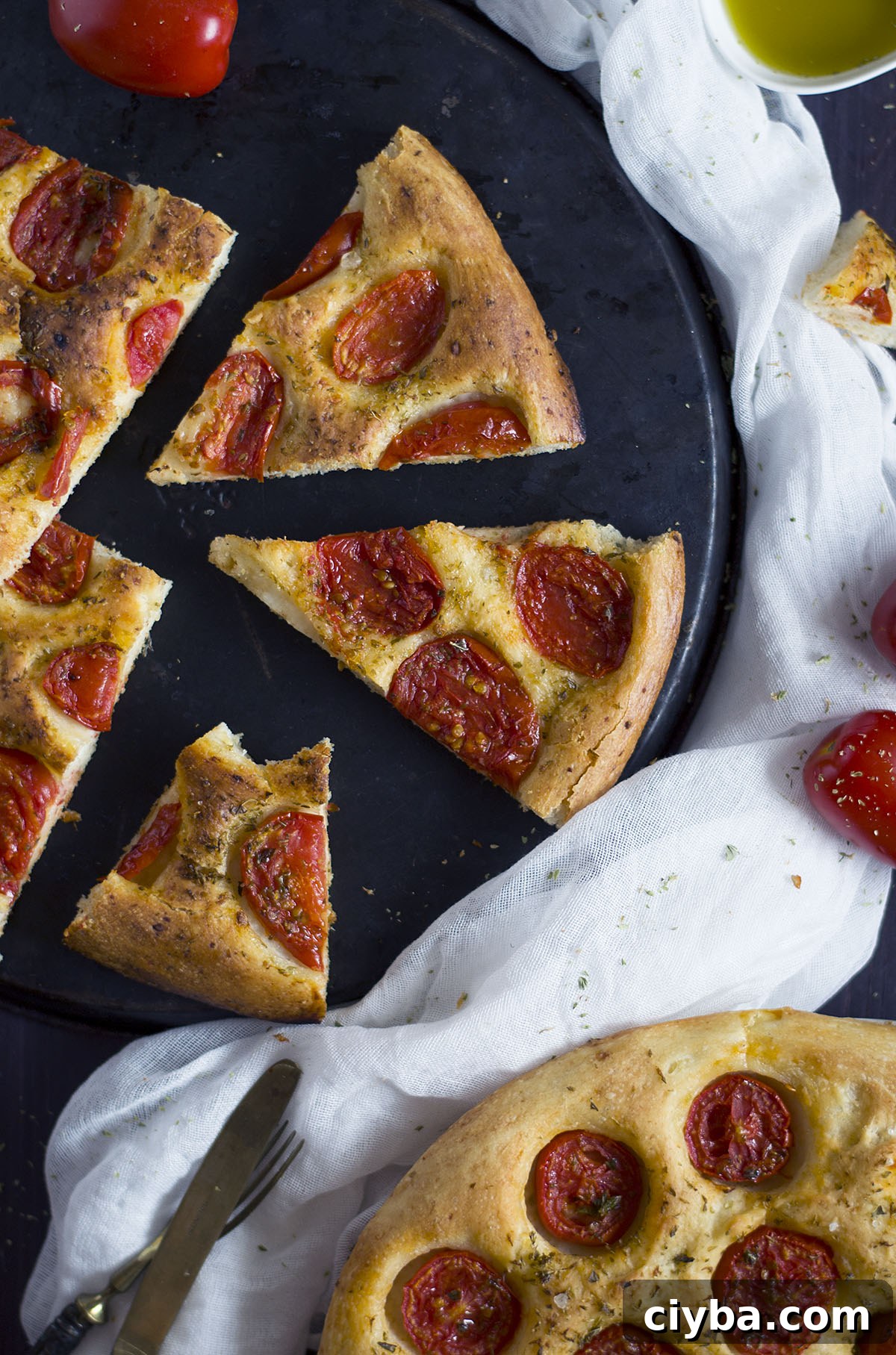
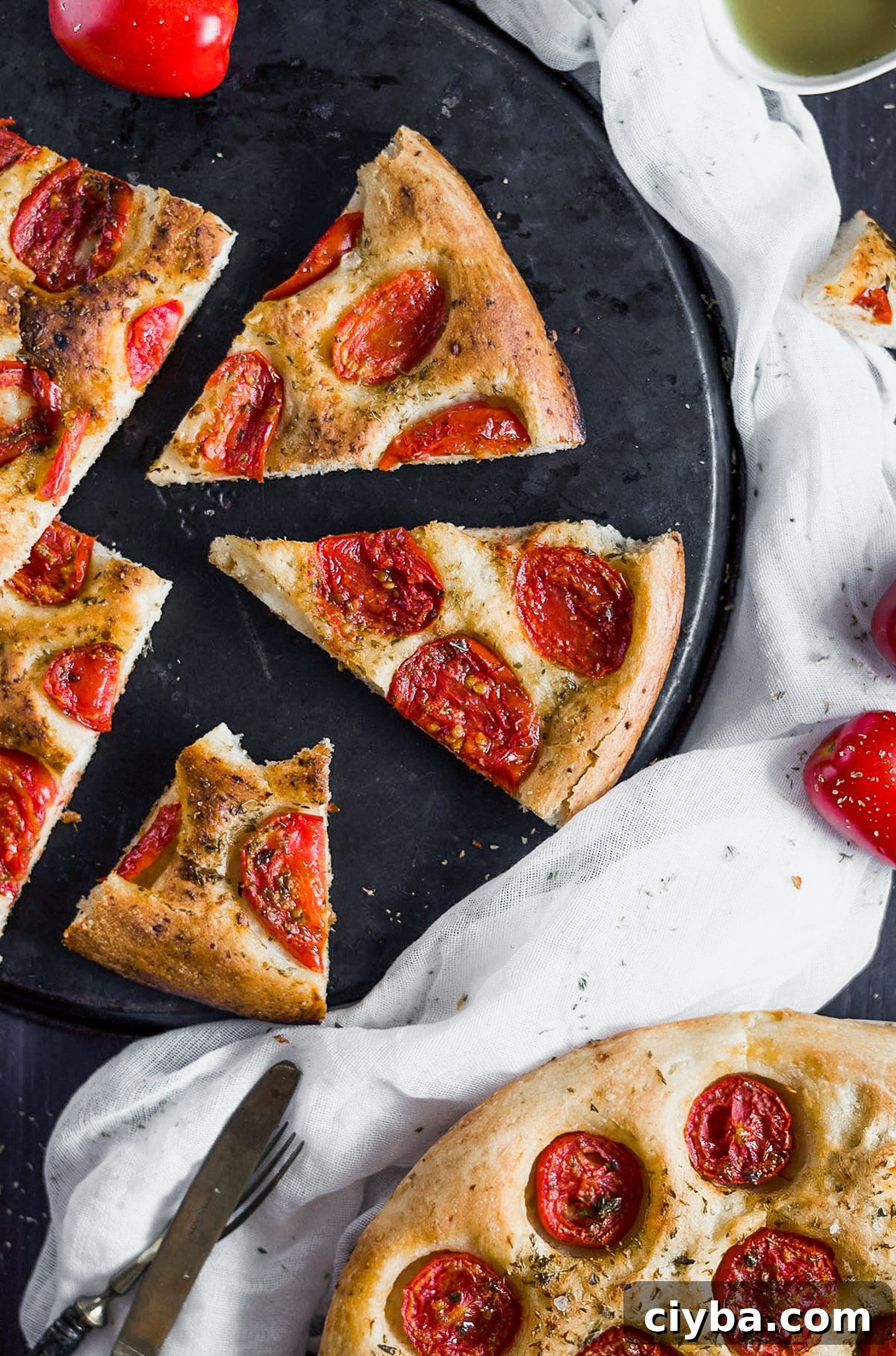
For this get-together I made a delicious focaccia Barese I discovered a few weeks ago. I baked it half an hour before leaving the house — we were guests at Enrico’s — and once there, while Marta prepared homemade flatbreads for everyone, I sliced the focaccia to serve as a starter. Guess what? It was a huge hit. The peaches in wine were popular too.

The focaccia Barese
I found this straightforward recipe in a baking group where I often look for bread ideas. The version I used was shared by Maria, and it’s genuinely simple and quick. You mix a few ingredients, let the dough rise, spread it out, let it rise again, then bake. Because the recipe is so uncomplicated, I recommend using high-quality ingredients — it matters.
There’s something about the aromas that feels completely Italian: the olive oil, tomatoes, a sprinkle of oregano. If you serve the focaccia alongside a protein, it becomes a satisfying, balanced meal.
Serve it with a protein on the side — fresh cheese, bresaola, or something similar — and you have a wholesome meal.
Ingredients: (for one large focaccia Barese or two smaller ones — serves 3–4)
- Organic type 0 flour (you can replace part with wholemeal), 350 g
- Fresh brewer’s yeast, 3 g
- One potato
- Warm water, 180 g
- High-quality extra-virgin olive oil, 3 tablespoons
- Pink salt, 12 g
- Cherry tomatoes, 4–5
- Alternatively: Taggiasca olives
- Oregano, to taste
Method:
Start by boiling the potato. Let it cool, then mash it thoroughly with a potato masher. You can knead this focaccia by hand — it’s very forgiving — or use a stand mixer or bread machine if you prefer.
Dissolve the fresh yeast in 150 g of the warm water (reserve the remaining 30 g for later), optionally with a pinch of sugar. Place the flour on a clean work surface, make a well in the center, and begin adding the water-yeast mixture, the mashed potato, and the olive oil. Begin kneading and then add the remaining water and the salt. Knead energetically until you have a smooth, elastic dough ball. Transfer the dough to a bowl, cover it, and let it rise in a warm place.
In summer the dough will rise easily at room temperature; in cooler weather, place the covered bowl in the oven with only the light on to create a gentle warmth.
When the dough has doubled in size — timing depends on the temperature — oil a round baking tray and stretch the dough to fit. The original suggestion is a 28 cm tray; I used two smaller ones. Press small dimples across the surface with your fingertips, drizzle a little more oil if you like, and arrange sliced cherry tomatoes (or olives) on top. Sprinkle with oregano and let the focaccia rest and rise for another hour.
Preheat the oven to 250°C. Bake the focaccia Barese for 15–20 minutes; check the underside for a golden color to ensure it’s cooked through. Serve warm with a simple protein like fresh cheese or cured meat. You’ll have the right balance of carbohydrates and fats — and plenty of flavor to enjoy with friends.