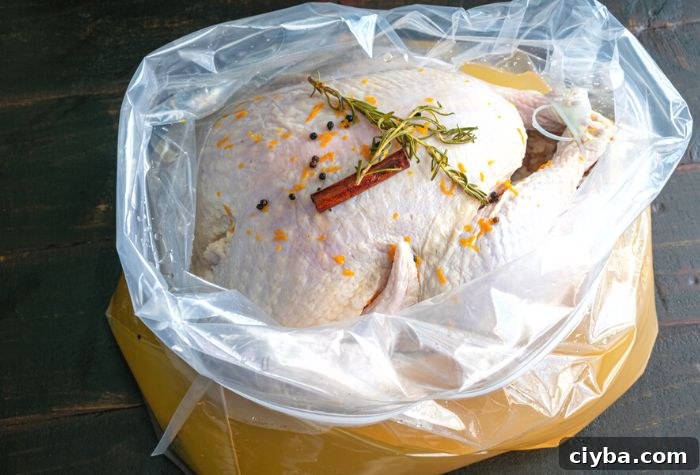
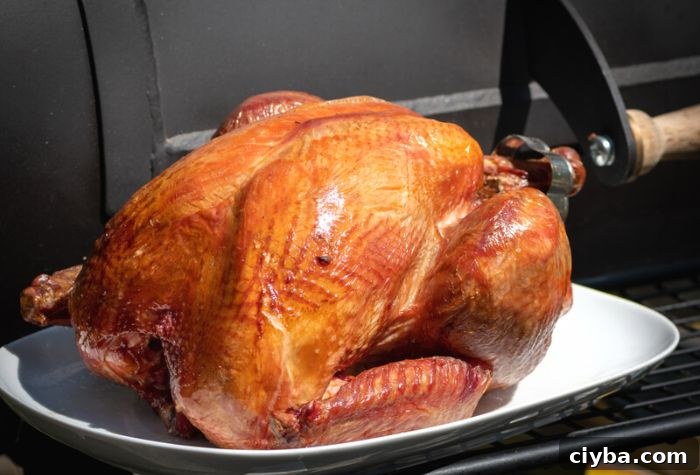
Make the best barbecue turkey with this easy smoked turkey brine. This straightforward brine combines kosher salt, brown sugar, fresh herbs, citrus zest, and aromatics to lock in moisture and boost flavor during a long smoke. Use this method whether you’re smoking for a holiday or a weekend cookout—brining helps ensure a tender, juicy bird with well-balanced seasoning.
- What is Brining?
- Wet Brining vs. Dry Brining
- What Does Brining Do to Turkey?
- Do You Have to Brine a Turkey?
- Turkey Brine Ingredients
- Equipment Needed
- FAQ
- Smoked Turkey Brine (Recipe)
Brining is the most reliable way to prevent a smoked turkey from drying out. Turkey is lean and easily overcooks during the long low-and-slow process of smoking. A proper brine increases moisture retention, improves texture, and creates a foundation for aromatic flavors to penetrate the meat.
What is Brining?
Brining is a preparatory technique that uses a saltwater solution—sometimes enhanced with sugar, herbs, spices, and acid—to season and tenderize meat. The salt disrupts some muscle proteins, allowing the meat to absorb and retain more liquid. That retained moisture helps the meat stay juicy through extended cooking times and also carries dissolved flavors deeper into the flesh.
Wet Brining vs. Dry Brining
Wet Brining
Wet brining means submerging the bird in a liquid brine. It’s ideal for very lean meats like turkey because it increases overall water content and allows additional flavors—citrus, herbs, aromatics—to infuse the meat. Wet brines are flexible: you can replace part of the water with apple juice, beer, or stock for extra flavor depth.
Dry Brining
Dry brining uses salt rubbed directly on the skin and under the skin. The salt draws out moisture that forms a concentrated surface brine, which is then reabsorbed. Dry brining enhances natural flavors and can produce crisper skin since there’s no added liquid to interfere with drying the surface.
What Does Brining Do to Turkey?
Brining evens out moisture differences between dark and white meat so the bird cooks more uniformly. It reduces the risk of overcooked breast meat while the legs finish, and it adds subtle seasoning throughout. When combined with smoke, a good brine balances savory, sweet, and bright citrus notes against the smokey profile.
Do You Have to Brine a Turkey?
Pros
- Keeps it moist: Brining increases the turkey’s water-holding capacity so it stays juicier through a long smoke.
- Adds flavor: Salt improves flavor and lets aromatics and citrus penetrate deeper into the meat.
Cons
- Space and logistics: A full-size turkey needs a large container and refrigerator or an iced cooler to brine safely.
- Higher sodium: Brined meat will have higher salt content, which can be a consideration for low-sodium diets.
Turkey Brine Ingredients
This smoked turkey brine uses a reliable balance of salt, sugar, herbs, and citrus to complement smoke without overpowering the bird.
- Water: Acts as the solvent for salt and sugar. Use cold water once the concentrated hot brine has been dissolved and cooled.
- Kosher salt: Larger crystals make it easier to measure and distribute evenly. Salt is the active ingredient that helps the meat retain moisture.
- Brown sugar: Adds a touch of sweetness and helps the skin brown when smoked. Use about a quarter by volume of the salt amount for balance.
- Aromatics: Onion, crushed garlic, bay leaves, and peppercorns infuse savory depth.
- Citrus zest: Orange and lemon zest brighten the flavor and offset smokiness.
Can I Add Extra Ingredients?
Yes. Alternatives and additions include apple juice for sweetness, beer for richer malt and tannin notes, honey or molasses instead of sugar for a different caramel character, or fresh herbs like rosemary and thyme. Adjust quantities to taste, keeping the salt-to-water ratio reliable.
Equipment Needed
- Large pot: To dissolve salt and sugar and warm aromatics.
- Brining bucket or food-safe container: Minimum five-gallon capacity is useful for most turkeys. Use plastic, glass, or stainless steel to avoid off-flavors.
- Brining bag: Optional but convenient for easy handling and to reduce container absorption of strong flavors.
- Refrigerator or iced cooler: Keep the turkey at safe temperatures while brining.
- Wire rack and baking tray: For draining and drying the turkey before smoking.
FAQ
How Long to Brine
Brine for at least 8 hours in a cool environment, then aim for about 1 hour per pound as a guideline. A 24-hour brine is common for a well-seasoned, juicy turkey.
Can You Brine a Frozen Turkey?
You can brine while thawing by using a cold brine in place of the water used for thawing. Ensure the turkey stays at safe temperatures and that the brine is cold.
Can You Over-Brine?
Yes. Leaving a turkey in brine too long (more than about 48 hours) can make it overly salty and change the meat’s texture. Stick to recommended times for best results.
Smoked Turkey Brine (Recipe)
Smoked Turkey Brine
Ingredients
- 2 gallons cold water
- 2 cups kosher salt
- 1 cup brown sugar
- 1 white onion, quartered
- 4 bay leaves
- 2 sprigs rosemary
- 6 cloves garlic, crushed
- 2 tbsp black peppercorns
- 2 tbsp orange zest
- 2 tbsp lemon zest
Instructions
- Combine 1 gallon of water, kosher salt, and brown sugar in a large pot. Bring to a boil, then reduce heat and simmer until the salt and sugar dissolve. Stir to ensure even dissolution.
- Add the remaining water, onion, bay leaves, rosemary, crushed garlic, peppercorns, orange zest, and lemon zest. Remove from heat and let the mixture cool completely to room temperature.
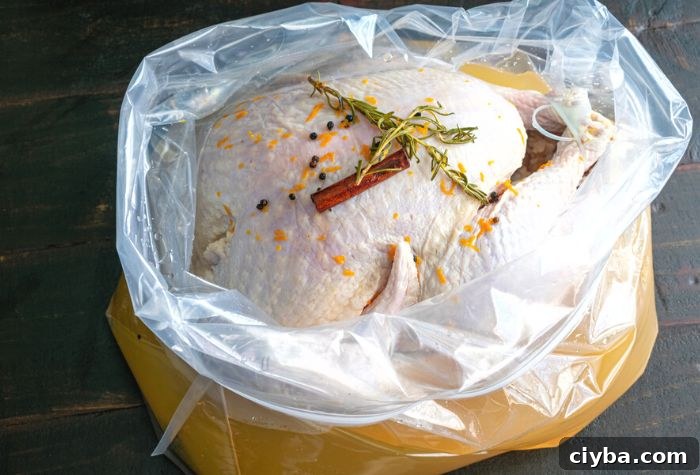
- Line a brining bucket or container with a food-safe brining bag if using one. Place the turkey inside the bag or container.
- Pour the cooled brine over the turkey, ensuring it is fully submerged. Seal the bag or cover the container and refrigerate or keep in an iced cooler for 24 hours.
- When brining is complete, remove the turkey and place it on a wire rack set over a baking tray to drain. Pat dry thoroughly with paper towels to help the skin crisp during smoking. Refrigerate uncovered until ready to smoke.
Equipment
- Large pot
- Brining bucket or food-safe container
- Brining bag (optional)
- Wire rack and baking tray
- Refrigerator or iced cooler